Wednesday, January 06, 2010

Slow Read: Mrs. Dalloway

I'm going to begin another slow read starting this Sunday. I hope some will be inspired to join me. I find these slow reads nice for several reasons:

  • The amounts per week, even per day, are so small that I hardly need to take time out for this extra reading.
  • The time spent reflecting about the week helps the book sink in better, and I remember more of it much later.
  • I'm reading the books for a reason... in this case a Classics book group led by a professor...and this keeps me on track so I'm not cramming in the last few days.
  • If I know others are reading along, I am more inspired to write my reflections. I hope if you're reading along, you will make comments freely, or even post your own blog entries.
I must give a nod to the blogger at Bookshelves of Doom. She has been doing "Big Reads" for a couple of years. She's just started one on The Woman in White. I'd love to join her, but I've got more to read.


Mrs. Dalloway Mrs. Dalloway by Virginia Woolf

You can find it here at Project Gutenberg Australia. Hmmm I wonder why it's not at the main Gutenberg site. Since I'm reading on the Kindle, and you may be reading some edition or another, I'm marking each reading by the beginning sentence. Or, just divide the book in 4 parts and consider that the approximate reading for the week.

Schedule
  • January 10-16: The beginning to...
  • January 17-23: Remember my party, remember my party, said Peter Walsh as he stepped down the street... to...
  • January 24- 30: How long had Dr. Holmes been attending him? to..
  • Jan. 31-Feb. 6: But Rezia laid her hands on them. to The End

I've begun reading this one:

The Voyage Out The Voyage Out by Virginia Woolf

It has Mrs. Dalloway as a character, and is Woolf's first book. I'm not reading slow, but I may not get finished before I need to start this other. I'm liking it so far.

I also need to read Dreams from my Father before the 19th for my library's book group. There I go, stacking up the books again.


View all my reviews >>

Wednesday, December 30, 2009

Books: Fat Karma

I have to put together a class proposal for my seminary program at the Zen Center. This proposal won't necessarily be implemented, but its purpose is for us to show our understanding of issues we learned out in the leadership and ethics class series. Since I've been thinking about this fat karma stuff, I decided to check out this first book especially because Chozen Bays is a local teacher and because I'm thinking about food and fat in my Fat Karma series. Then the second book passed over my work desk, and I got excited by that. About the time I started looking at the first, I realized this could make a really neat class series, so I hurried up, skimmed the second, and finally read the third book, which excites me most of all.

I suspect others will find this an exciting class proposal as well, and it could very well turn into a class actually offered at the Zen Center. This challenges me, and scares me at the same time. This hot button topic will be sure to bring out advice, fear, and judgment from many participants...actually great for the presentation for seminary, as I'm supposed to address problematic situations we foresee could happen in our proposed class. Not so great for my comfort-level. Not only would I be challenging the cultural paradigm in a Zen setting, I would be questioning the wisdom of a beloved Zen teacher on a particular aspect of this topic, as you'll see below. The first is difficult enough, the second makes me fear being a Bad Zen Student. I worry that I would not have the grace to balance these delicate issues.

As far as designing that class, with some more studying of these books, I think the outline will fall into place. Plus, I need a name. I'm vacillating between "Food Karma and Mindful Eating" or "Body Karma and Mindful Eating" or "Food and Body Karma and Mindful Eating." I would appreciate any thoughts my readers have on that. The primary text would be "Mindful Eating" but I would bring much material from the other two books into play, as well as other fat activist resources, and my thoughts from the ongoing Fat Karma series.


Eat What You Love, Love What You Eat: How to Break Your Eat-repent-repeat Cycle Eat What You Love, Love What You Eat: How to Break Your Eat-Repent-Repeat Cycle by Michelle May

My rating: 4 of 5 stars
I didn't fully read, but skimmed this book. I saw enough to know I like what the author has to say. I found it problematic that the author did not appear to mention "Health at Every Size." Perhaps this is because she seems somewhat still concerned about weight, and using her method as a way to encourage weight loss.

She presents her method as self-discovered, yet all her messages were just like those as presented in "Health at Every Size." (I read that one just after skimming this.)

I liked the way she identified 3 ways people eat: instinctive eaters; overeaters; and restrictive eaters. The book is about finding that instinctive way of eating again, and putting away the worse than useless dieting cycle of eat-repent-repeat. She talks about taking charge, rather than control, and that no food is forbidden. This is all good, but it is just the same as found in "Health at Every Size," and without what I felt was a key ingredient. The author of HAES makes every effort to warn against turning food mindfulness into another way to restrict, and to diet. I didn't see that so much here.

Mindful Eating: A Guide to Rediscovering a Healthy and Joyful Relationship with FoodMindful Eating: A Guide to Rediscovering a Healthy and Joyful Relationship with Food by Jan Chozen Bays

My rating: 3 of 5 stars
I feel like I should like this book more because the author is a local and loved Zen teacher. I think the method of mindful eating is well-presented and a useful tool, but enlightened though she may be, Chozen Bays reveals her lack of need to confront fat karma.

In his foreword to the book, Jon Kabat-Zinn refers to "our disordered relationship to food and eating." I thought, wow, that's just what I've been saying. I think we have a societal eating disorder, and it just seems to be getting worse. Mindfulness practice applied to eating is very useful to get us back in touch with our bodies' true needs. It helps peel back and erase those disordered relationships.

Unfortunately, in my view Chozen Bays still buys into some of those disordered relationships. I found it slightly problematic that rather than enjoy her discovery of the tastiness of Krispy Kreme donuts, she treated it as a cancerous thought of sorts. On first encounter, she, as she viewed it, mindlessly gorged on them, then obsessed over them while she denied herself further indulgences. Her account of making a particular candy difficult to retrieve also seemed to participate in the control found in restrictive eating and diet culture. When she claimed a healthy respect for those of us who are fat because her partner made a joke about her size, and her clothes got a little tighter, it didn't sit well with me. This was participating in the disordered eating culture, not understanding it. She hasn't needed to experience a life in a fat body, and while I know her to be a compassionate Buddhist teacher, I would doubt she truly understands this karma.

Most problematic to me was her casual mention of a Mindful Eating workshop participant. This participant was taking the workshop in order to prepare herself for her necessarily changed eating style after her bariatric surgery. Like many physicians, Chozen Bays accepts the validity of this surgery, and gives no further comment. She, it seems to me, mindlessly accepts the cultural paradigm that fat is bad, so bad that it is ok to endorse a surgery that hinders the body's ability to function normally for the rest of a person's life. This is if it doesn't actually kill you.

While there are some messages in this book I would not want to endorse, especially the controlling aspect, I do like the detailed instruction on how to eat mindfully. For people who've been immersed in the diet culture that forces us to ignore our own signals of our bodies, this method brings you back to that body, mind, emotional, and spiritual awareness.


Health at Every Size: The Surprising Truth about Your Weight Health at Every Size: The Surprising Truth about Your Weight by Linda Bacon


My rating: 5 of 5 stars
I read this after reading "Eat What You Love, Love What You Eat." It made me like that other book less, because this one covered all found in the other, but this one came first, and this one helped explain why there were parts of "Eat What You Love" that I found a little problematic.

This author, with her little study that proved that dropping the issue of weight, and concentrating on self-esteem, self-acceptance, and learning to trust the signals of the body and the mind actually works better than a conventional diet to improve health factors, well, this author is a David to the Goliath giant of the weight loss industry.

I've read The Obesity Myth and Taking Up Space, among others. If there were one book I would recommend on getting over fat phobia and finding a true path to health, this would be it. (Though those are good to pick up too. Both are especially good for understanding how this whole fat/food issue has its roots in culture, not health.)

Recovery from the diet paradigm includes learning to listen to the body's signals of hunger and satiety, and this is covered very well. It also includes understanding the economic and the cultural forces involved in supporting the diet paradigm, and this book covers that as well. (funding and oversight of studies being heavily intertwined with the weight loss industry; agricultural subsidies driving the production of processed food)While the author sends us to her website for further support and information, this book can truly stand alone as a guide to recovering from the damage of the diet paradigm.

View all my reviews >>

Thursday, December 24, 2009

Happy Holidays


May all beings be happy, healthy, and loved.

Saturday, December 05, 2009

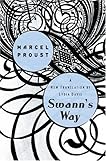
Slow Read: Swann's Way, Week 8, conclusion

In Search of Lost Time, Volume 1: Swann's Way by Marcel Proust
In Search of Lost Time: Volume 1, Swann's Way (Modern Library Classics) (v. 1)
by Marcel Proust, translated by Scott Moncrieff

Part Three: Place-Names: The Name

How much more individual still was the character that they assumed from being designated by names, names that were only for themselves, proper names such as people have. Words present to us little pictures of things, lucid and normal, like the pictures that are hung on the walls of schoolrooms to give children an illustration of what is meant by a carpenter's bench, a bird, an ant-hill; things chosen as typical of everything else of the same sort. But names present to us—of persons and of towns which they accustom us to regard as individual, as unique, like persons—a confused picture, which draws from the names, from the brightness or darkness of their sound...The name of Parma, one of the towns that I most longed to visit, after reading the Chartreuse, seeming to me compact and glossy, violet-tinted, soft, if anyone were to speak of such or such a house in Parma, in which I should be lodged, he would give me the pleasure of thinking that I was to inhabit a dwelling that was compact and glossy, violet-tinted, soft, and that bore no relation to the houses in any other town in Italy
Names are imbued with his impressed imagination from a few clues about that name. So yet again the name of the book looms significant. "Swann's Way" was about a place, a particular memory on a particular walk and the girl first encountered there, about Swann and his love, and a love significantly similar for that little girl. Yet these examples he has, Parma, Balbec, and so on, had such significance based on nothing but imagination and a hint or two of the reality. To put it in an extreme way, those loves could be said to be like that also.
All the time that I was away from Gilberte, I wanted to see her, because, having incessantly sought to form a mental picture of her, I was unable, in the end, to do so, and did not know exactly to what my love corresponded. Besides, she had never yet told me that she loved me. Far from it, she had often boasted that she knew other little boys whom she preferred to myself, that I was a good companion, with whom she was always willing to play, although I was too absent-minded, not attentive enough to the game. Moreover, she had often shewn signs of apparent coldness towards me, which might have shaken my faith that I was for her a creature different from the rest, had that faith been founded upon a love that Gilberte had felt for me, and not, as was the case, upon the love that I felt for her, which strengthened its resistance to the assaults of doubt by making it depend entirely upon the manner in which I was obliged, by an internal compulsion, to think of Gilberte.
A love like Swann's...is that Swann's way?

But at the period when I was in love with Gilberte, I still believed that Love did really exist, apart from ourselves; that, allowing us, at the most, to surmount the obstacles in our way, it offered us its blessings in an order in which we were not free to make the least alteration; it seemed to me that if I had, on my own initiative, substituted for the sweetness of a confession a pretence of indifference, I should not only have been depriving myself of one of the joys of which I had most often dreamed, I should have been fabricating, of my own free will, a love that was artificial and without value, that bore no relation to the truth, whose mysterious and foreordained ways I should thus have been declining to follow.
Suddenly I would stop, in alarm. I had realised that, if I was to receive a letter from Gilberte, it could not, in any case, be this letter, since it was I myself who had just composed it. And from that moment I would strive to keep my thoughts clear of the words which I should have liked her to write to me, from fear lest, by first selecting them myself, I should be excluding just those identical words,—the dearest, the most desired—from the field of possible events.
There is an effort to resist the relentless track, but it is fairly futile.
They would ask one another, "Who is she?", or sometimes would interrogate a passing stranger, or would make a mental note of how she was dressed so as to fix her identity, later, in the mind of a friend better informed than themselves, who would at once enlighten them. Another pair, half-stopping in their walk, would exchange: "You know who that is? Mme. Swann! That conveys nothing to you? Odette de Crecy, then?" "Odette de Crecy! Why, I thought as much. Those great, sad eyes... But I say, you know, she can't be as young as she was once, eh? I remember, I had her on the day that MacMahon went."
I suspected Mme. Swann might be Odette, but the time frames have been murky, and I thought also it might be possible Swann had recovered his love addiction and moved on to someone else. I find myself wondering, was this supposed to be a great love story, or a tragic one? When Odette was losing her figure suddenly, was she pregnant? If so, whose baby was Gilberte? Did Swann then marry her out of chivalry? Did his love finally win her over after he'd finally felt over her, and her baby was legitimately conceived? I suspect now there are all kinds of code words and phrases going on that are no longer used so I didn't catch them.

I further wonder, was it in the very giving up of his love that Swann was hooked? Was it then that Odette said the little thing that folded him in again, as to an addiction to a pain without which he'd no longer have a clear identity?

Related to the Celtic belief he sited, the narrator felt the past could not be recaptured with volition. Only if we chanced upon some link it might open back up to us. So this whole book, a chance re-awakening? And in that unfolding blooms larger and more vividly perhaps, full of romantic wishes.

On the Bois de Boulogne, seeing the people strolling there, the elegance of Mme. Swann and those days, lost:
They were just women, in whose elegance I had no belief, and whose clothes seemed to me unimportant. But when a belief vanishes, there survives it—more and more ardently, so as to cloak the absence of the power, now lost to us, of imparting reality to new phenomena—an idolatrous attachment to the old things which our belief in them did once animate, as if it was in that belief and not in ourselves that the divine spark resided, and as if our present incredulity had a contingent cause—the death of the gods.
Is he saying that we create the divine spark through our creative memory?
the end:
...helped me to understand how paradoxical it is to seek in reality for the pictures that are stored in one's memory, which must inevitably lose the charm that comes to them from memory itself and from their not being apprehended by the senses. The reality that I had known no longer existed. It sufficed that Mme. Swann did not appear, in the same attire and at the same moment, for the whole avenue to be altered. The places that we have known belong now only to the little world of space on which we map them for our own convenience. None of them was ever more than a thin slice, held between the contiguous impressions that composed our life at that time; remembrance of a particular form is but regret for a particular moment; and houses, roads, avenues are as fugitive, alas, as the years.


Previous posts:
Schedule
Week 1
Week 2
Week 3
Week 4
Weeks 5 and 6
Week 7

Friday, November 27, 2009

Slow Read: Swann's Way, Week 7

In Search of Lost Time, Volume 1: Swann's Way by Marcel Proust
In Search of Lost Time: Volume 1, Swann's Way (Modern Library Classics) (v. 1)
by Marcel Proust, translated by Scott Moncrieff

Part Two: Swann in Love

I'm 90% through and finally the good stuff happens. Sure, the writing has been good, the use of flowers as people was lovely, and music as a touchstone for love a sweet touch, but it did go on. Now that it's getting somewhere, I wonder, would it be as good, this end of Swann's Love, if we hadn't had all that came before? I'd like to say for Proust's sake that the long lingering over Swann's swoon of denial made the emergence that much more sharp, but I think we could have had the same impression without a couple or a few of those rounds. On the other hand, today's authorial practice of never ever putting a bit in the writing unless it furthered the story has gone too far in the other direction. Proust is creating a mood, a feeling, and a venue, and it does work.

Just an aside:

(though people now thought of it, by the same mental process which enables one to discover the meaning of a piece of symphonic music of which one has read the programme, or the 'likenesses' in a child whose family one has known: "He's not positively ugly, if you like, but he is really rather absurd; that eyeglass, that tuft, that smile!" realising in their imagination, fed by suggestion, the invisible boundary which divides, at a few months' interval, the head of an ardent lover from a cuckold's)
Does everybody know but Swann? Swann doesn't only because he doesn't want to, quite yet.
These new manners, indifferent, listless, irritable, which Odette now adopted with Swann, undoubtedly made him suffer; but he did not realise how much he suffered; since it had been with a regular progression, day after day, that Odette had chilled towards him, it was only by directly contrasting what she was to-day with what she had been at first that he could have measured the extent of the change that had taken place. Now this change was his deep, his secret wound, which pained him day and night, and whenever he felt that his thoughts were straying too near it, he would quickly turn them into another channel for fear of being made to suffer too keenly. He might say to himself in a vague way: "There was a time when Odette loved me more," but he never formed any definite picture of that time.
Love growing, peaking, then dying, what a topsy-turvy time. Poor Swann. But he won't ever again be fooled in quite this way, I bet. He finds himself at a gathering which includes his set. There are fine little examples of the ways in which young folk cast off the tastes of their elders.
Mme. de Cambremer cast a furtive glance behind her. She knew that her young daughter-in-law (full of respect for her new and noble family, except in such matters as related to the intellect, upon which, having 'got as far' as Harmony and the Greek alphabet, she was specially enlightened) despised Chopin, and fell quite ill when she heard him played. But finding herself free from the scrutiny of this Wagnerian, who was sitting, at some distance, in a group of her own contemporaries, Mme. de Cambremer let herself drift upon a stream of exquisite memories and sensations.
But then, Wagner will go out of fashion, and a younger set will re-discover Chopin, just as Sting replaced the Rolling Stones, and each has been replaced and come around again.
Mme. de Gallardon, with a stern countenance and one hand thrust out as though she were trying to 'force' a card, began with: "How is your husband?" in the same anxious tone that she would have used if the Prince had been seriously ill. The Princess, breaking into a laugh which was one of her characteristics, and was intended at once to shew the rest of an assembly that she was making fun of some one and also to enhance her own beauty by concentrating her features around her animated lips and sparkling eyes, answered: "Why; he's never been better in his life!" And she went on laughing.
Just as the Verdurins, who apparently are Bohemians, had well-rehearsed spontaneity, so too do the elite.
"Listen, and I'll explain," she began to Mme. de Gallardon. "To-morrow evening I must go to a friend of mine, who has been pestering me to fix a day for ages. If she takes us to the theatre afterwards, then I can't possibly come to you, much as I should love to; but if we just stay in the house, I know there won't be anyone else there, so I can slip away."
And the Princess, just like the mistress.
"...It's only when I see you that I stop feeling bored." Which was probably not true. But Swann and the Princess had the same way of looking at the little things of life—the effect, if not the cause of which was a close analogy between their modes of expression and even of pronunciation. This similarity was not striking because no two things could have been more unlike than their voices. But if one took the trouble to imagine Swann's utterances divested of the sonority that enwrapped them, of the moustache from under which they emerged, one found that they were the same phrases, the same inflexions, that they had the 'tone' of the Guermantes set.
I wonder if Swann fell in love because Odette was not of his set. The unfamiliarity blinded him to clues to her duplicity. The exotic differences, exciting, enticing, perhaps even dangerous. The Princess is familiar.

Of that tune, Swann's and Odette's, their song, unexpectedly encountered:
Swann felt that it was present, like a protective goddess, a confidant of his love, who, so as to be able to come to him through the crowd, and to draw him aside to speak to him, had disguised herself in this sweeping cloak of sound. And as she passed him, light, soothing, as softly murmured as the perfume of a flower, telling him what she had to say, every word of which he closely scanned, sorry to see them fly away so fast, he made involuntarily with his lips the motion of kissing, as it went by him, the harmonious, fleeting form.
...ever since, more than a year before, discovering to him many of the riches of his own soul, the love of music had been born, and for a time at least had dwelt in him, Swann had regarded musical motifs as actual ideas, of another world, of another order, ideas veiled in shadows, unknown, impenetrable by the human mind
I wonder if music has become, to Swann, as flowers are to the narrator. Perhaps not, as Swann discovered this through love, whereas the narrator had this delicate relationship to flowers before such experiences.
certain great artists who do us the service, when they awaken in us the emotion corresponding to the theme which they have found, of shewing us what richness, what variety lies hidden, unknown to us, in that great black impenetrable night, discouraging exploration, of our soul, which we have been content to regard as valueless and waste and void. Vinteuil had been one of those musicians. In his little phrase, albeit it presented to the mind's eye a clouded surface, there was contained, one felt, a matter so consistent, so explicit, to which the phrase gave so new, so original a force, that those who had once heard it preserved the memory of it in the treasure-chamber of their minds.
Was it possible Swann was opened to love, awakened, by this song? Like enlightenment, I believe love can be a sudden opening to that great emptiness through which we are all connected. This opening of the heart is facilitated by a readiness and a convergence of the moment. A phrase of music could open it that final crack, or a turn of phrase, a clap, a snap of the fingers, like a blossom burst open by a gust of wind.
Perhaps it is not-being that is the true state, and all our dream of life is without existence; but, if so, we feel that it must be that these phrases of music, these conceptions which exist in relation to our dream, are nothing either. We shall perish, but we have for our hostages these divine captives who shall follow and share our fate. And death in their company is something less bitter, less inglorious, perhaps even less certain.
Sounds rather Buddhist with a pinch of god-stuff. Love sparks the divine connectedness. Oh, that sounds like Rumi.
So Swann was not mistaken in believing that the phrase of the sonata did, really, exist. Human as it was from this point of view, it belonged, none the less, to an order of supernatural creatures whom we have never seen, but whom, in spite of that, we recognise and acclaim with rapture when some explorer of the unseen contrives to coax one forth, to bring it down from that divine world to which he has access to shine for a brief moment in the firmament of ours. This was what Vinteuil had done for the little phrase.
For lack of a better expression we create angels. Could it be enough to Recognize the interconnection across Emptiness? (I do not say abyss for the negativity associated with it.) A friend of mine has said he sees art as people sharing their experience of samadhi. Something in the art then seems to spark a universal recognition of this mastery of Truth.
Swann dared not move, and would have liked to compel all the other people in the room to remain still also, as if the slightest movement might embarrass the magic presence, supernatural, delicious, frail, that would so easily vanish. But no one, as it happened, dreamed of speaking. The ineffable utterance of one solitary man, absent, perhaps dead (Swann did not know whether Vinteuil were still alive), breathed out above the rites of those two hierophants, sufficed to arrest the attention of three hundred minds, and made of that stage on which a soul was thus called into being one of the noblest altars on which a supernatural ceremony could be performed.
A sublime moment, Swann was not alone in sensing the divine through the music.
From that evening, Swann understood that the feeling which Odette had once had for him would never revive, that his hopes of happiness would not be realised now.
He is now ready to emerge from the madness that was his love. It allowed him to experience this sacred moment, led up to it, yet experiencing this also brought him through to a sanity regarding his love that he couldn't access before. ....yet he does go on with some more dying obsessions. This is what happens, isn't it, my friends who have loved so heart-breakingly thoroughly? We have these moments of clarity, but still that wicked obsession sends us down a well-worn track, looking again for clues and markers that assure us there was indeed something there, this love wasn't just one-sided, that other one that has turned cold, but they participated, they did. When this happens to you, my friend, avoid that other person at all costs. I know you want to rub that raw place again, be near that other one, but don't. Allow some time and space. So too should have Swann.
No doubt Swann was assured that if he had now been living at a distance from Odette he would gradually have lost all interest in her, so that he would have been glad to learn that she was leaving Paris for ever; he would have had the courage to remain there; but he had not the courage to go.
Friends of those love-spurned who do not have this courage, help them find it! Try to convince them it is for their own good to stay away from that love interest. Maybe nothing can be done. Be gentle. But the sooner removed, the sooner that heart can heal and get on an even keel. Still, there is some need, like picking at a scab, to confront and pin down.
He went to see Odette. He sat down, keeping at a distance from her. He did not dare to embrace her, not knowing whether in her, in himself, it would be affection or anger that a kiss would provoke. He sat there silent, watching their love expire. Suddenly he made up his mind.
He pushed her for details of her lies, and discovered over and over ways she had played him that he didn't expect. Someone should have stopped him. Or maybe he had to be exposed, then he could be inoculated from any further what-ifs.
He smiled back at her with the sudden, craven weakness of the utterly spiritless creature which these crushing words had made of him. And so, even in the months of which he had never dared to think again, because they had been too happy, in those months when she had loved him, she was already lying to him!
Here's where it gets interesting to me. Like Swann, or Proust, I too examine love for its shape, its manifestations, its universal entity:
For what we suppose to be our love, our jealousy are, neither of them, single, continuous and individual passions. They are composed of an infinity of successive loves, of different jealousies, each of which is ephemeral, although by their uninterrupted multitude they give us the impression of continuity, the illusion of unity. The life of Swann's love, the fidelity of his jealousy, were formed out of death, of infidelity, of innumerable desires, innumerable doubts, all of which had Odette for their object. If he had remained for any length of time without seeing her, those that died would not have been replaced by others. But the presence of Odette continued to sow in Swann's heart alternate seeds of love and suspicion.
So don't feed those identity beasties, the ones that are so painful, at least. Turn away, in small ways if that's the only way you can, if you must, if there is no hope. Don't put yourself through this agony, as Swann did. It is altogether too tempting to walk these paths again:
And Swann felt himself overflowing with gratitude to her, as well as to Mme. Verdurin (and almost to Odette, for the feeling that he now entertained for her was no longer tinged with pain, was scarcely even to be described, now, as love), while from the platform of the omnibus he followed her with loving eyes.... But now, to the faintness of his love there corresponded a simultaneous faintness in his desire to remain her lover. For a man cannot change, that is to say become another person, while he continues to obey the dictates of the self which he has ceased to be.
Dream sequence, seems significant. To visit, go here, and use a find search for "He was mistaken." (wow, a short sentence, how about that?) Swann's self-analysis of the dream has quite a modern psychological understanding.
his mind, anxious to admire the richness of invention that life shews, and incapable of facing a difficult problem for any length of time, such as to discover what, actually, had been most to be wished for, came to the conclusion that the sufferings through which he had passed that evening, and the pleasures, at that time unsuspected, which were already being brought to birth,—the exact balance between which was too difficult to establish—were linked by a sort of concatenation of necessity.
We modern American Buddhists like to use the word interconnected, but I wonder if this word, new to me, concatenation, does the job?
Odette's pallid complexion, her too thin cheeks, her drawn features, her tired eyes, all the things which—in the course of those successive bursts of affection which had made of his enduring love for Odette a long oblivion of the first impression that he had formed of her—he had ceased to observe after the first few days of their intimacy.... ...he cried out in his heart: "To think that I have wasted years of my life, that I have longed for death, that the greatest love that I have ever known has been for a woman who did not please me, who was not in my style!"
Finally! Swann is recovered. Boy, I hear ya, Swann. I've been there. Inoculated now.


Previous posts:

Schedule
Week 1
Week 2
Week 3
Week 4
Weeks 5 and 6

Monday, November 23, 2009

Slow Read: Swann's Way, Weeks 5 and 6

I had another book to read between these weeks for my library's book group, The Picture of Dorian Gray, so I didn't get time to blog. Oscar Wilde was just a little ahead of Proust on the literary time-line, but I found the settings quite similar. Gardens and dinner salons and people being, or trying to be, witty at the expense of others. I really enjoyed Wilde much more. One day in the library, I saw a woman who's a regular attendee of the Read the Classics programs, and she asked me if I was reading this. We were both having trouble getting into it, and she said she thought it's been overrated. Whereas Wilde is devilish and witty, Proust is meticulously long-winded. He does manage to convey a time and scene quite thoroughly, but it is so slow that Wilde has already run circles around him. During my reading, Lord Henry and Dorian Gray keep inserting themselves into the story, livening up the sickening fakery of the Proustian salons, and I have to remind myself, that vision comes from Wilde, not Proust.

In Search of Lost Time, Volume 1: Swann's Way by Marcel Proust
In Search of Lost Time: Volume 1, Swann's Way (Modern Library Classics) (v. 1)
by Marcel Proust, translated by Scott Moncrieff

Part Two: Swann in Love

The Verdurins never invited you to dinner; you had your 'place laid' there. There was never any programme for the evening's entertainment. The young pianist would play, but only if he felt inclined...

And so, too, if one of the 'faithful' had a friend, or one of the ladies a young man, who was liable, now and then, to make them miss an evening....

...he would be put to the test, to see whether he was willing to have no secrets from Mme. Verdurin, whether he was susceptible of being enrolled in the 'little clan.' ... And so when, in the course of this same year, the courtesan told M. Verdurin that she had made the acquaintance of such a charming gentleman, M. Swann, and hinted that he would very much like to be allowed to come, M. Verdurin carried the request at once to his wife. He never formed an opinion on any subject until she had formed hers, his special duty being to carry out her wishes and those of the 'faithful' generally, which he did with boundless ingenuity.
I should have known I was in for it with this description of the Verdurins. I can't stand people like that. Apparently neither can Proust. So Swann falls for this woman, here called a courtesan, but in his understanding, only rumored to have been a "kept woman." Is it noteworthy that the narrator has such intimate details of Swann's great love that happened at the time of the narrator's birth? I've been told of the 19th century novels that the narrator is simply a device, not to get too worked up about their part in the novel.
But [my grandfather] had entirely severed his connection with what he called "young Verdurin," taking a general view of him as one who had fallen--though without losing hold of his millions--among the riff-raff of Bohemia. One day he received a letter from Swann asking whether my grandfather could put him in touch with the Verdurins. ...

And on my grandfather's refusal to act as sponsor, it was Odette herself who had taken Swann to the house.
So those outside the group don't think much of them, while the Verdurins are so rigid about their faithful. They are funny and creepy.

Dr. Cottard:
was never quite certain of the tone in which he ought to reply to any observation, or whether the speaker was jesting or in earnest. And so in any event he would embellish all his facial expressions with the offer of a conditional, a provisional smile whose expectant subtlety would exonerate him from the charge of being a simpleton, if the remark addressed to him should turn out to have been facetious. But as he must also be prepared to face the alternative, he never dared to allow this smile a definite expression on his features, and you would see there a perpetually flickering uncertainty
Mme. Verdurin:
so was overtaken and vanquished by her device of a feigned but continuous hilarity—she would utter a shrill cry, shut tight her little bird-like eyes, which were beginning to be clouded over by a cataract, and quickly, as though she had only just time to avoid some indecent sight or to parry a mortal blow, burying her face in her hands, which completely engulfed it, and prevented her from seeing anything at all, she would appear to be struggling to suppress, to eradicate a laugh which, were she to give way to it, must inevitably leave her inanimate.
M. Verdurin:
finding it rather a strain to start laughing again over so small a matter, he was content with puffing out a cloud of smoke from his pipe, while he reflected sadly that he could never again hope to keep pace with his wife in her Atalanta-flights across the field of mirth.
Swann (what is he doing here?):
"I know him slightly; we have some friends in common" (Swann dared not add that one of these friends was the Prince of Wales). "Anyhow, he is very free with his invitations, and, I assure you, his luncheon-parties are not the least bit amusing; they're very simple affairs, too, you know; never more than eight at table," he went on, trying desperately to cut out everything that seemed to shew off his relations with the President in a light too dazzling for the Doctor's eyes.
Ah, the allowances one convinces oneself of, for love:
"What a charming atmosphere!" [Swann] said to himself. "How entirely genuine life is to these people! They are far more intelligent, far more artistic, surely, than the people one knows. Mme. Verdurin, in spite of a few trifling exaggerations which are rather absurd, has a sincere love of painting and music! What a passion for works of art, what anxiety to give pleasure to artists! Her ideas about some of the people one knows are not quite right, but then their ideas about artistic circles are altogether wrong! Possibly I make no great intellectual demands upon conversation, but I am perfectly happy talking to Cottard, although he does trot out those idiotic puns. And as for the painter, if he is rather unpleasantly affected when he tries to be paradoxical, still he has one of the finest brains that I have ever come across.
Swann is a trifle too warm in describing a person the Verdurins consider a rival, so he is cast out of the 'faithful.'
His explanation was terribly effective; Mme. Verdurin now realised that this one state of unbelief would prevent her 'little nucleus' from ever attaining to complete unanimity, and was unable to restrain herself, in her fury at the obstinacy of this wretch who could not see what anguish his words were causing her...
Saniette:
The worthy man suffered acutely from the Verdurins' always finding him so dull; and as he was conscious of having been more than ordinarily morose this evening, he had made up his mind that he would succeed in being amusing, at least once, before the end of dinner.
M. Verdurin finds a new humor mask:
As for M. Verdurin, he was unsparing of his merriment, having recently discovered a way of expressing it by a symbol, different from his wife's, but equally simple and obvious. Scarcely had he begun the movement of head and shoulders of a man who was 'shaking with laughter' than he would begin also to cough, as though, in laughing too violently, he had swallowed a mouthful of smoke from his pipe. And by keeping the pipe firmly in his mouth he could prolong indefinitely the dumb-show of suffocation and hilarity. So he and Mme. Verdurin (who, at the other side of the room, where the painter was telling her a story, was shutting her eyes preparatory to flinging her face into her hands) resembled two masks in a theatre, each representing Comedy, but in a different way.
The Verdurins are like a parody of the arts they would say they support.

Before he knows it, Swann is given the boot:
"Didn't I say so?" retorted her husband. "He's simply a failure; a poor little wretch who goes through life mad with jealousy of anything that's at all big." Had the truth been known, there was not one of the 'faithful' who was not infinitely more malicious than Swann; but the others would all take the precaution of tempering their malice with obvious pleasantries, with little sparks of emotion and cordiality; while the least indication of reserve on Swann's part, undraped in any such conventional formula as "Of course, I don't want to say anything—" to which he would have scorned to descend, appeared to them a deliberate act of treachery.
And thus Odette begins her campaign of disdain. The more she lies, evades, and pushes Swann away, the more entrenched he becomes in his addictive love for her. Even while a rational part of his brain tells him that without the ecstatic romantic feelings he wouldn't have much in common with Odette, he becomes more frenetic over trying to see her, as well as trying to catch her in a deception. How familiar those love-addicted thoughts are. The more elusive a love's object, the more one is convinced of that love. For example, Swann realises he may be participating in the whole 'kept woman' dynamic, thinking of the money he gave Odette to help with her expenses...
He could not explore the idea further, for a sudden access of that mental lethargy which was, with him, congenital, intermittent and providential, happened, at that moment, to extinguish every particle of light in his brain, as instantaneously as, at a later period, when electric lighting had been everywhere installed, it became possible, merely by fingering a switch, to cut off all the supply of light from a house. His mind fumbled, for a moment, in the darkness, he took off his spectacles, wiped the glasses, passed his hands over his eyes, but saw no light until he found himself face to face with a wholly different idea, the realisation that he must endeavour, in the coming month, to send Odette six or seven thousand-franc notes instead of five, simply as a surprise for her and to give her pleasure.
When not Odette-addled, Swann is a likable guy. He can hob knob with the Prince, and with regular folks.
He had the same regard—to a degree of identity which they would never have suspected—for the little families with small incomes who asked him to dances in their flats ("straight upstairs to the fifth floor, and the door on the left") as for the Princesse de Parme, who gave the most splendid parties in Paris; but he had not the feeling of being actually 'at the ball' when he found himself herded with the fathers of families in the bedroom of the lady of the house, while the spectacle of wash-hand-stands covered over with towels, and of beds converted into cloak-rooms, with a mass of hats and great-coats sprawling over their counterpanes, gave him the same stifling sensation that, nowadays, people who have been used for half a lifetime to electric light derive from a smoking lamp or a candle that needs to be snuffed.
Swann tortures himself with thoughts of Odette with other men. He spies on her. He suspects her of lying, but when he doesn't suspect and she is lying, he absolutely will not believe she is lying. Such delusion, such attachment, so difficult to avoid when it comes to this kind of love.
As though this had been a bodily pain, Swann's mind was powerless to alleviate it; in the case of bodily pain, however, since it is independent of the mind, the mind can dwell upon it, can note that it has diminished, that it has momentarily ceased. But with this mental pain, the mind, merely by recalling it, created it afresh. To determine not to think of it was but to think of it still, to suffer from it still.
When she pays him a small favor of attention, he elevates it to favoring him over others with her love. She sure does know how to play a man.
So, too, Odette, certain of seeing him come to her in a few days, as tender and submissive as before, and plead with her for a reconciliation, became inured, was no longer afraid of displeasing him, or even of making him angry, and refused him, whenever it suited her, the favours by which he set most store. Perhaps she did not realise how sincere he had been with her during their quarrel, when he had told her that he would not send her any money, but would do what he could to hurt her. Perhaps she did not realise, either, how sincere he still was, if not with her, at any rate with himself, on other occasions when, for the sake of their future relations, to shew Odette that he was capable of doing without her, that a rupture was still possible between them, he decided to wait some time before going to see her again.
For Swann, the very thought of trying to pull away from her ends up pushing him further off the deep end.
An imperfect idea (though possibly all the more profound in consequence), if one were to judge it from the point of view of Swann, who would doubtless have considered that Odette failed to understand him, just as a morphinomaniac.... which in reality have never ceased to weigh heavily and incurably upon them while they were nursing their dreams of normality and health. And, as a matter of fact, Swann's love had reached that stage at which the physician and (in the case of certain affections) the boldest of surgeons ask themselves whether to deprive a patient of his vice or to rid him of his malady is still reasonable, or indeed possible.

Previous posts:
Schedule
Week 1
Week 2
Week 3
Week 4