Showing posts with label oregon. Show all posts

Thursday, October 13, 2011

Eastern Oregon Trip: Thomas Condon Paleontology Center
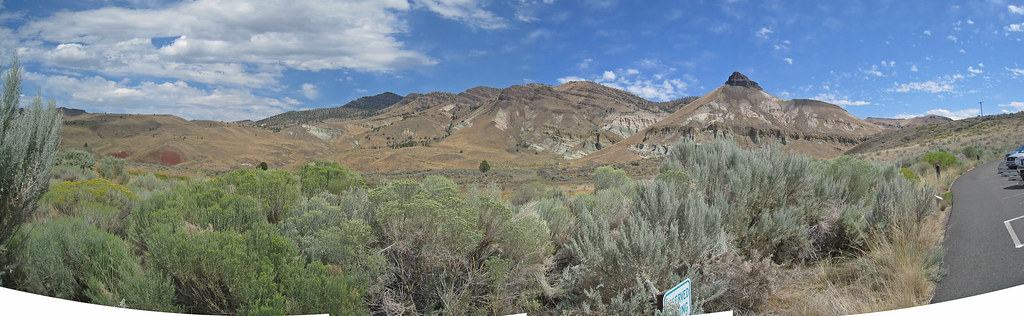
view sheep rock
View of Sheep Rock from the parking lot of the Paleontology Center


It was while we were in the John Day Fossil Beds National Monument that we left HWY 26 and turned north on Oregon HWY 19.

I was excited to visit the Thomas Condon Paleontology Center, two miles after our turnoff.  I was reading Your Inner Fish for my library book group.  I find the fossil record fascinating.  When I was a kid I had a small fossil collection, several of which were found in my rural Wisconsin back yard.  (I have to ask my mom if that's still around.)

In 1859 Charles Darwin published The Origin of Species.  Fossils were the big thing among a certain set.  A minister and self-taught scientist in The Dalles, Oregon, Thomas Condon, heard about abundant fossils from soldiers in 1862, and in 1865 he began excavating fossils in this area. Condon eventually became a Professor of Geology at the University of Oregon.

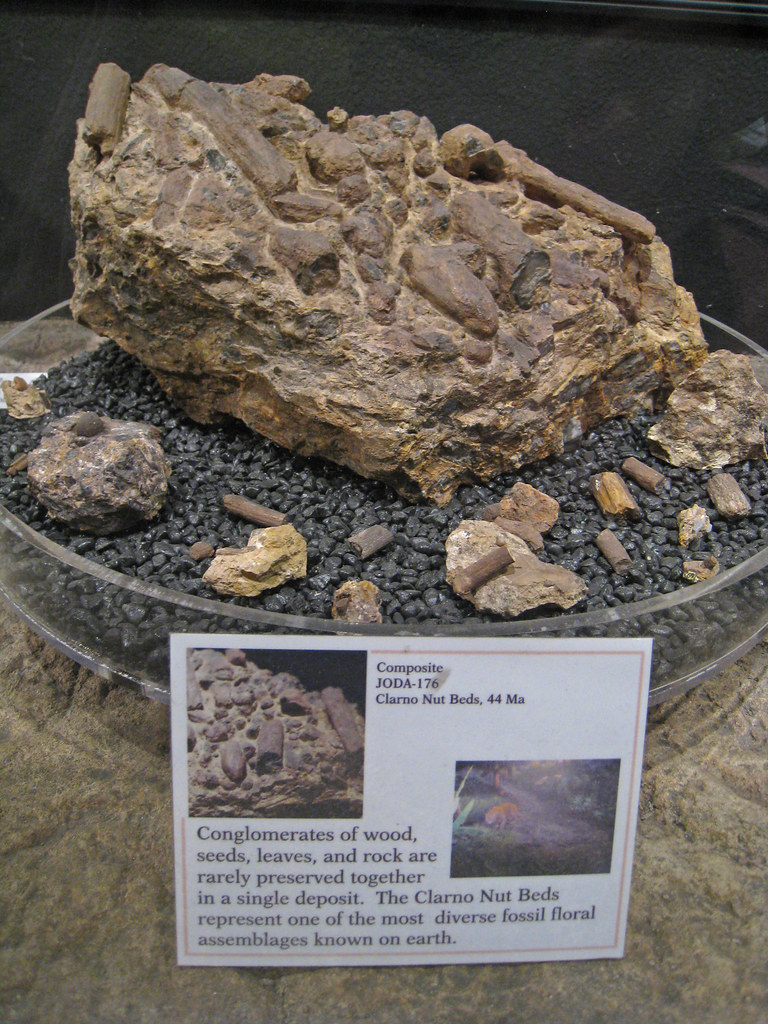
IMG_5755_1A few minutes after arriving at the center, a short movie about the John Day Fossil Beds and paleontology was announced.  We learned there are fossil beds throughout 10,000 square miles of Eastern Oregon. The National Monument is 20 square miles of protected area.  The John Day Fossil Beds in particular are very diverse.  Six distinct ages ranging from 7 million to 44 million years ago can be found there. The fossil record is so reliable there that paleontologists around the world "are looking to this formation for correlation."

I'd learned in Your Inner Fish that lava beds were not good places to find fossils because the molten lava destroyed the beings it killed, and that former sea beds were good places to find fossils.  In this case, it was volcanic activity that created these profuse fossil records, but it was mud flow that covered over and smothered everything, and since it was so fast, it was like a snapshot of all the living beings at one time, encased in mud which became rock.

While Thomas Condon must certainly have kept a record of where he found fossils, these days paleontologists can keep notebooks with precise locations, times, and pictures printed on the spot.  In this rich territory in Oregon, a paleontologist can find "an entirely new basin that no one has collected before."
IMG_5765_1
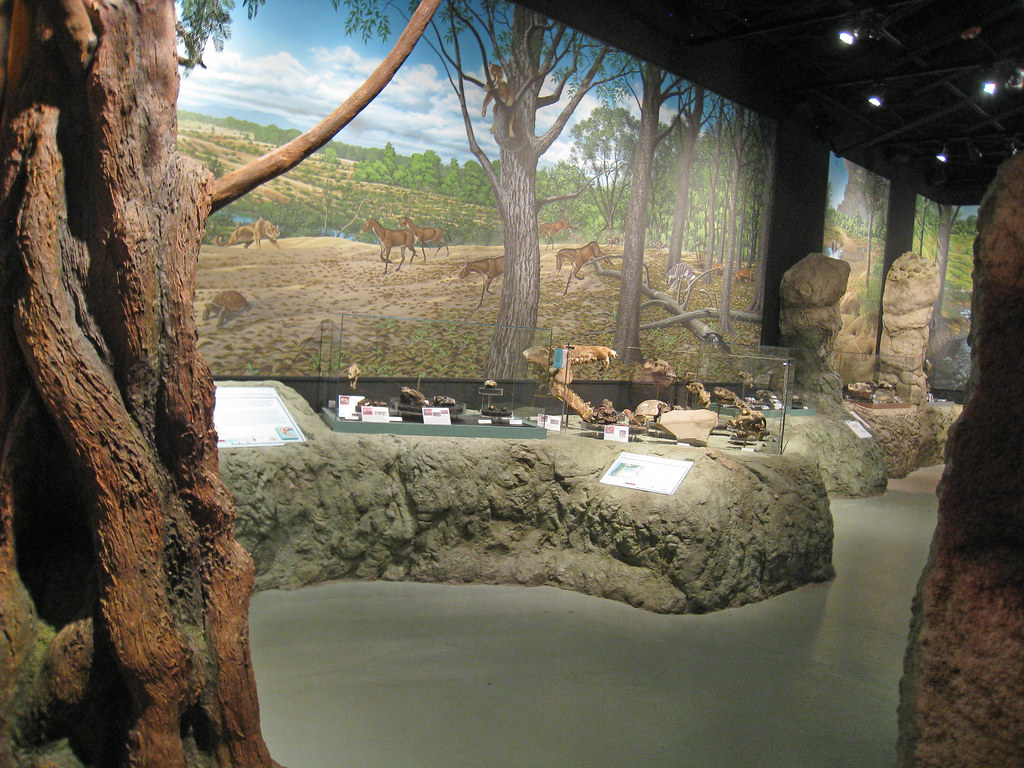
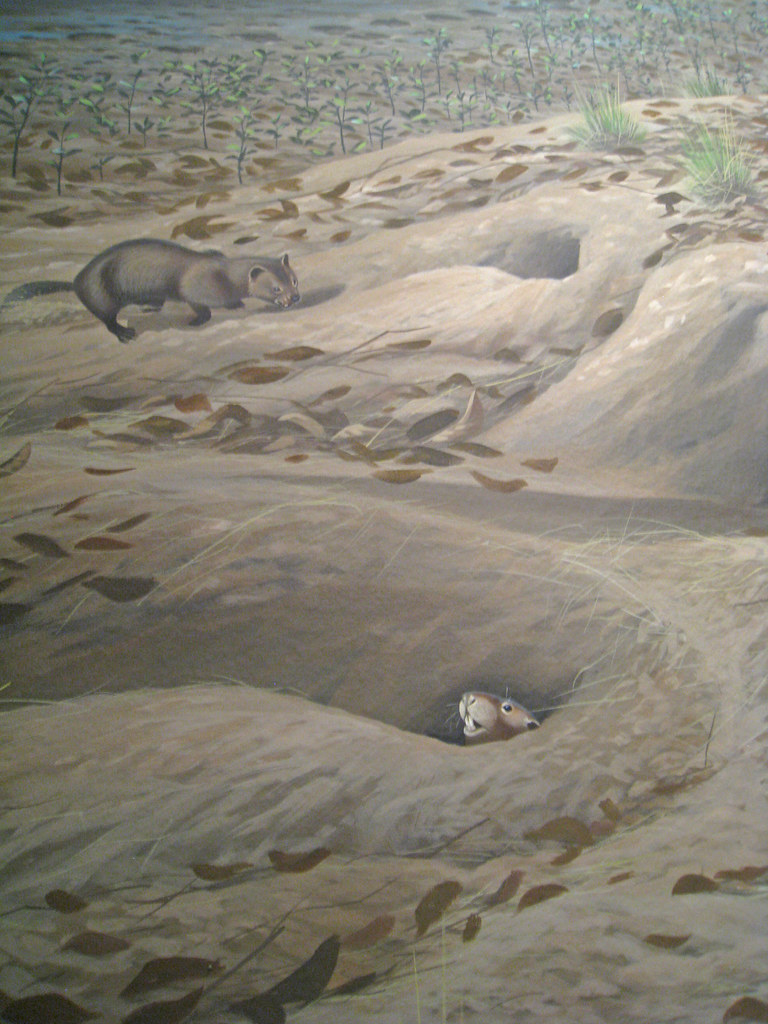
I can't recommend enough visiting this place as part of your visit to Eastern Oregon.  It can't compare to the American Museum of Natural History, but it is chock full of information, and because of the unique fossil record of the area, has a wide range of fossils, post-dinosaurs. Wall murals depicting the animals and plants as they may have looked line the walls (well-done, not hokey as I remember museum visits from my childhood) and the exhibits are displayed as if on exposed rock.  I took a bunch of pictures to look at later but there are plenty of photos and other things to explore at the National Parks website. (I may have more description work to do with those photos of mine, so check back later.)
IMG_5779_1

Tuesday, October 11, 2011

Eastern Oregon Trip: Kam Wah Chung Museum

IMG_5670_1

Sheesh, I've been busy. Here it is almost two months later and I'm almost done with my travel chronicle.  After a leisurely morning, breakfast in our room, packing and checkout by noon (love that noon checkout time), we left Baker City on Oregon HWY 26 East.  If we stayed on 26 it would get us back to Portland, but our destiny took us north sooner than that.

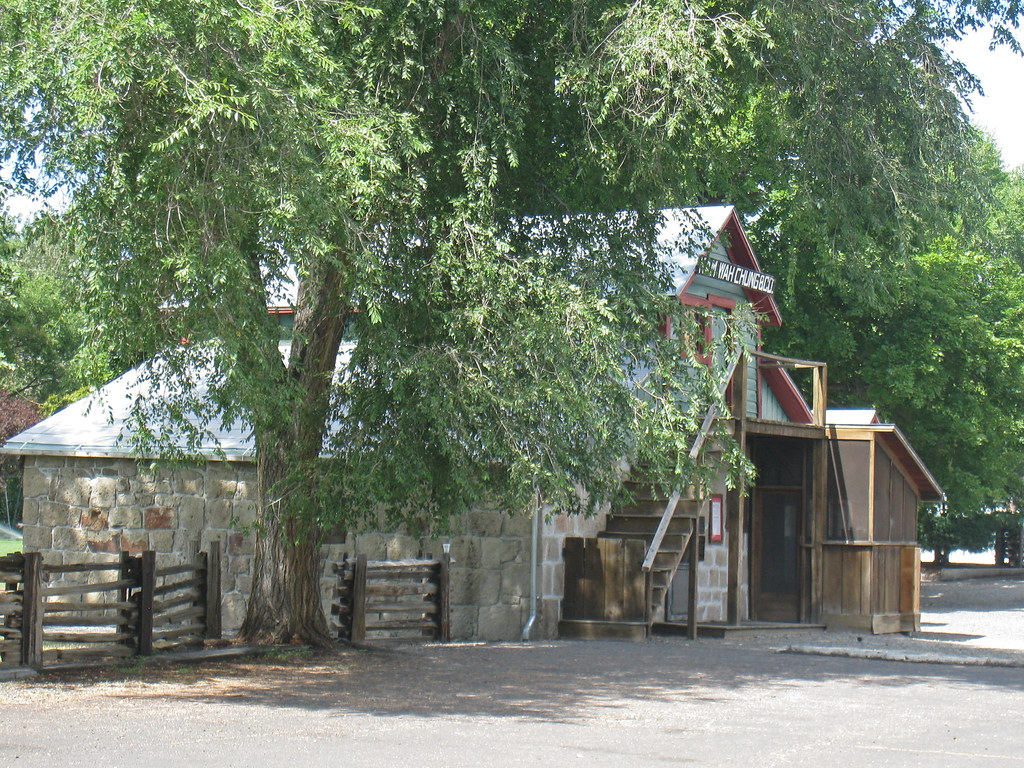
IMG_5686_1First stop, the Kam Wah Chung Museum.  Ever since we read Midnight at the Dragon Cafe for Everybody Reads in 2007, I've been interested in visiting John Day, and viewing the encapsulated history of Doc Hay in this museum.  Included in the events for Everybody Reads were lectures on the history of Chinese and other Asians in Oregon.  More recently, OPB's show Oregon Experience covered the history of the museum and Ing Hay and his business partner Lung On.  Video here. It happened to air again before our trip, and my sweetie and I watched it together.

It turned out we couldn't visit the museum except in a guided tour, as too much damage was done when too many unescorted people wandered in the small space. We were lucky to arrive just a little before a tour...just enough time to use the restroom, buy a piece of Chinese calligraphy art, and view the displays in the visitor center.

IMG_5699_1In 1862 there was a gold rush in Oregon.  At the same time the Civil War was preventing an influx of workers, so foreign workers were relied on to fill the gaps.  As I mentioned before, only men were allowed.  Doc Hay and Lung On left their families behind.

In 1882, no one but scholars were allowed to enter the country from China.  After a certain point, even if they wanted to, the two men didn't dare return to China because they might not be allowed back.  They remained in their adopted home of Oregon.  Doc Hay wrote letters faithfully and sent money, and according to our guide, appeared to love his wife, though it was a traditional arranged marriage.  Lung On, though, was apparently glad to leave his arranged marriage.

I found myself wondering again, what about their sex life?  Did they have any once they moved to the U.S.?  Did they dare?  Could they have been lovers?  If that were the case this could never have been hinted at for the history books.  I like to think they were partners in more than the business sense, hiding their companionship in plain sight.  I also wonder if the sexual revolution has indeed made us more sexualized, and if it was entirely common for unattached women as well as men simply to have no sex life.  Lung On liked to gamble, and both liked to host a cadre of visitors.  I can imagine them smoking, tossing coins, tiles, cards, shooting the shit, laughing at low humor, easing the unexpressed libido through innuendo and crude jokes.

In 1921 electricity arrived in John Day, and Ing Hay got it the first day. One later addition was a bedroom for Lung On, with its own entrance.  This way Lung On wasn't disturbed when Doc Hay received a late night patient, and Doc Hay wasn't disturbed when Lung On returned from late nights spent drinking and gambling.

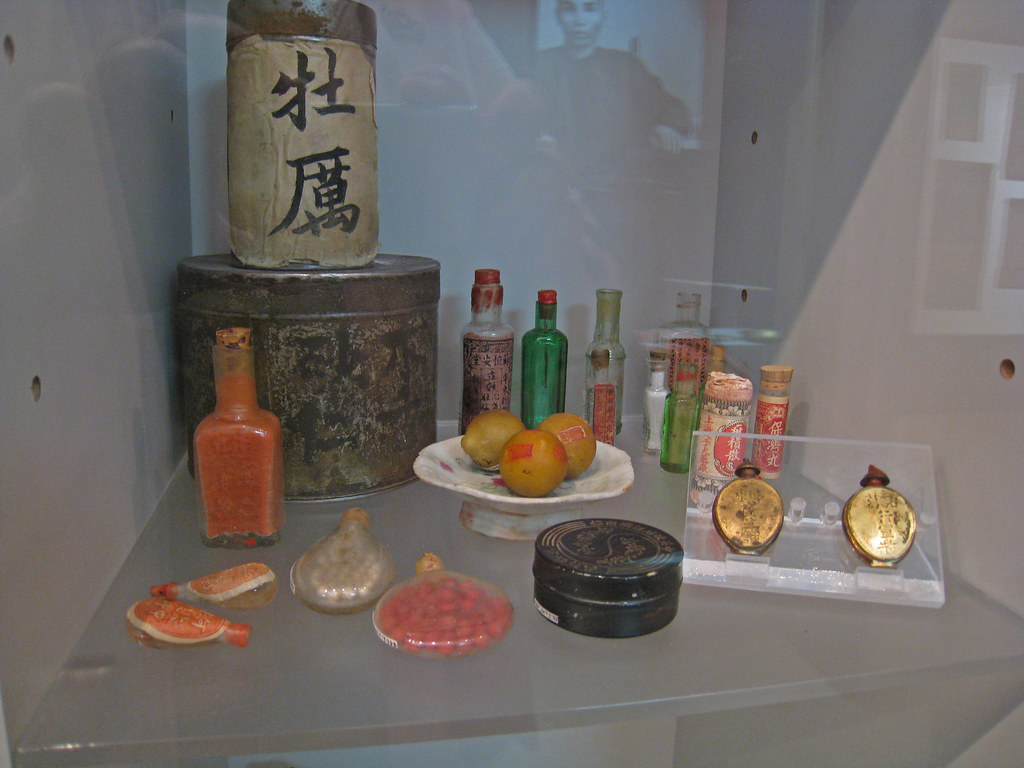
The grocery was closed down when Lung On died, and the business closed completely in 1948 when Doc Hay could no longer run his healing business. After his death, the building was closed completely. When the building was opened back up in 1969, they found items from the twenties to the forties.  They also found Kentucky bourbon under the floorboards dated 1912-1918...so apparently this catch-all business that served both Chinese and whites also was prepared to be a speakeasy, or provide the speakeasy's liquor.

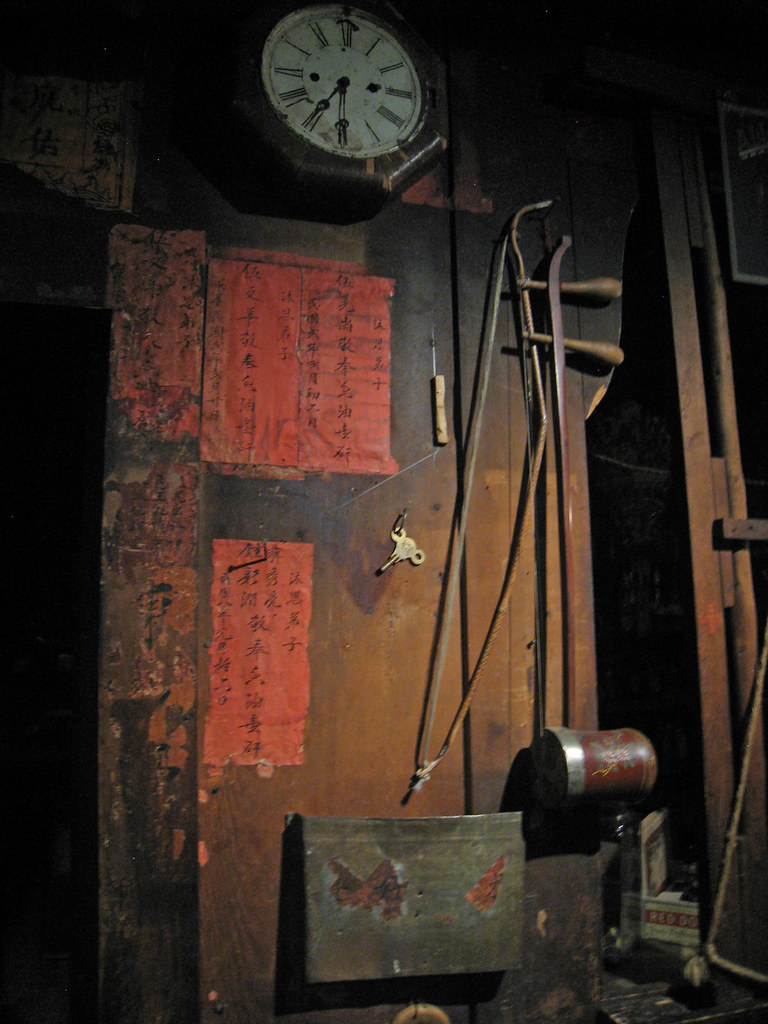
Erhu: Chinese violin
Erhu, or Chinese violin, on the right
There were pasted red papers with Chinese writing on the walls. I'm guessing this had something to do with New Year's celebrations.

These two men were the only Chinese to remain buried in the town.  Everyone else had their remains sent back to their homeland as their tradition enjoined. Lung On didn't want the job, but he was the one who would dig up the bones and send them back to China.  Doc Hay was buried with a Mason funeral.

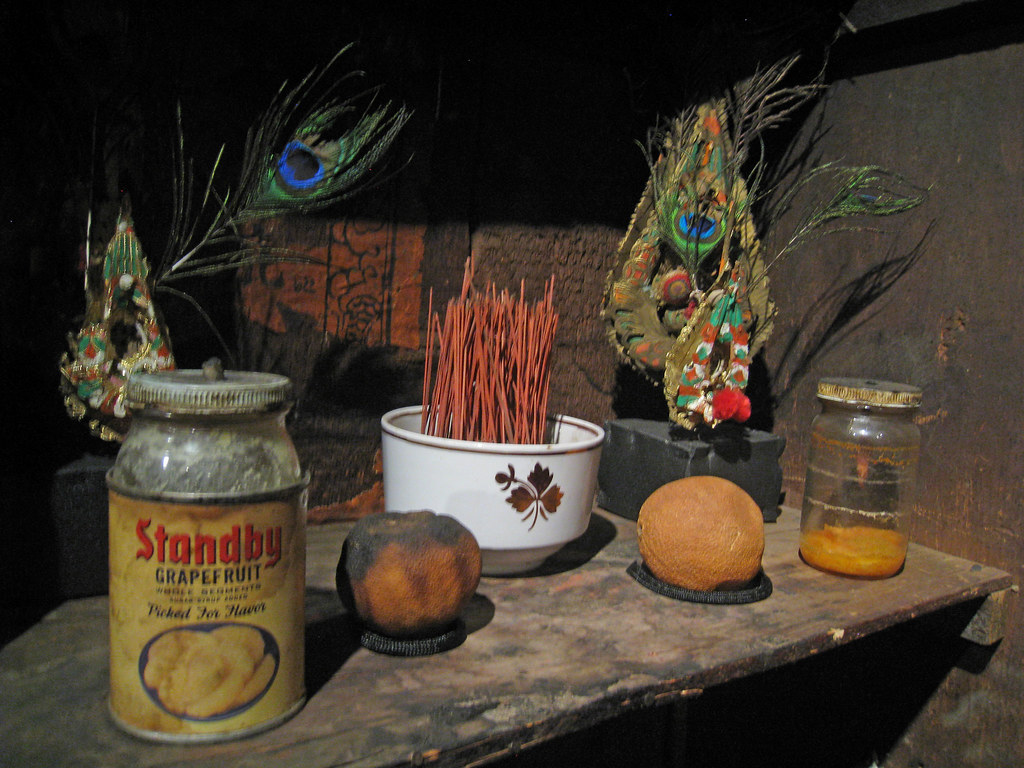
 Altars graced every room.


More details and photos here.


altar detail

Monday, September 26, 2011

Eastern Oregon Trip: Elkhorn Scenic Byway

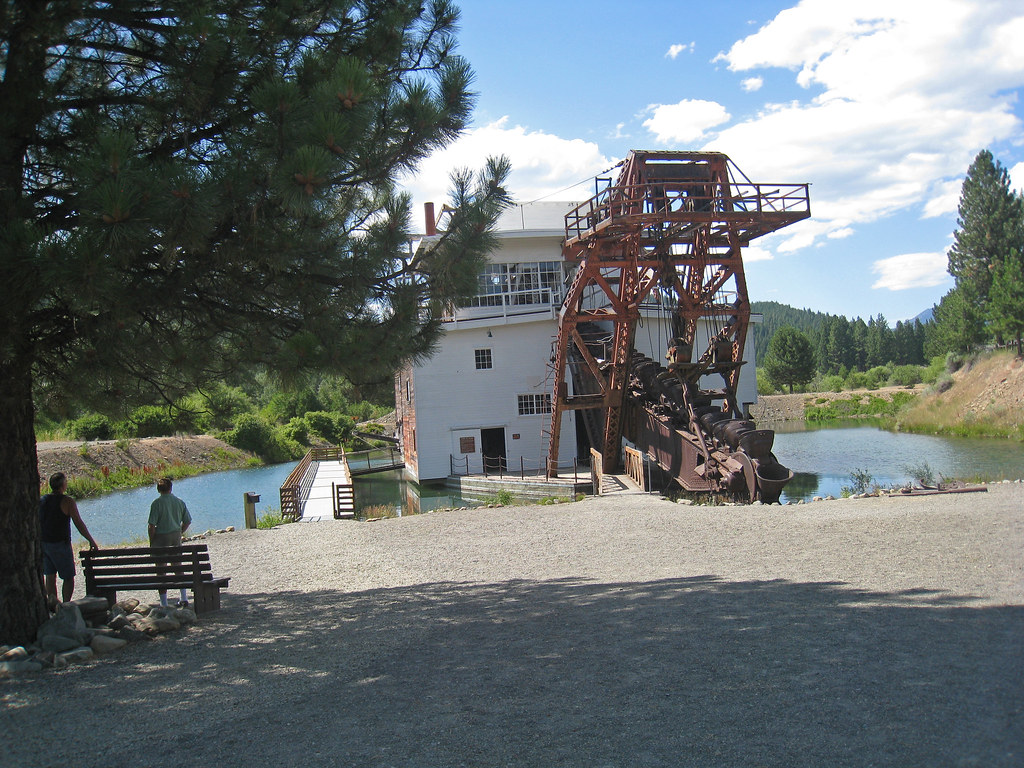
IMG_5515_1After shuffling through two museums, we were ready to go for a drive. Our first destination outside of Baker City was Sumpter, Oregon, a little over a half-hour drive. Sumpter doesn't qualify as a ghost-town, but it has plenty of those Old West buildings, and it has a ghost-dredge....a retired gold dredge, that is.

The gold dredge used water to pull the gold out of the soil.  The material sluiced through the moving building, water washing the gold to the bottom of the sluices, along with other heavy materials, and the lighter materials were dumped out the back.  The gold bits mixed with black sand were tumbled in a barrel with mercury-coated paddles.  The gold bonded with the mercury, while the black sand escaped below.  I wonder if the person responsible for this gave the Mad Hatter a run for his money. I also wonder how much mercury escaped into the ponds and piles and the Powder River.


This was the last of three dredges built on the Powder River, built in 1935, retired in 1954..  After viewing the dredge inside and out, it was mid-afternoon, and we had a choice: retrace our drive back to Baker City, or keep going on the scenic byway. If we returned, we'd have enough time to visit the Oregon Trail Interpretive Center, but if we kept going we'd see walls built by the Chinese, ghost towns, and pass over the mountains. We decided to keep going, and there might still be time to make it to the Interpretive Center. First detour off the byway: Granite.

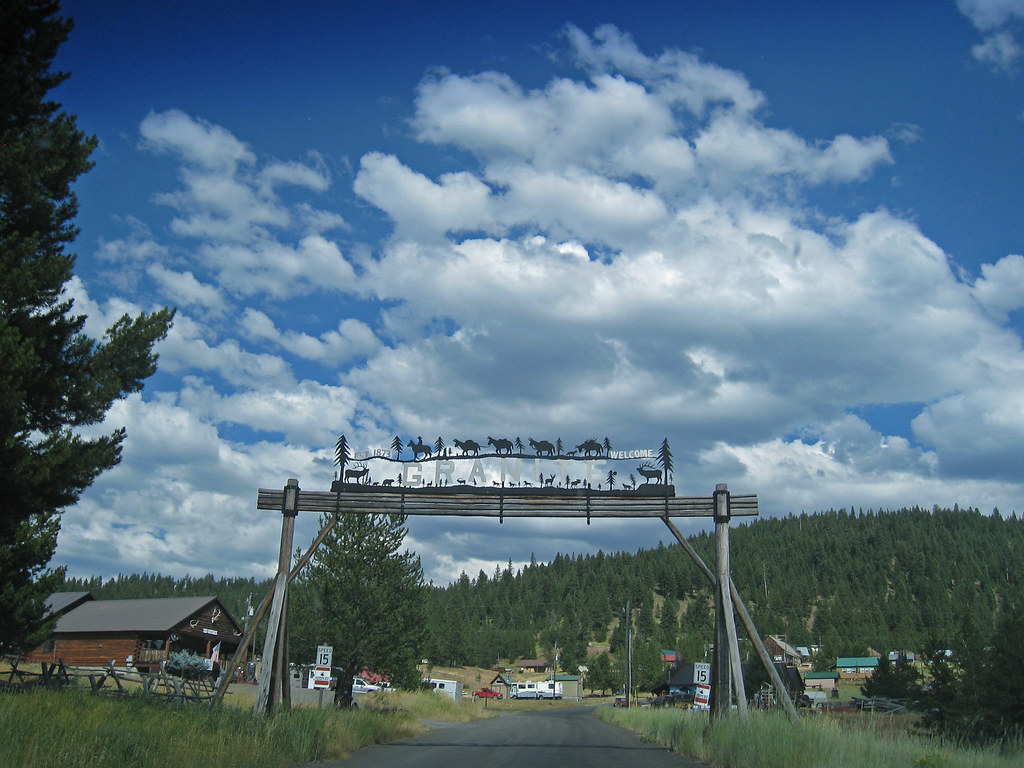
Granite


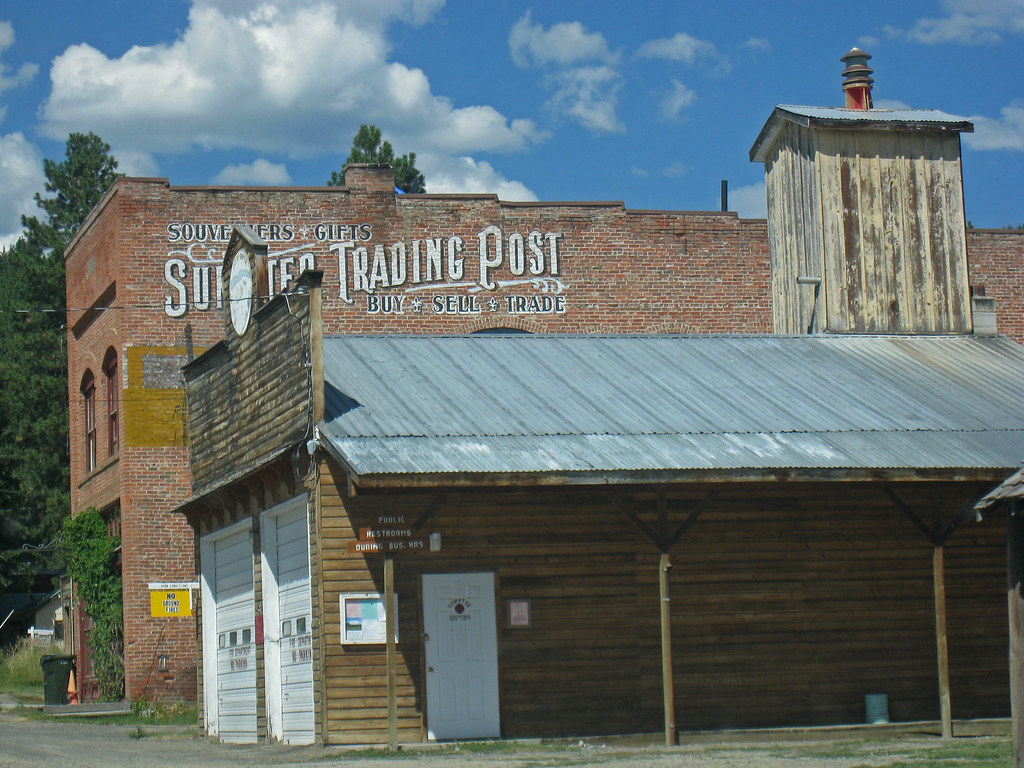
Granite was supposed to be a ghost town, but it looked pretty occupied, and while the old buildings were minimally renovated, you could see the modern energy-efficient doors and windows. The next stop on the byway was to visit the Chinese Walls, but now that I research, I see I was looking at the wrong thing! 
"The Ah Hee Diggings, also called the Chinese Walls, are sixty acres of hand-stacked, winding rock walls constructed of placer mine tailings. The walls were built by Chinese miners who worked gold-mining claims for the Ah Hee Placer Mining Company along a five-mile stretch of Granite Creek from 1867 to 1891." source, link above
All the signs showed the stop with stone barriers, so I took photos of those, but what this website shows as walls were not cemented rocks, but piled rocks.

Before Granite we went over a pass of 5,864 feet, and after, a pass at over 7,800 feet, and we saw a mountain still a 1,000 feet higher.  The temperature up there was 66 degrees, and when we got to the valley, it was 81 degrees.

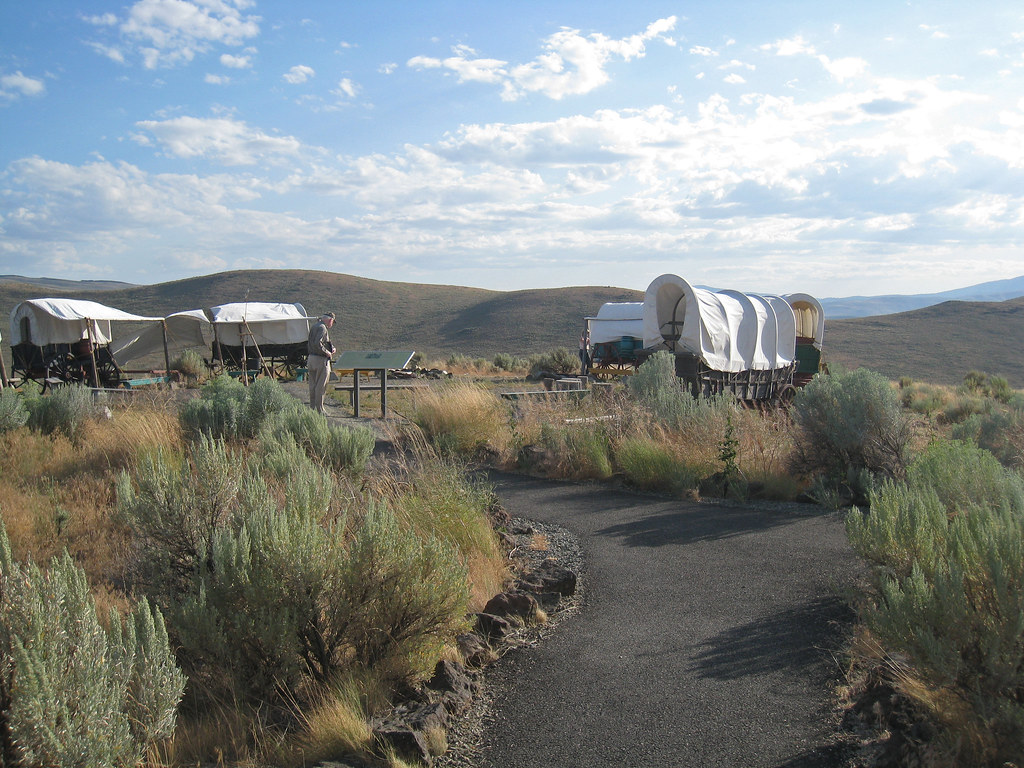
We made it to the Oregon Trail Interpretive Center just 20 minutes before they closed.  They didn't charge us, though my sweetie donated some money anyway, and they informed us that we could look but we had to be out of the parking lot by 6 pm.

IMG_5601_1

After, we would have liked to stop to see wagon trail ruts near the road, but we had little time to catch some dinner, then go back to Sumpter for our moonlight train ride on the Sumpter Valley Railway.  (We ordered room service again for a quick but tasty meal.) We'll just have to visit the End of the Oregon Trail nearby in Oregon City sometime soon.  More photos of the dredge, the mountain drive, and the Oregon Trail center can be found here, along with further details.

IMG_5610_1

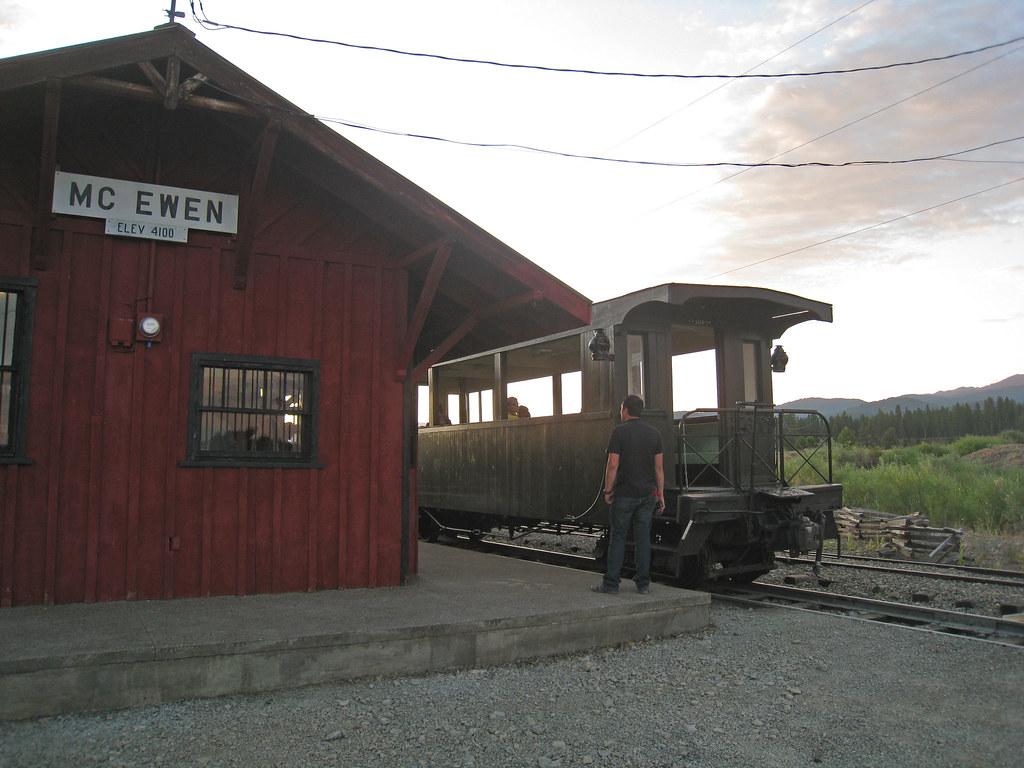
Normally one would ride this train during the day, but because there was a full moon and the Perseid Meteor Showers were expected, this Moonlight Express was scheduled.  Just at that point in time when the next moment I couldn't see, the moment just before that, I saw a deer.  This was the extent of our wildlife spotting, other than birds and chipmunks. After twilight fell I spent most of my time with my head back looking at the sky above. Of course that bright lamp of the full moon didn't help any for spotting shooting stars, but I did see one, on our trip back to McEwan Station.  The 7 mile trip was extended in time thanks to changing of the engine from front to back, so it would be front again after Sumpter Station.  Also, we had cake.  More photos and details here.

This was a very full day.

Monday, September 12, 2011

Eastern Oregon Trip: Museums

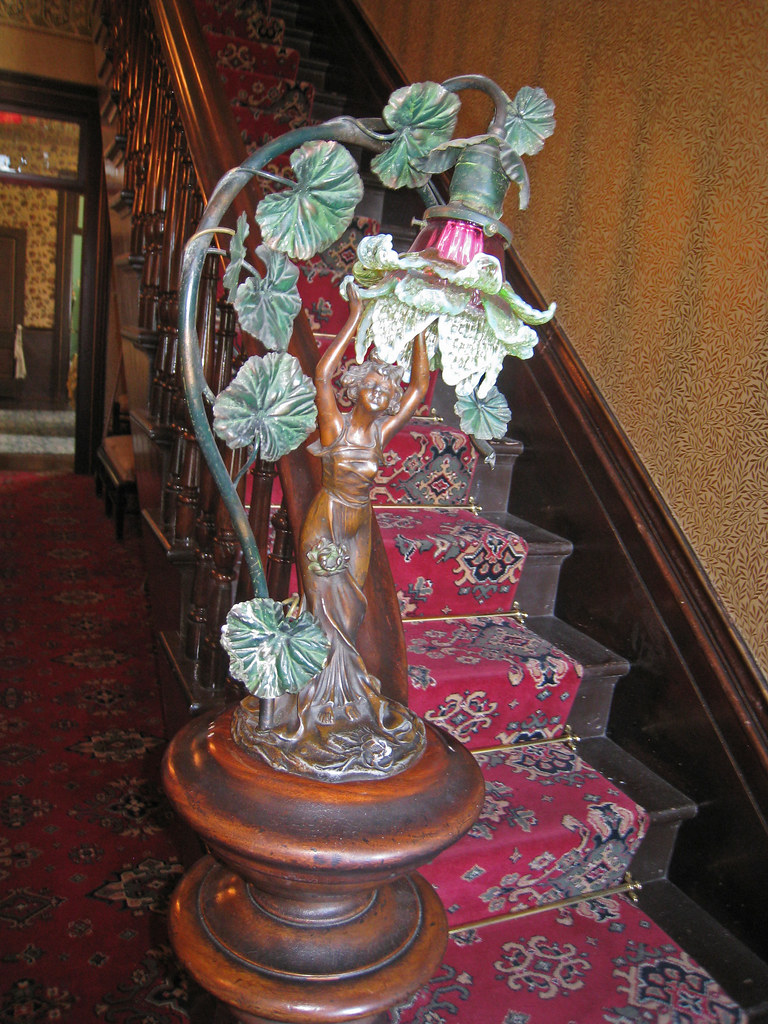
lamp
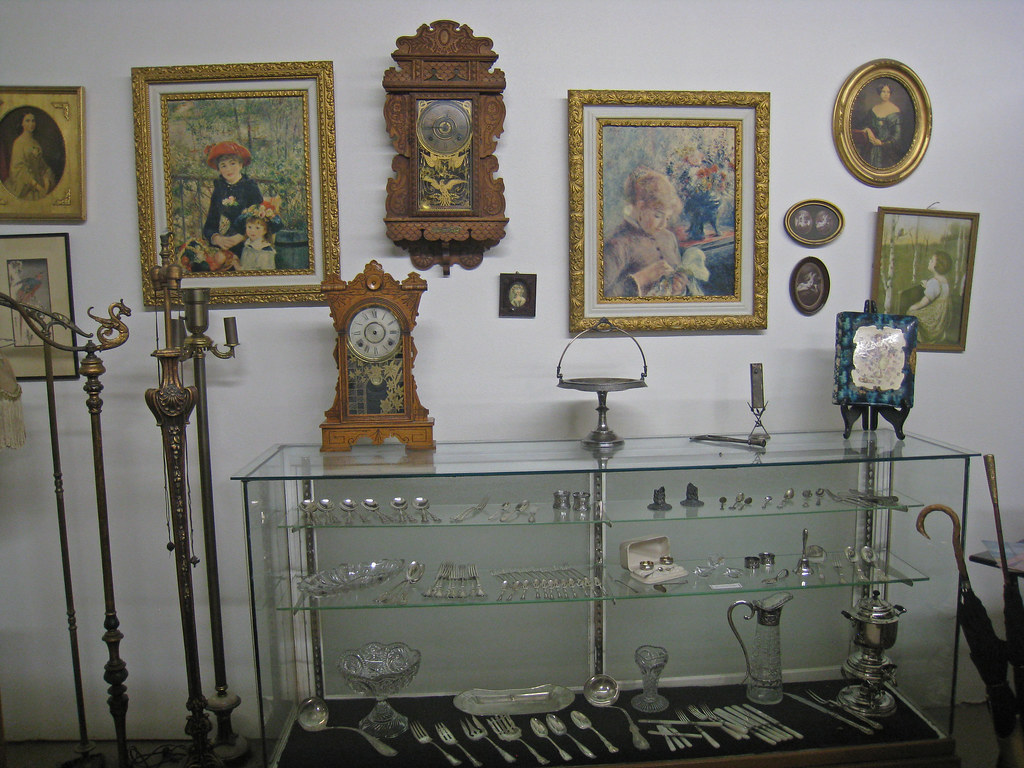
First view on entering the Adler Museum
We managed to pack two or three days into one. On our one full day away from home, we managed to see two museums, travel the Elkhorn Scenic Byway, which included several "ghost towns" and a state heritage sight, the Oregon Trail Interpretive Center, and a moonlight ride on an historic train.

After our leisurely room service breakfast, we were ready to do some of that walking around and about that tourists do, so first we went to the Adler House Museum. We happened to arrive just as the museum guide was starting a tour.

Leo Adler lived his entire life in this house, was a major philanthropist in Baker City, never married, and left his fortune to Baker County, including his house. Once he lived alone in the house he closed up the entire upstairs, closed up the front rooms, and only lived in two rooms in the rear of the house.  The unused rooms became unheated storage rooms.  In some ways this helped preserve household pieces, as they went unused, but weather extremes probably didn't help, and the rooms were never cleaned.  Leo was a generous person, and if someone said they liked something, he was apt to give it to them...like the unique lamp at the bottom of the stairs.  Leo had given it away to a friend, but museum curators were able to ask for, and get it back.  The butler's pantry did not have a full set of dishes because Leo gave many of those away too.

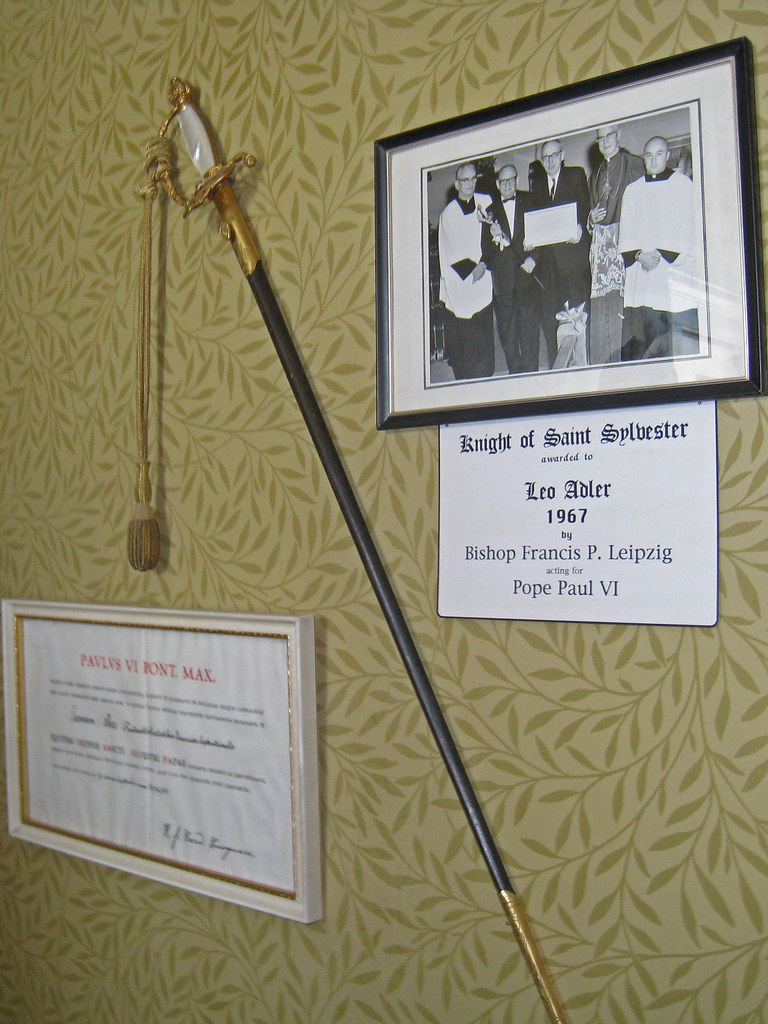
foil award from the Pope
Leo receives award for good deeds from the Pope
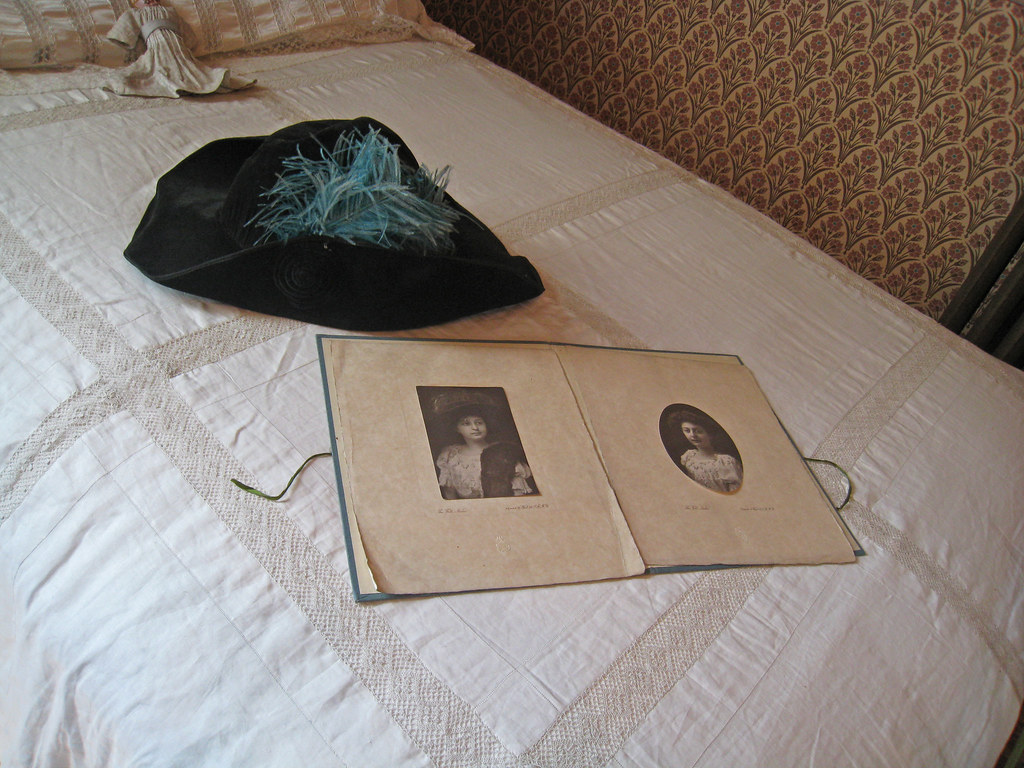
As we proceeded on the tour, I found myself wondering about those parts left unsaid.  Why did Leo and his sister and his brother never marry?  Was it because they were Jewish and perhaps there weren't many Jewish people in Oregon?  Did any of them have lovers?  Our guide showed us a "Chap Book".  I didn't get it right away, as I immediately thought of the usual usage of the term.  She told us young ladies of the day would keep a book like this to keep track of their dates and whether they liked them.  Oooohhh! Chap book.  They called them "chaps" in the day.  It was the size of a yearly diary, and with room for about 5 chaps per page, there was room for a lot of chaps.  It looked as though Elizabeth had many entries, a good twenty pages, though it nowhere near filled the book.  All her entries listed the eye color...blue eyes...brown eyes...but as far as I could see as the guide riffed through the book, no opinions on how she liked the boys.  Poor Elizabeth died at the age of 33 of the flu.  Before that she taught kindergarten in the home.  Were all these chaps unworthy, or was Elizabeth just not interested in that?  Leo too?  Even with prejudice, he would have been a fine catch, but it seems he was uninterested. 

sister Elizabeth
for more photos from the Adler House Museum, go here
Since we happened upon the tour, we took a little longer here than we intended.  Next, we went to the Baker Heritage Museum.  Like the Tillamook Museum, which I am fond of visiting when at the coast, there was an interesting mix of natural history and people history. Whenever I visit these exhibits, it reignites my interest in rocks and fossils.  Among the many collections I had as a tween was a rock and fossil collection.  I keep meaning to ask my mom what happened to that.  I doubt she still has it.

After I got my camera out in readiness, and as we showed our tickets we'd got at the first museum (it cost less to visit both), my sweetie pointed out the sign that said no photography was allowed.  The clerk told us photos were okay, just no flash was allowed.  Good thing, because there was too much to see, and photos help me reflect on and remember things.

Crystal Palace
The Crystal Palace
I noticed that when you visit small museums like this, the exhibits depicting life back when look very similar...especially the schoolrooms. However, this museum also had rooms that depicted very specific pieces of Baker County history, such as the shop that Leo Adler's father owned, The Crystal Palace.

What might make these little County museums unique are these specific histories.  In Tillamook, there's an entire wall of portrait photos of founding citizens (see Elbridge Trask, immortalized by Don Berry in Trask).  Here, there was a particular focus on mining and logging history, as well as these scenes featuring the histories of specific citizens.  And I wonder, do all these museums have some stuffed animals?  I remind myself these animals would long be dead already anyway.

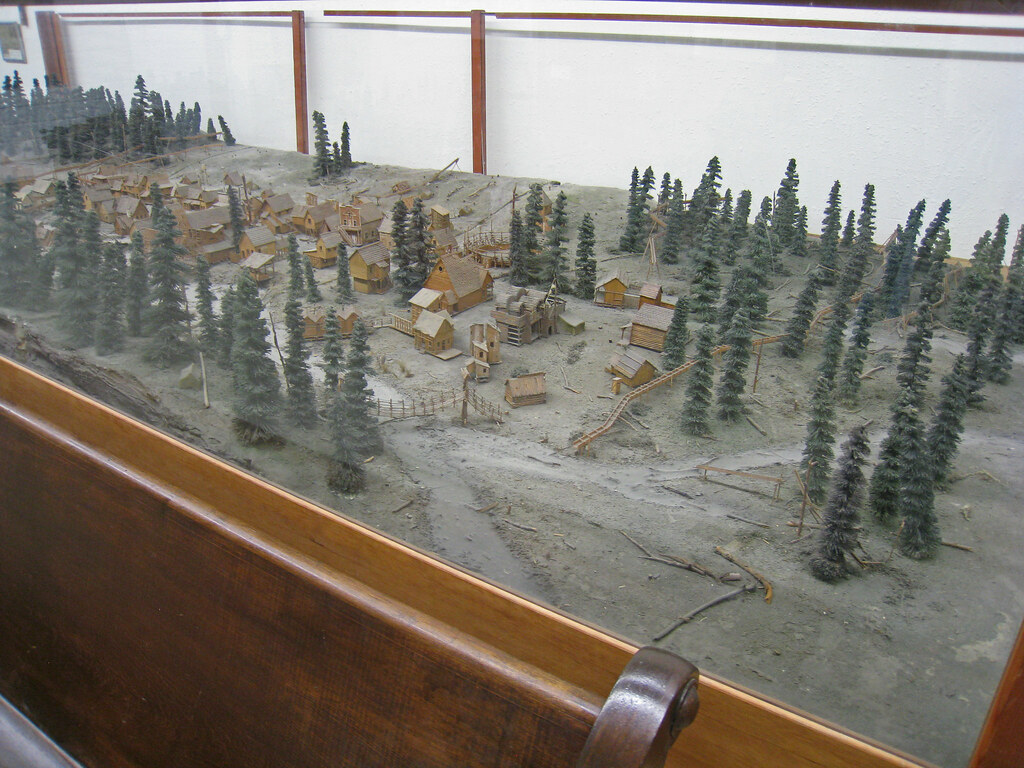
Coming next, our scenic drive. I leave you with the photo of the model for the film set of Paint Your Wagon.
film set model for Paint Your Wagon
For more photos of the Baker Heritage Museum collections, go here.

Monday, August 29, 2011

Eastern Oregon Trip: Geiser Grand Hotel

Photo courtesy of Baker County Library
We were glad to get to Baker City.  We stayed at the Geiser Grand Hotel, shown here when it was the Hotel Warshauer.  


Whenever I visit a new place I like to check out the library.  We were too busy to do so during this mini-vacation, but I did visit the Baker County Library website.  They have a great database of historic photos.  In addition to the photos, there are accompanying historic articles.  This photo, for instance, has an 1898 review of the hotel. "On entering we find that the promise given of elegance in furnishings does not disappoint." It still doesn't.


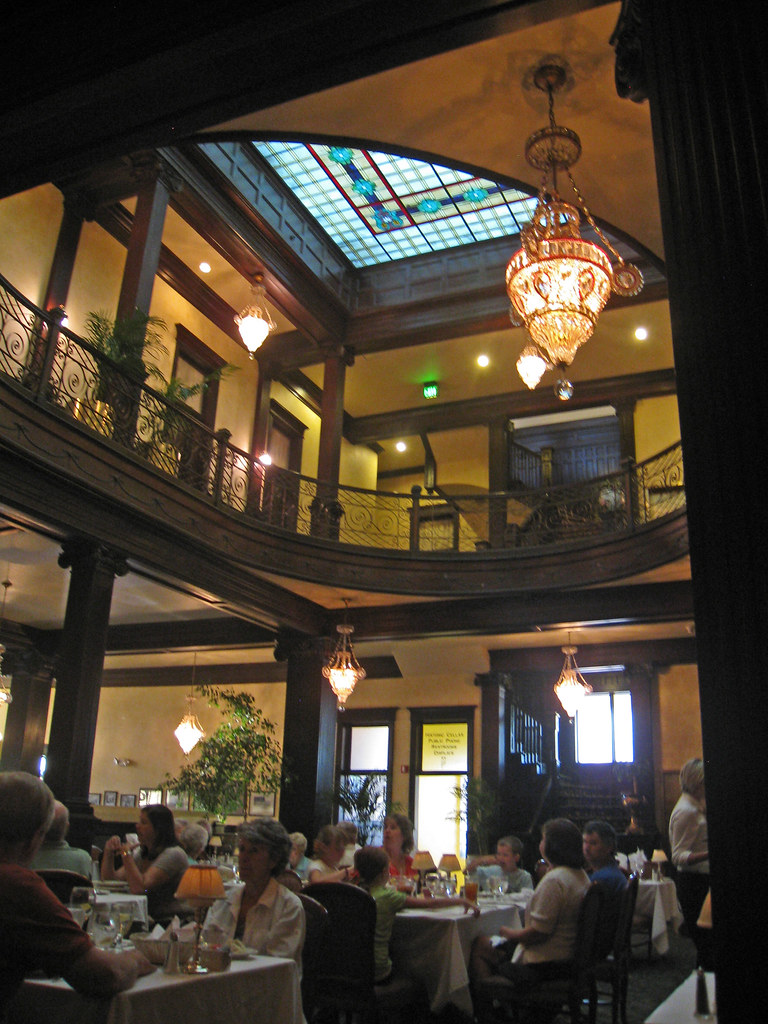
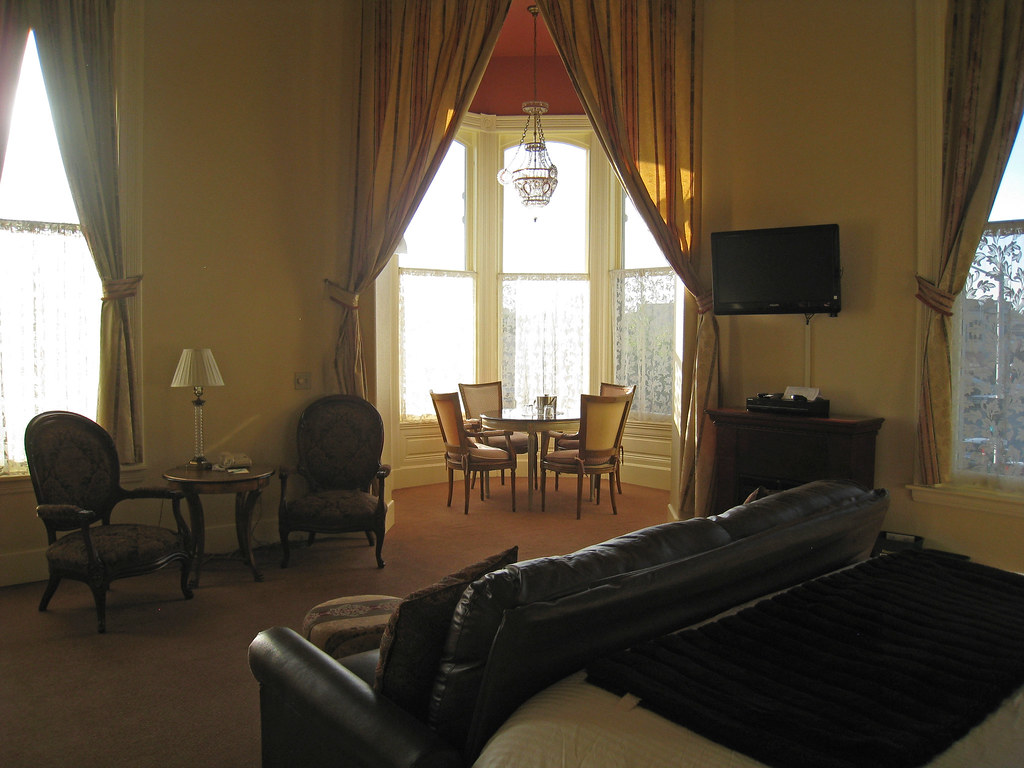
It was dinner time when we arrived, and we got a glimpse of the dining room.  Soon we would return, me for the usual vegetarian option of pasta, but in this case with locally harvested wild mushrooms, and my sweetie for steak.  But first, our room.  At first I had reserved one of the cheaper rooms without some kind of view.  Even the cheaper rooms promised to be better than your usual chain hotel.  However, my sweetie had me call the hotel and upgrade to a cupola suite.  I had to reveal my ignorance and ask just how you say that.  It's an Italian term, so you say coop-oh-la.  We were on the second floor in that round corner.

Geiser Grill dining roomour room We stayed there two nights...and each morning we ordered room service and sat at that table with the view all around us.  Room service is so fun...everybody should have a chance to experience that at least once in their life.  Another nice thing...this hotel has a noon checkout time.  Even though we didn't stay that long, it was so nice not to have that pressure to be packed up and out by 10 or 11 am, and still have time to have breakfast brought to us.

 Our view included the US Bank across the street, which housed the largest Oregon nugget still extant.  Sadly, we arrived too late to give that a visit.  Banks still stay closed on the weekend in Baker town.

More photos here, including a closer shot of that beautiful skylight.


Eastern Oregon Trip: Pendleton

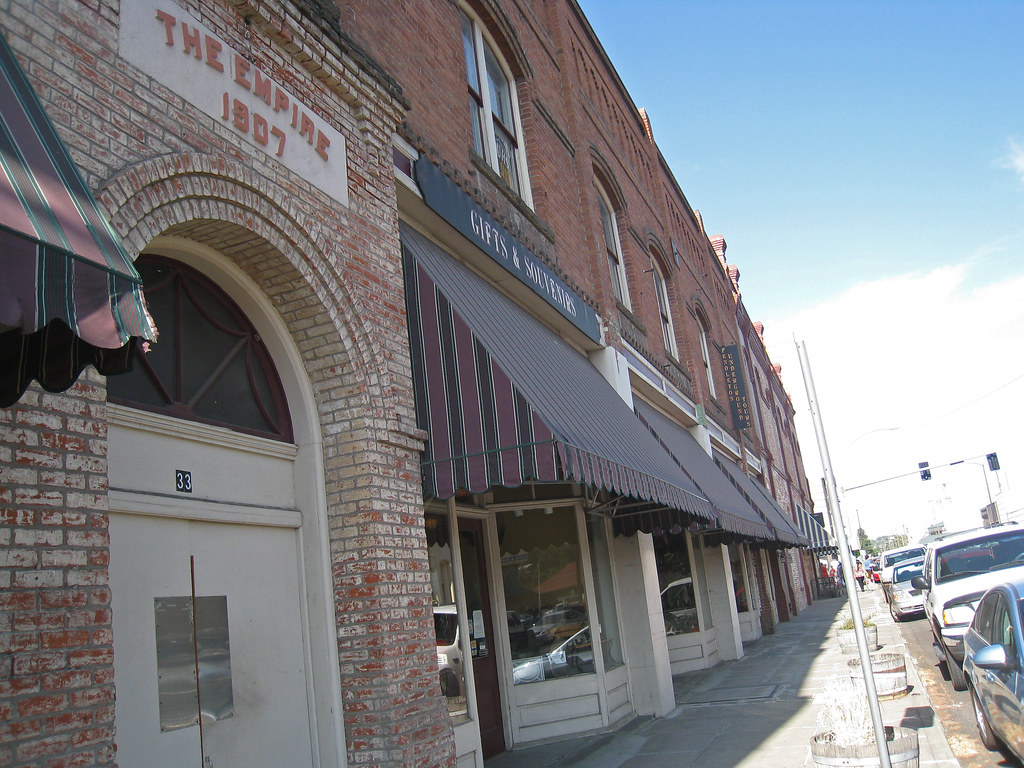
The Empire Meat CompanyI packed quite a lot of plans into this little weekend trip. (Here's a map.) I didn't expect we could do everything, but I was prepared with possibilities depending on our mood. Our stop in Pendleton depended on how our drive along I-84 went, and whether we got a timely start in the morning.  Fortunately, the last tour of the day of Pendleton's Underground happens at 2:30 pm, so we didn't have to make it a very early morning start.  After about 4 hours of driving, it was a good time to make a stop, anyway.  We got there with just enough time to grab some lunch...simple sandwiches across the street...and wait a few minutes for the tour.

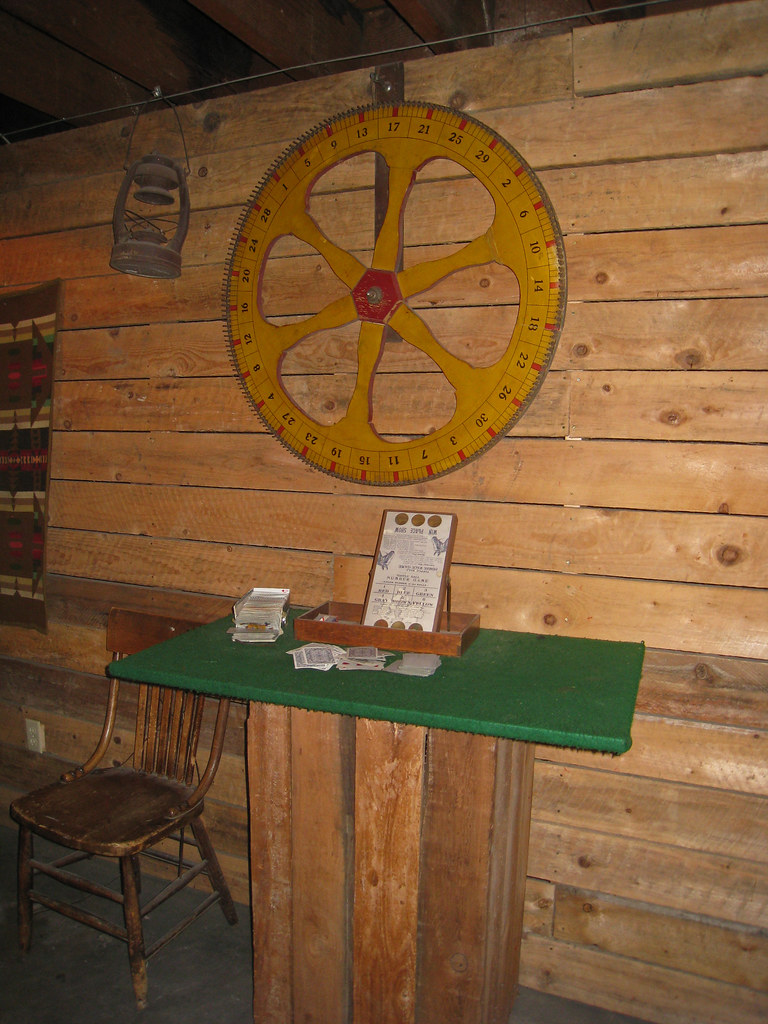
Wheel of chanceOur first stop was a western barroom underground. Oregon had experienced a gold rush later than the California Rush.  Our guide told us how bartenders would measure gold dust in payment for drinks, but as they did so, they would spill some grains along the bar.  After payment and poured drink, they would swipe it onto the floor with a cloth, and near the end of their shift, would tromp around in the mud, come back behind the bar, then pick up the gold dust off the floor with the mud on their boots.  Hmmm, sounds like a good story, but true?  Our guide said that's how bartenders got into the habit of wiping down the bar even when not needed.  Now that definitely sounds made up, because I thought it was due to health codes.  All in good fun.  In the same vein, the Chinese laborers would sweep up the barroom floor at the end of the night, and they would get all kinds of gold dust out of their sweepings.

In the same room he pointed out a simple wheel with numbers and pegs, telling us it was donated by Pendleton Woolen Mills. Back in the day, he said, the company would give sellers the opportunity to spin for the price of their wool.

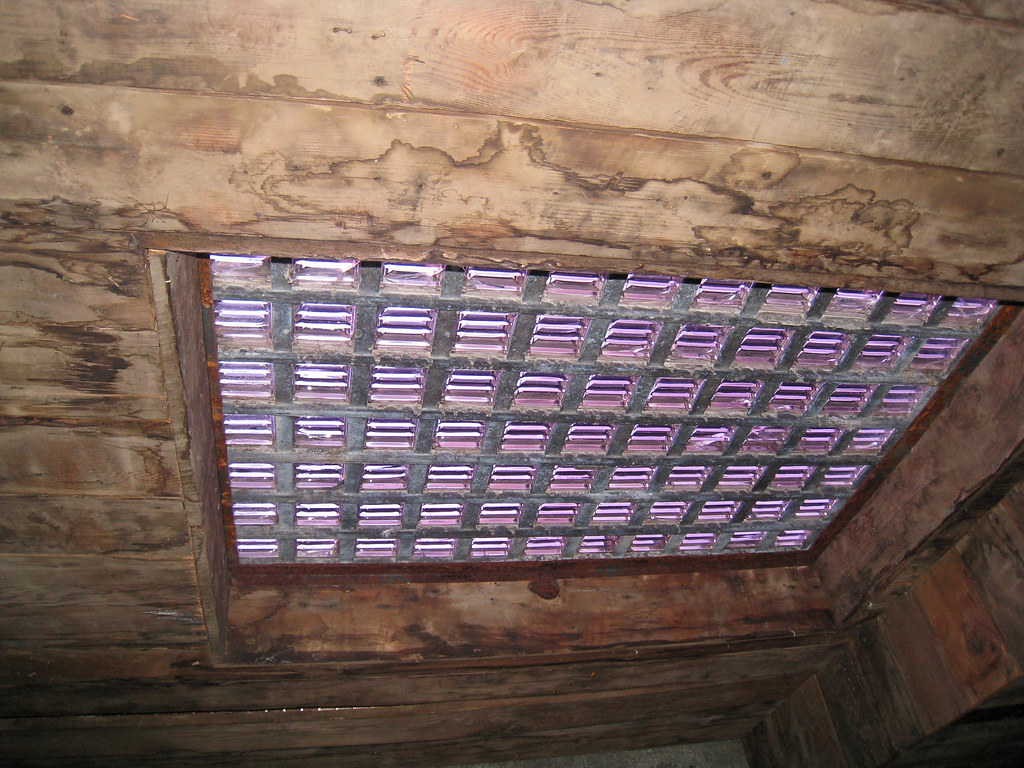
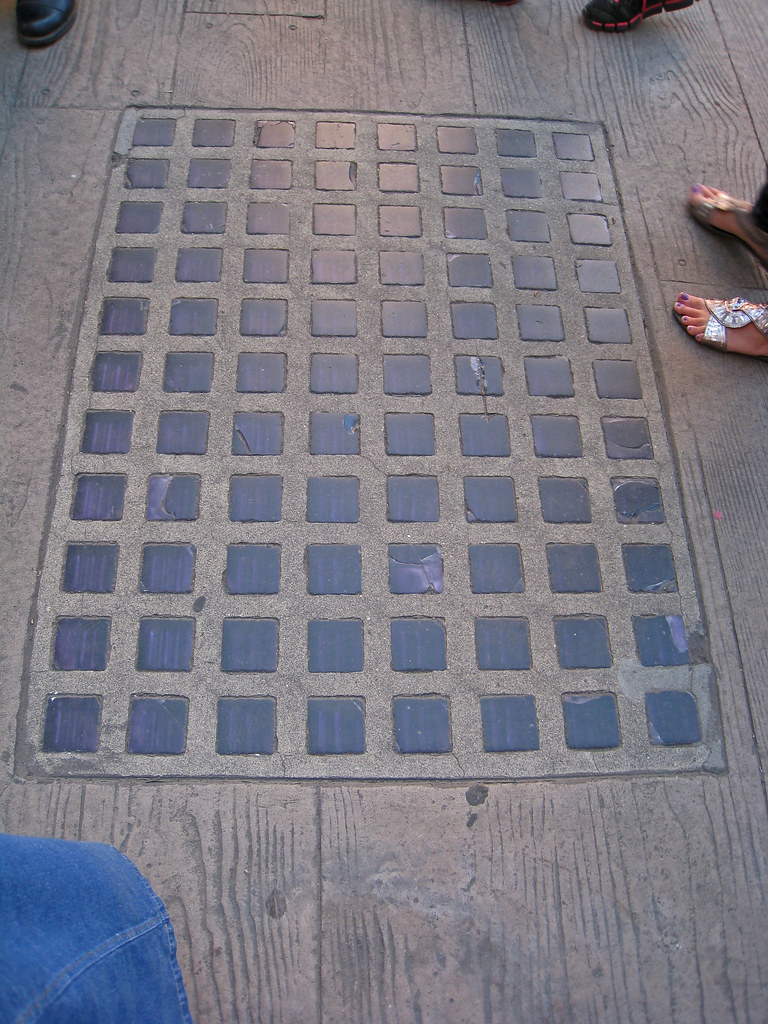
prism lights from belowPrism glass in sidewalkWhenever you're in a Western town or city and see those purple glass squares in a sidewalk, that means there is, or was, tunnels underground there. It's actually magnesium glass prisms.  The prisms start out clear, but the sun turns them purple.  They're designed to focus and amplify the light in the tunnels.  The tunnels are designed to provide one stop for delivery, with individual deliveries to businesses branching out underground, rather than on the busy street.  Nothing nefarious about the original intention, despite the legends of Shanghai Tunnels, opium dens, and speakeasies (though it seems these often turned into those).  The panels are really beautiful from underneath (right photo).  Unfortunately, an inept business destroyed all but two full panels when it rebuilt the streets and sidewalks of Pendleton. They were supposed to put the panels back in the sidewalks when they created the boardwalk style cement, but instead ground up the glass and recycled it.  I want to ask, what idiot thought those things weren't worth something?!  Or maybe they weren't idiots, and sold the prism panels while saying they accidentally destroyed them?

Also on this tour we saw Hop Sing's Laundry, a recreation of an early Ice Cream shop, an opium den, quarters for Chinese men, along with their Chinese jail, a big stakes poker room, a speakeasy, along with the requisite bullet holes in the tin ceiling, a butcher's shop, along with one of the earliest ice-makers, and a brothel, though the brothel tour was above ground.  In reality, the ice cream shop and the butcher shop were above ground, while the production of the foods were below ground, but hey, it's a museum of sorts.

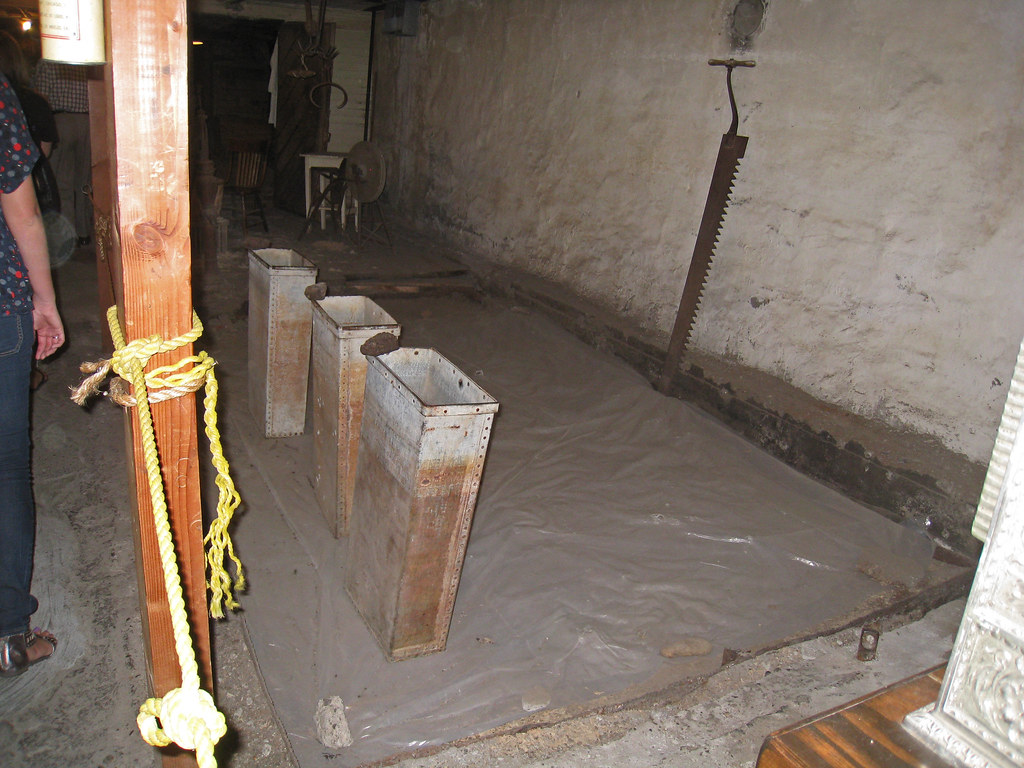
pit with brine waterIn some cases there was water in the tunnels.  Sometimes this was cause for a business to set up shop, like the ice cream makers and the butchers.  The butchers dug a pit in their tunnel, filled it with brine water they cooled with ammonia compression (who knew this was used for early refrigeration?), and fresh water was placed in tall metal containers.  They then sold the ice.
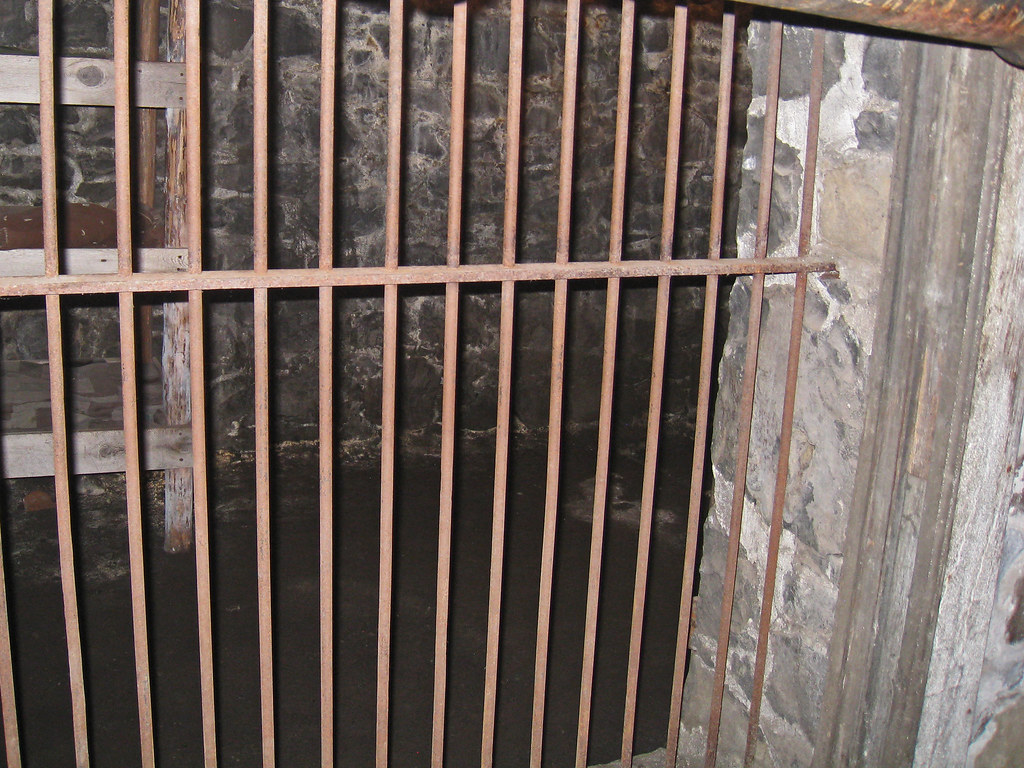
Chinese jail

Our guide told us he was sad to learn of this when he took this job, that there were sundown laws in Oregon.  No person of color could be on the city's streets after sundown.  This was why the Chinese men (only Chinese men were allowed to emigrate to the US, not women) lived in the tunnels.  Their "Chinese jails" were for each other...to keep someone from going above to get some air.  If he did, he could be shot by the whites, and the shooter would not be charged.

As I search around, I find this was an "unwritten law." While Oregon was not a slave state, it was indeed written into law that Blacks could not settle here (exclusion laws), and these "sundown laws" seem to be an extension of that racist institutionalization.  (Let me just say, if I haven't already, that an MCL card holder can access all of the Oregonian's archives, as well as JSTOR, where one can access many journals, images, letters, and other primary sources.  Included in JSTOR, Oregon Historical Quarterly.)

According to our guide, up until 1953, there were 18 brothels and 32 bars in Pendleton.  That all ended when a new minister came to town, didn't like the sin of the city, and observed the brothels to take names and force the city to close all the brothels down.  Gotta love morality by coercion.  There are still many upper stories of buildings, he pointed out, that are closed up, sealed since the day the prostitutes were sent out of town.  The one we toured had only been unsealed in recent years, revealing many belongings that were never retrieved.

One madame stuck around, sneaking back into town.  We learned that unlike other brothel managers, she treated her girls well: she covered all their expenses; paid them 50/50; and taught them life skills so they could move on from the business, even get married. Madame Stella would tour the town with a wagon load of groceries for the down and out, and have a visiting minister give sermons in her brothel so her employees could also convene with God because, of course, they weren't allowed in churches. Her funeral, our guide said, was the second-most-attended in Pendleton's history, after the sheriff who was killed in the line of duty.

The rest of the photos, and more of the story, can be found here.  The whole tour took an hour and a half.

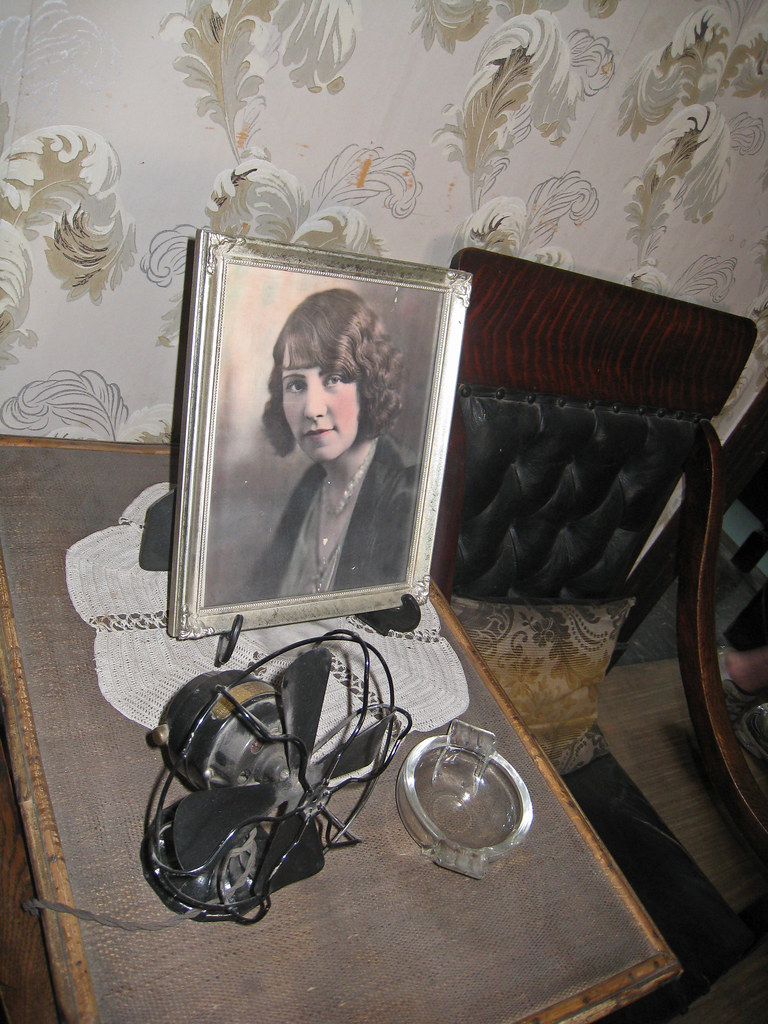
Madame Stella
Madame Stella Darby

Monday, November 29, 2010

Mad Lib Myth Creations

My first thought on hearing about the attempted bombing of Portland's living room was 'I wonder how much of this was the boy's idea, and how much the FBI's idea?  My next, he must be mentally ill.  I first learned of this via the Mayor's blog post via his Facebook feed.  At least his headline made clear from the beginning that people were never actually under any real threat: The bomb was a fake but the suspect thought it was real.

My first concerns were that the facts of this situation might never be truly available to us, it would certainly be distorted in the media to fortify calls for greater security, it would fortify the continued erosion of civil rights, and it would be difficult for this young man to get a fair trial.  More concerns tumbled through my head, like, isn't it convenient that this great threat comes on the heels of several weeks of protest over the implementation of full body scans or full body pat-downs at airports?  No doubt it will be used to shut people up.  And oh yeah, wikileaks has published more embarrassing duplicitous stuff by government officials.  Could this be a wag the dog event?  While the world looks at the US Embassy cables and gets mad, will Americans be caught up in this home terrorist threat?

As the fallout news shakes out, I begin to realize this could have been a very calculated wag the dog event.  Five years ago, thanks to the persistent voices of activists on the street and in city hall, and a rational liberal mayor, Portland said no to the Joint Terrorism Task Force.  No, the city would no longer share its police officers with the FBI in a task force that pushed the limits of civil rights.  Now, the voices are rising for it. Could it be the FBI never forgave Portland for pulling out?  These two news stories are becoming one and the same.

My wish to know more about just what part the FBI played, and what part the young man played, was quickly fulfilled.  At least a couple of friends in my social networks shared the link to the original affidavit.  From this I learned that this seems to be a teenage misanthropic fantasy only allowed to come to apparent fruition through the encouragement of the FBI agents.  Young Mohamed Osman Mohamud allegedly had email contact with someone based in Pakistan that allegedly used coded words regarding his willingness "to prepare for violent jihad."  His attempt to contact a second "Unindicted Associate" failed.  After that, the FBI contacted him, pretending to be a third associate to numbers 1 and 2.  


The undercover FBI agents gave Mohamed several options.  Multiple choice.  I thought, would this boy even have gone this far without those choices made concrete?  Before this, he had vague notions of going to the Middle East, and going to Alaska to earn big money so he could go to the Middle East, but he was unable to do either.  Without the suggestions by the FBI, might someone have noticed he was emotionally disturbed, and got help for him?  What he needed then was compassion.  He certainly needed to be watched carefully, but he didn't need someone to give him a road map to dark fantasy fulfillment.


It seemed to me the agents rounded him into a corner (you can't join up overseas, you're on the no-fly list) and gave him a clear route out to his dark desires.  The affidavit makes this sound so reasonable, like they never led the young man to these choices, that he just stepped in this pile of shit of his own free will.  But I wonder, what kind of body indicators were they giving them as they asked?  What subtle hints in intonation?  Choice number 1 was praying 5 times a day, and number 4 to become "operational."  A young man has finally met his heroes (he thinks) and he wants to impress them, right? 

 
So then, the FBI agents lead him down a path.  They have a blueprint for action, and they tell him what they need to fill in the blanks.  It's like Mad Libs for terrorists.  OK, we need an action.  He comes back with a dramatic one, bomb the tree-lighting crowd in Portland.  Oh, that's good! Now, how do you want to do this?  More dark drama, the more dramatic the better...kill the women and children.  Video games, movies, rap, they all call for the dramatic.  He wants a bomb, a big bomb?  Well, then he needs to buy this stuff. They give him the money for the stuff.  (Only a portion of the supplies actually needed for a bomb.)  They give him the money for a hotel to hide out.  The FBI builds the "bomb."  The FBI provides the van, and the strategic plan.  More blanks for him to fill in: a map with several possibilities for the "bomb"-loaded van to park.  The FBI makes sure the parking spot is available.  He has to drive the van, but he doesn't have to get himself to a remote location.  The FBI can do that.  Final blank to fill in: he must make the phone call to trigger the "bomb".

So the news is that a bomb threat was foiled.  The FBI narrowly prevented a tragedy. "The bottom line of all this is that the FBI saved Portland from a potentially horrendous attack."  No...the bottom line of all this is that we are seeing myths created before our eyes.  There was never a real threat to the festive tree-lighting event in Portland. There was no real bomb threat to be foiled or narrowly prevented.  A young man who had adolescent fantasies of destruction was fed fantasy fulfillment, and given experts, money, and a clutter-free path to give it a form bigger than he'd probably ever imagined on his own.


I admit I thought to myself Why am I immediately suspicious?  This is what people refer to when they say someone like me hates America.  What can I say to them?  I say it is not new to the peace movement that agents will insinuate themselves into a group, look for weaknesses, and wedge the cracks open. They will incite members to plan violence where no motive toward violence existed before.  Because I want my country to live up to its professed ideals, I don't want government-sponsored agent provocateurs doing this kind of thing.  I say I would simply like to know the facts, if it is possible.  The peace movement's greatest weapons are transparency, honesty, and commitment to non-violence.  The weapons of secret agents are isolation of individuals, deceit, and incitements to violence.  I would just like this case to be transparent.  Let's hear those conversations between secret agents and the violent-jihad-bound young man, not just the picked bits chosen to fortify the affidavit and the fears of the masses.

Further reading supports my fears.  Salon shares that the crucial conversation, in which Mohamed chooses from five options, is missing, that there were technical difficulties.  Really? Scarily convenient.  We'll never know how unequivocal he was about it now, will we?  I learn also this Mad Lib for Wanna-Be Terrorists has happened before.  It looks like you could have quite a bit of reading, if you care, at this link to a Truthout story on that.  Indeed, my Portland pacifist friend reminds us that it's not even the first time in Portland that the FBI has cooked up some completely false allegations.

I am not trying to say this is entrapment according to the law; I have no idea.  I was surprised to find from the Salon article that the multiple choice options are to address that very concern, when to me it seems the very options put the ideas into an impressionable young man's head.  But what about the people who will say I am making excuses for terrorists?  I feel sorry for Mohamed Osman Mohamud. It may be he is a dangerous person.  If the cherry-picked statements regarding his wish to kill families and children are to be believed, he is a scary person.  I only hope he gets a fair trial, and I regret that it already appears his case exists to fulfill fears of terrorists and to encourage the loss of civil rights.

Wednesday, July 30, 2008

Weekend Treat

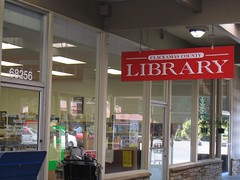
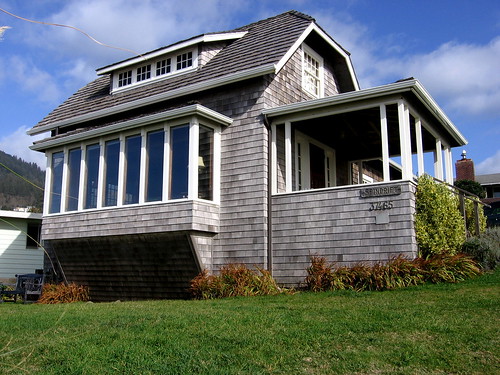
I had time to snap a quick photo of my new house color including trim before I left for work on Friday. It looks so sweet. After work I left directly on a weekend out of town hosted by a Buddhist friend and mentor. She gave me a ride, and grilled me on my life so far. She scared me with tales of cabin traditions such as playing games while only talking with fake accents. On the way we stopped for food for the weekend. Of course I had to snap a photo of the library next door.


nearest store Hoodland Library

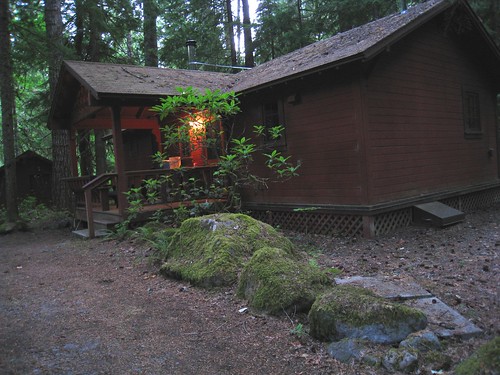
Her cabin is on National Forest land. She and her co-owners lease the land, and own the cabin. No new building is allowed, and the government agency wants buildings dismantled whenever possible. It's as close to camping you can get with enough of the comforts of modern living: plumbing; full-sized beds; and electricity. The owners were allowed to keep the outhouse because sometimes the water gets turned off. Some things sometimes missed, but not essential: internet access and cell phone connection.

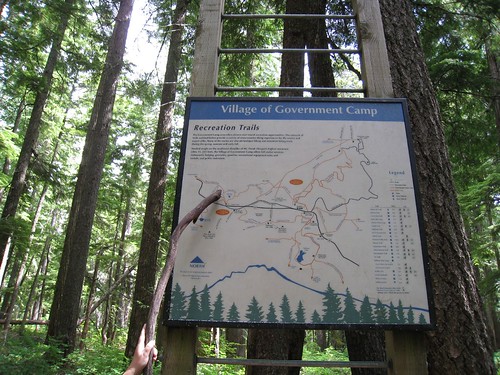
The first night there we played UNO and Clue, and drank Pina Coladas. I messed up the clues at Clue. The next day more folks arrived, and after breakfast and some puttering about, we went on an easy (for them) hike. I didn't plan to do the whole thing because I didn't want to hold the others back, but they didn't seem to mind waiting. A hike for me by definition includes weight training. I've noticed recently that when I walk with others I have to be careful of this. When I forget myself and try to keep up with others I can't get enough air. So I was going to ferry the car to the end of the hike.


we're starting here

I kept going though. When we stopped for lunch, we were more than halfway through. I'm not very hungry in the midst of a workout. Somebody else got most of my sandwich (but of course I made up for it later with snacks, as we all did).

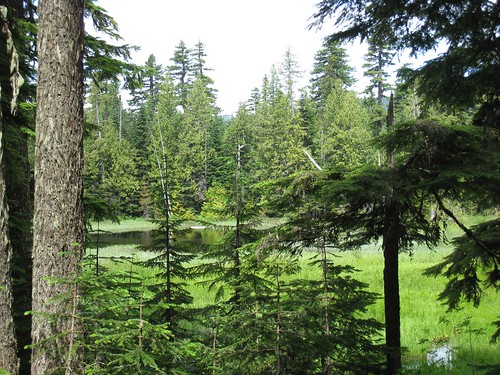
We passed by Enid Lake.

Enid Lake

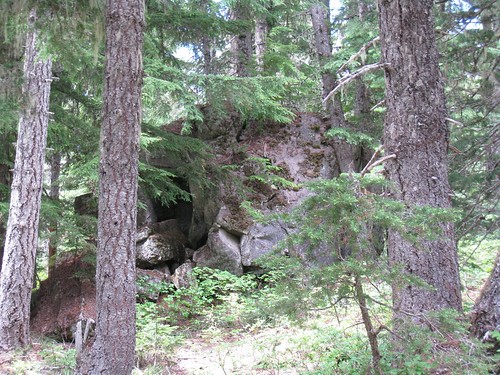
and this big boulder, about 15 feet high. J seemed quite sure it came from a volcanic explosion.

giant rock

After I got home, I saw this NOVA episode on a Northwest Megaflood. I'd wondered about that, if that had anything to do with the big rocks, but I had no clue about altitudes. Our mutual friend the scientist had told me about this flood that washed down the Columbia River basin. I researched the question, and must conclude J must be right. Enid Lake is 1102 meters high, while the flood at its height reached 170 m. (See page 5 here.) I found this cool blog on Pacific Northwest history while doing my research.

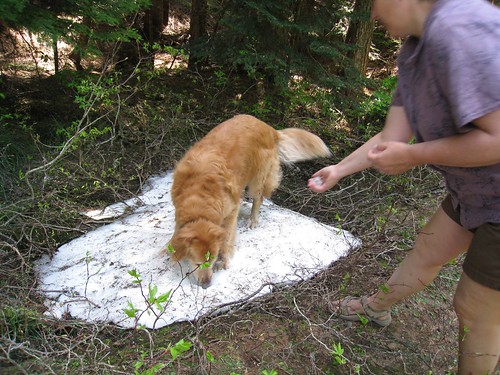
Mango the dog found snow, which made him very happy:
patch of snow

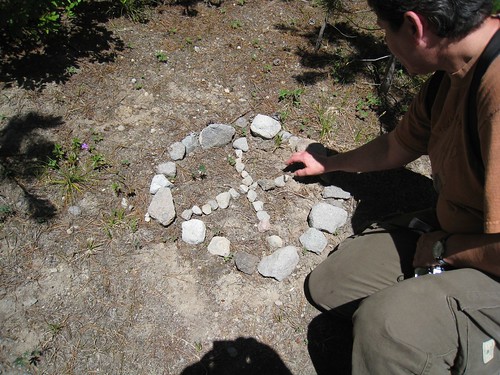
and S found a Medicine wheel which needed mending, so she fixed it.
medicine wheel


See the full slideshow and more narrative from the weekend right here.

Monday, November 05, 2007

Fall Colors

I found this neat slideshow via http://chezbez.blogspot.com. For more of my fall colors photos visit my flickr page.

Sunday, November 04, 2007

Neahkanie and Nehalem Bay

I really quite enjoyed our vacation along the coast last month, but something I missed was the leisure time to walk on the beach. By some dumb stroke of luck somebody cancelled and I won the drawing for two nights at the library cottage. During the three days/two nights there, I got the chance to walk on the beach four times. I've been fortunate to visit here about once a year since Steve and I started going.


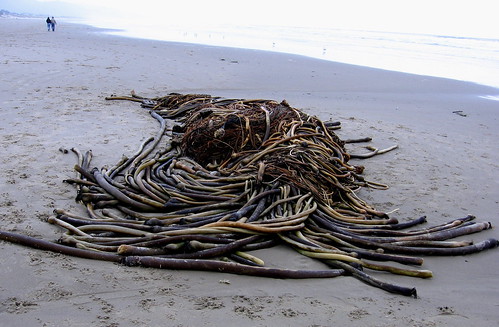
There's always something different about the beach. This time there was a giant tangle of seaweed. These things are about 30 feet long.

seaweed

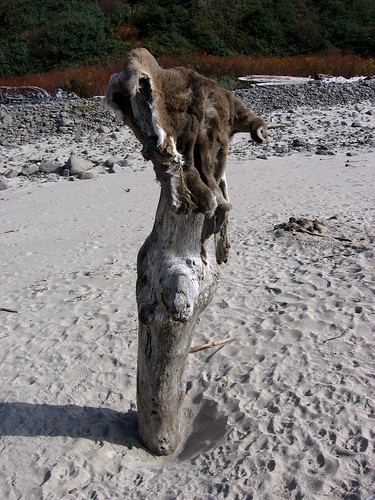
Somebody left an art installation on the beach:

hide arranged on driftwood

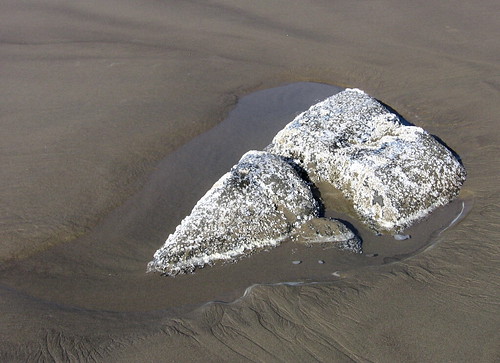
I like to visit these rocks during low tide. Once upon a time there were at least three, and this the tallest was 4 to 5 feet above the sand, the size of an easy chair. I'm not sure if people truck in sand to replace sand lost to the ocean, or if the ocean shifts sand back to the shore. During high water, the rocks would be submerged. I wonder if I will find them at all on my next visit.


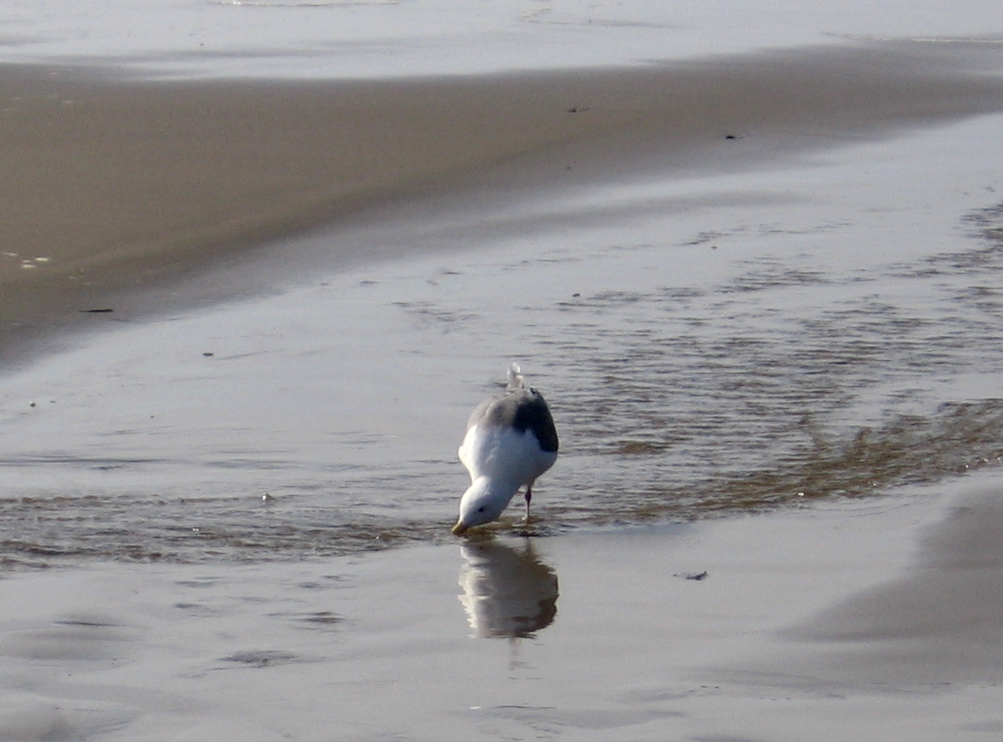
I also enjoy observing the gulls as they drink the fresh water from the creeks emptying into the ocean.


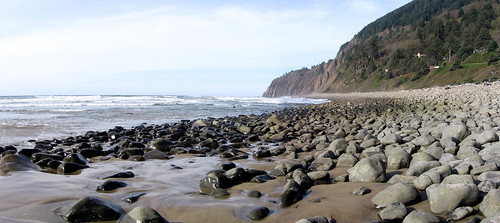
I was particularly drawn to the rocks. Perhaps I developed an affinity after the Shasta Caverns. I was climbing about on the rocks on the north end of Neahkanie beach when the low water tide turned around to seek high water. Whoops, almost got wet.
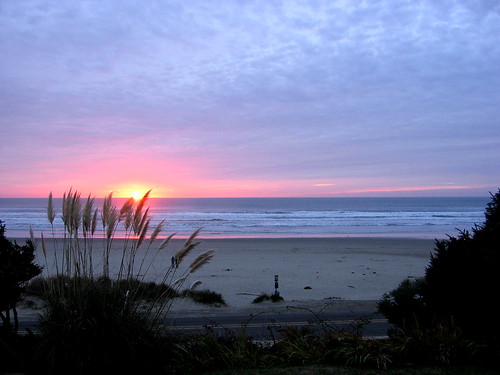
The sunsets were glorious.

setting sun Neahkanie beach

Steve had the neat idea to take photos of details of the cottage that he likes to remember.

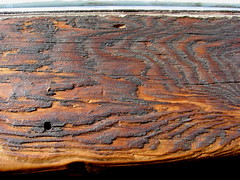
Steve's little things about the cottage old wood windowsill
I decided to steal his idea and take a few more of my own.

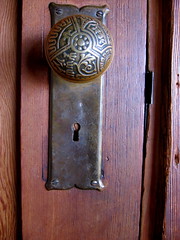
little things about the cottage little things about the cottage

On Thursday, our full day there, we visited the Cart'm recycling center

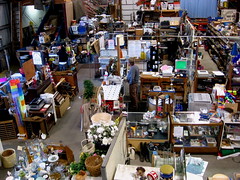
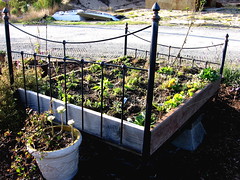
Cart'm recycling center thrift store garden bed

and the Nehalem Bay State Park, Steve's good idea.
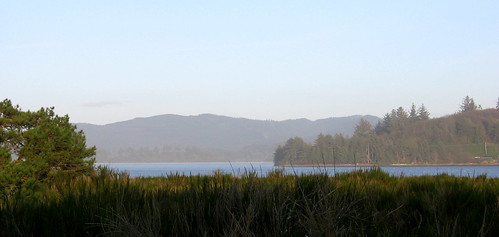
Nehalem Bay

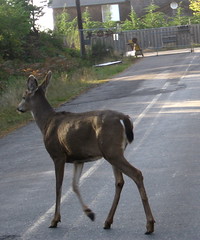
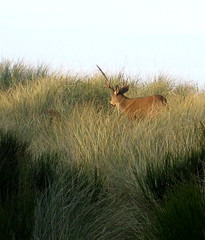
We saw a total of eight deer.

doe near cart'm stag in dunes

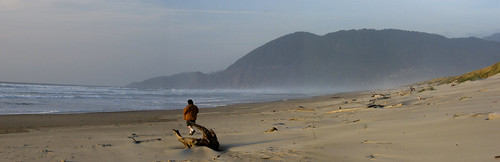
nehalam bay state park beach north view
For the slideshow of all the photos, go here. There are many more favorite things, and more visions from the beach and state park. Turn the titles on if you want to see more explanation, off if you just want to see the many photos.
neahkanie mountain rock beach