Showing posts with label non-fiction. Show all posts

Tuesday, November 06, 2012

Elections

I can't believe I'm doing this, writing about elections on election day.  I've avoided just about all election coverage I could.  No, I didn't watch any of the debates.  Why would I want to see someone I would like to do better, and another that just about makes me sick to watch, when I knew I was voting for not-that-guy?  (Though I was particularly proud of my book groupies who wanted to come to the October book group and also wanted to watch one of those debates, and someone shared that it would be on hulu, so they all came to the book group and learned how to find it on hulu.)

So no, I don't know what inspiring things Obama has been saying, things that I now would not entirely trust. I hold a little hope that if he does win, that is if the election isn't stolen from him, that he could bring about some more of the changes he promised last time, such as withdrawal of troops from Iraq, and bring about more substantial change to the changes he has made, such a more universal health care. (now I better finish before it is all decided before our polls close here in Oregon)
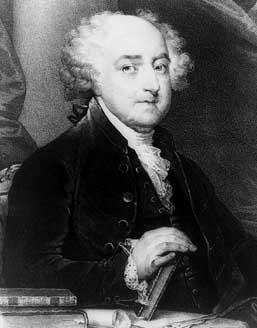
What I really came here to say is that I've been enjoying reading John Adams by David McCullough for our November book group during this election season.  While people I know have been grousing about our lack of true democracy in our nation on Facebook, I've been reading about the birth of our nation.

At home, [Adams] filled pages of his journal with observations on government and freedom, “notes for an oration at Braintree,” as he labeled them, though the oration appears never to have been delivered. Government is nothing more than the combined force of society, or the united power of the multitude, for the peace, order, safety, good and happiness of the people. . . . There is no king or queen bee distinguished from all others, by size or figure or beauty and variety of colors, in the human hive. No man has yet produced any revelation from heaven in his favor, any divine communication to govern his fellow men. Nature throws us all into the world equal and alike. . . . The preservation of liberty depends upon the intellectual and moral character of the people. As long as knowledge and virtue are diffused generally among the body of a nation, it is impossible they should be enslaved. . . . Ambition is one of the more ungovernable passions of the human heart. The love of power is insatiable and uncontrollable. . . . There is danger from all men. The only maxim of a free government ought to be to trust no man living with power to endanger the public liberty.   Part I, Chapter One, Section II, p. 55
 One of those friends asked why someone would want to become president, as they clearly age 20 years while in office, and yet, they turn around and do it again.  Talk ensued of attraction to power, of narcissism, etc.  Our manner of elections encourage this at almost all levels.  If a person enters the political arena from ideals, and a pretty good moral compass, it is difficult to retain authenticity and honor.  Good people often don't wish to taint their own moral ground by getting involved in politics. They effect change close to home, in non-governmental ways.

I got involved in the peace efforts thinking I acted not politically, but from the heart.  I felt a visceral response to someone calling it political action, but I had to realize, that is what taking it to the streets is.  It is political to vote. It is political to withhold a vote.  It is political to speak up about how the system stinks.  It is political to organize a permitted rally and march.  As soon as I have an intent to change someone's mind about how this society works together, it is political, no matter that it comes from the deepest faith in love from my heart.  In this we are all thrust "into the world equal and alike."

As I read McCullough's book, I am admiring John Adams because he did not get into politics for personal power. It is clear he got involved due to love of his homeland.  He did things he did not want to do, such as act as a Minister in Europe, first in France, then to the Dutch, then in Britain.  He was seven years away from his beloved wife, who finally joined him after her first dreaded Atlantic voyage. He did this to his own financial detriment, and often wasn't even thanked by the congress. His political action was from his heart.

I would like to have some choice. I would like to feel I live in a true democracy. We need to find a more effective way for our nation to reflect the "united power of the multitude." We need:
  1. Election day to be a national holiday. (duh)
  2. We need to consider individual voters innocent of fraud until proven guilty...so all those laws that prevent individuals from voting need to be rescinded, such as having to prove themselves with ID.
  3. We need to have equal access.  Thus there has to be enough places and equipment so people don't have to wait to vote, or have to prove they have the right to vote, or have to lose a job to take the time to vote.  People need to be able to register the same day they wish to vote.
  4. We need to prevent election tampering, and that means getting corporations with agendas out of the business.  It is currently much easier for one person to affect wide ranges of votes with a single machine, than it is for one voter to do something fraudulent.
  5. We need to have a choice, and by that I mean we need to be able to vote for more than two nominally polarized candidates. We need preferential or ranked choice voting, or instant run-off voting.  Or something as democratic.  So I could vote for my true choice, as well as vote for not-that-guy. I could vote for the woman who is not paid for by the corporations.
Have I forgotten something?  Please add to my list.

Thursday, October 18, 2012

How to Live: Or A Life of Montaigne...

How to Live: Or A Life of Montaigne in One Question and Twenty Attempts at an Answer My book group read How to Live: Or A Life of Montaigne in One Question and Twenty Attempts at an Answer in September.  That's a mouthful.  These convoluted titles seem to be a trend lately.  Don't let that stop you from checking out this book. Almost all of the book groupees loved this book, though some were hesitant to begin.
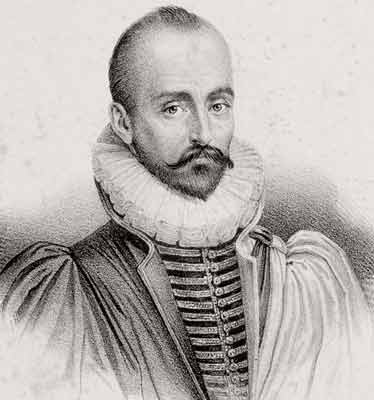
This was one of my subversive picks.  Since I am the one who tallies the votes for our year's picks, I get to target my votes.  I made sure this one made the cut.  I needed to have a reason to read this book, and sometimes, no matter how much I want to read a book, I won't get around to it unless duty calls...so I made sure duty called. Several of my co-conspirators in book group facilitation do the same thing.  And as I suspected, I loved it.  And I fell in love with Montaigne.  As I said in the book group, I am so jealous that I never get to meet Montaigne, that I can't travel back to his time.

This book also made me feel like I could begin blogging again.  How to live?  That is indeed the question of my life, right next to 'What does this mean, to be alive?'  Along with getting a taste of Montaigne and a peek at his life, we get the view of Montaigne down through history.  Individuals brought him forward into their age and found their own reflections in his essays.  There are the Stoics and the Romantics...everybody finds something in Montaigne. Pascal and Descartes hated him (as he anticipated and decimated their arguments).  Regarding thes two, some of what Sarah Bakewell says is this:

Descartes cannot truly exchange a glance with an animal. Montaigne can, and does. In one famous passage, he mused: “When I play with my cat, who knows if I am not a pastime to her more than she is to me?” And he added in another version of the text: “We entertain each other with reciprocal monkey tricks. If I have my time to begin or to refuse, so has she hers.” He borrows his cat’s point of view in relation to him just as readily as he occupies his own in relation to her.
This comfortable acceptance of life as it is, and of one’s own self as it is, drove Pascal to a greater fury than Pyrrhonian Skepticism itself. The two go together. Montaigne places everything in doubt, but then he deliberately reaffirms everything that is familiar, uncertain, and ordinary—for that is all we have. His Skepticism makes him celebrate imperfection: the very thing Pascal, as much as Descartes, wanted to escape but never could.

Montaigne was the first to write the essay, and now, in this world of personal blogs, we live his legacy.  He wrote like we do, in stream of consciousness, about anything he encountered and pondered in his life.  Unlike blogging, where we may never revisit our blatherings, Montaigne goes back, and inserts new thoughts into old essays, often, according to Bakewell, not bothering to make his difference in age make sense.  Some editions of Montaigne indicate different timelines with A, B, and C.  Of course, we do link back to our past lives in essays.

Montaigne is a man of my own heart.  He resolved to pay attention, and did so in his essays.  Of all the vows I have made through the years, this is my top pick.  I trust in paying attention.  All the while I was not blogging, at least I was paying attention.  Whatever I noticed may have slipped through the sieve of my brain...sometimes if writing is anything it is to catch the sand of thoughts before the grains slip through the holes...but I was waiting with my attention for something to give me a reason for my frozen state.

I hoped this book could inspire people to read Montaigne.  It certainly did me, and I hope to read Montaigne and find my reflection in him, as so many others have before me.  I've tried a slow read of hefty non-fiction tomes before.  I fizzled out with A People's History.  So, I only say, "I hope."  I only know my way in to blogging feels kinda broken, and perhaps I need a mentor of sorts, like Montaigne.  It won't just be a reading of a text, but it will be the query, "How to live?"  As I've mentioned, I don't seem to be able to stick to a plan unless I have an externally imposed deadline, so I'm making no plan.  Maybe I'll visit Montaigne once a week and reflect...maybe once a month, but I do know I look forward to meeting his mind.


Wednesday, December 30, 2009

Books: Fat Karma

I have to put together a class proposal for my seminary program at the Zen Center. This proposal won't necessarily be implemented, but its purpose is for us to show our understanding of issues we learned out in the leadership and ethics class series. Since I've been thinking about this fat karma stuff, I decided to check out this first book especially because Chozen Bays is a local teacher and because I'm thinking about food and fat in my Fat Karma series. Then the second book passed over my work desk, and I got excited by that. About the time I started looking at the first, I realized this could make a really neat class series, so I hurried up, skimmed the second, and finally read the third book, which excites me most of all.

I suspect others will find this an exciting class proposal as well, and it could very well turn into a class actually offered at the Zen Center. This challenges me, and scares me at the same time. This hot button topic will be sure to bring out advice, fear, and judgment from many participants...actually great for the presentation for seminary, as I'm supposed to address problematic situations we foresee could happen in our proposed class. Not so great for my comfort-level. Not only would I be challenging the cultural paradigm in a Zen setting, I would be questioning the wisdom of a beloved Zen teacher on a particular aspect of this topic, as you'll see below. The first is difficult enough, the second makes me fear being a Bad Zen Student. I worry that I would not have the grace to balance these delicate issues.

As far as designing that class, with some more studying of these books, I think the outline will fall into place. Plus, I need a name. I'm vacillating between "Food Karma and Mindful Eating" or "Body Karma and Mindful Eating" or "Food and Body Karma and Mindful Eating." I would appreciate any thoughts my readers have on that. The primary text would be "Mindful Eating" but I would bring much material from the other two books into play, as well as other fat activist resources, and my thoughts from the ongoing Fat Karma series.


Eat What You Love, Love What You Eat: How to Break Your Eat-repent-repeat Cycle Eat What You Love, Love What You Eat: How to Break Your Eat-Repent-Repeat Cycle by Michelle May

My rating: 4 of 5 stars
I didn't fully read, but skimmed this book. I saw enough to know I like what the author has to say. I found it problematic that the author did not appear to mention "Health at Every Size." Perhaps this is because she seems somewhat still concerned about weight, and using her method as a way to encourage weight loss.

She presents her method as self-discovered, yet all her messages were just like those as presented in "Health at Every Size." (I read that one just after skimming this.)

I liked the way she identified 3 ways people eat: instinctive eaters; overeaters; and restrictive eaters. The book is about finding that instinctive way of eating again, and putting away the worse than useless dieting cycle of eat-repent-repeat. She talks about taking charge, rather than control, and that no food is forbidden. This is all good, but it is just the same as found in "Health at Every Size," and without what I felt was a key ingredient. The author of HAES makes every effort to warn against turning food mindfulness into another way to restrict, and to diet. I didn't see that so much here.

Mindful Eating: A Guide to Rediscovering a Healthy and Joyful Relationship with FoodMindful Eating: A Guide to Rediscovering a Healthy and Joyful Relationship with Food by Jan Chozen Bays

My rating: 3 of 5 stars
I feel like I should like this book more because the author is a local and loved Zen teacher. I think the method of mindful eating is well-presented and a useful tool, but enlightened though she may be, Chozen Bays reveals her lack of need to confront fat karma.

In his foreword to the book, Jon Kabat-Zinn refers to "our disordered relationship to food and eating." I thought, wow, that's just what I've been saying. I think we have a societal eating disorder, and it just seems to be getting worse. Mindfulness practice applied to eating is very useful to get us back in touch with our bodies' true needs. It helps peel back and erase those disordered relationships.

Unfortunately, in my view Chozen Bays still buys into some of those disordered relationships. I found it slightly problematic that rather than enjoy her discovery of the tastiness of Krispy Kreme donuts, she treated it as a cancerous thought of sorts. On first encounter, she, as she viewed it, mindlessly gorged on them, then obsessed over them while she denied herself further indulgences. Her account of making a particular candy difficult to retrieve also seemed to participate in the control found in restrictive eating and diet culture. When she claimed a healthy respect for those of us who are fat because her partner made a joke about her size, and her clothes got a little tighter, it didn't sit well with me. This was participating in the disordered eating culture, not understanding it. She hasn't needed to experience a life in a fat body, and while I know her to be a compassionate Buddhist teacher, I would doubt she truly understands this karma.

Most problematic to me was her casual mention of a Mindful Eating workshop participant. This participant was taking the workshop in order to prepare herself for her necessarily changed eating style after her bariatric surgery. Like many physicians, Chozen Bays accepts the validity of this surgery, and gives no further comment. She, it seems to me, mindlessly accepts the cultural paradigm that fat is bad, so bad that it is ok to endorse a surgery that hinders the body's ability to function normally for the rest of a person's life. This is if it doesn't actually kill you.

While there are some messages in this book I would not want to endorse, especially the controlling aspect, I do like the detailed instruction on how to eat mindfully. For people who've been immersed in the diet culture that forces us to ignore our own signals of our bodies, this method brings you back to that body, mind, emotional, and spiritual awareness.


Health at Every Size: The Surprising Truth about Your Weight Health at Every Size: The Surprising Truth about Your Weight by Linda Bacon


My rating: 5 of 5 stars
I read this after reading "Eat What You Love, Love What You Eat." It made me like that other book less, because this one covered all found in the other, but this one came first, and this one helped explain why there were parts of "Eat What You Love" that I found a little problematic.

This author, with her little study that proved that dropping the issue of weight, and concentrating on self-esteem, self-acceptance, and learning to trust the signals of the body and the mind actually works better than a conventional diet to improve health factors, well, this author is a David to the Goliath giant of the weight loss industry.

I've read The Obesity Myth and Taking Up Space, among others. If there were one book I would recommend on getting over fat phobia and finding a true path to health, this would be it. (Though those are good to pick up too. Both are especially good for understanding how this whole fat/food issue has its roots in culture, not health.)

Recovery from the diet paradigm includes learning to listen to the body's signals of hunger and satiety, and this is covered very well. It also includes understanding the economic and the cultural forces involved in supporting the diet paradigm, and this book covers that as well. (funding and oversight of studies being heavily intertwined with the weight loss industry; agricultural subsidies driving the production of processed food)While the author sends us to her website for further support and information, this book can truly stand alone as a guide to recovering from the damage of the diet paradigm.

View all my reviews >>

Thursday, August 27, 2009

Recent and Upcoming Books Read

A Passage to India (Penguin Classics) A Passage to India by E.M. Forster

I'm reading this for the Read the Classics discussion group at the library.

I welcome people joining me in a slow read, from August 31 to October 3, at a rate of 7-8 chapters each week.


Interpreter of Maladies Interpreter of Maladies by Jhumpa Lahiri

reading for the MCL Hollywood library book group on September 15...

I got this one in the book group vote because when I shared how much I loved the movie "Namesake," several people from my alumni email list said I should read this.


The Complete Maus The Complete Maus by Art Spiegelman


My rating: 5 of 5 stars
I read this for my book group, and it was a great book with many threads for conversation. We don't usually read graphic novels, so several began it with a bias against graphic novels, and found themselves won over.

In some cases the holocaust scenes depicted would be so horrific, it was a little easier to confront with the people depicted as various animals, Jewish people being mice, Germans cats, Americans dogs, etc.

Some sources for book group questions:
Here's some great questions, and an interview with the author.

Here's a local article for a book group that happened here in Portland. Included is a video of Marjani Satrapi (Persepolis) who talks about how Maus inspired her.

And some more questions, some of which I found were useful for getting more out of what the pictures are doing.


Doomsday Book Doomsday Book by Connie Willis


My rating: 4 of 5 stars
At first I thought this book was a little too hard science fiction with the overuse of numbers and jargon. Too much time on establishing medical parameters, etc. It was distracting from the story, and not completely necessary to establish a foundation.

That soon receded though, and then I was hooked, wondering if this young history scholar would be stuck back in medieval times while people in her time were dropping from a deadly flu.

One thing that dated the book was the reliance for plot on not being able to get a telephone line in a crisis. Cell phones already existed at the time of the book's publishing, though I could understand not imagining how ubiquitous they would become so soon.


The Next 100 Years: A Forecast for the 21st Century The Next 100 Years: A Forecast for the 21st Century by George Friedman


My rating: 1 of 5 stars
I chose to read this book because someone asked people's opinion on an email list. I couldn't buy into it enough to finish it.

First, we are asked to accept geopolitical analysis, then we are asked to accept that George Friedman's analysis using geopolitics is accurate, and that his angle is the only one that counts.

Well I don't buy it. Most of the time he picks and chooses what specific world events to highlight to 'prove' his geopolitical forecast. I kept thinking of other events he ignored. I also kept thinking of a vastly different interpretation of those events. What it comes down to is, it's all his opinion, and since he picks and chooses what history we should look at to prove his points, his forecasts are built on sticks and cards.

Especially dubious are the premises that countries will act in their best, what, Machiavellian? interests, even when one person is essentially making those decisions. So George Bush Jr. acted the way he did because it was the next step for our country to take. Right.

You have to buy Reaganomics, you have to buy that this crash of 2008 was just a blip, and we still have prosperity for a real crash 20 some years from now, and nowhere does he take into account peak oil having anything to do with future economic woes...at least as far as I got.

An example. He says, "...these alliances and maneuvers are not difficult to predict. As I have said, they follow well-established patterns that have been ingrained in history for many centuries. What I am doing is seeing how traditional patterns play themselves out in the context of the twenty-first century." ...this after countless arguments that could conclude just the opposite of what he posited as givens.

He actually thinks Japan will rise again as a military power. Right. This would completely ignore the anti-war effect that the carpet-bombings of Tokyo and the atom bombs had on the country. I think the country has discovered what prosperity can be had by choosing not to have to build a military-industrial complex. The people there don't want to go back to the militaristic arrogance they had in WWII, at least that I have witnessed.

I take more of a Zinnian view that depending on what prism through which you look at history, you will find vastly different accounts. It is my instinctive response that if you ignore these different views, your predictive ability will be woefully myopic, as evidenced by Friedman's view of this recent economic crash.


Stoneheart (Stoneheart Trilogy, #1) Stoneheart by Charlie Fletcher


My rating: 4 of 5 stars
This is the first audio book I chose due to the reader, rather than the author or title. I think Jim Dale could make any book sound good, though it took a little while for me to forget this voice was Harry Potter, and that voice was Dumbledore.I'm not sure, but I think I would have liked it less if I had read rather than listened to it. It is an interesting premise for a world...that architectural sculptures have lives and wars and intrigues with the rest of us being none the wiser. Edie the glint reminded me a bit of Lyra from the Pullman Dark Materials books.

View all my reviews >>

Monday, June 29, 2009

Books for Bodhisattvas-in-Training

The Coconut Monk The Coconut Monk by Thich Nhat Hanh

rating: 4 of 5 stars
I used this book in Dharma School to demonstrate Sila Paramita, or ethics. It's a true story of a monk who lives with a cat and a mouse during the Vietnam war. He truly embodies an ethical life.


The Hermit and the WellThe Hermit and the Well by Thich Nhat Hanh

rating: 4 of 5 stars
A boy and his friends want to find and learn from a wise hermit they've heard about. Instead the boy finds the Buddha within himself.

This could be a good book for Dharma School for demonstrating aspiration, and for demonstrating the natural wisdom we can find in ourselves, our buddha nature.


Samsara Dog Samsara Dog by Helen Manos

rating: 4 of 5 stars
A youth librarian shared this book with me when it came out...she thought it would interest me.

A dog is reborn many times, and each time learns a little about love and loving actions, and each time he's reborn into better circumstances to learn.

This would be a great book to use for a preschool Dharma School throughout a year, perhaps one of the dog's lives per lesson. I would focus on the aspects of his life that helped the dog become more loving.

I could also see using it as examples for grade school kids. The lives of the dog correspond with aspects of the Six Realms.


Sky Sweeper Sky Sweeper by Phillis Gershator

rating: 4 of 5 stars
This could be used for an example of a bodhisattva who is dedicated to keeping a vow. Focused purpose, single-minded purpose even in the face of distractions, and finding the whole universe in that purpose.

The sweeper considers other paths in life, but he always remembers that a sweeper is needed for the monastery garden, and he keeps choosing that. His dedication and care are overlooked until he is no longer able to take care of the garden as he did.


Three Cups of Tea: Young Reader's Edition Three Cups of Tea: One Man's Journey to Change the World... One Child at a Time by Greg Mortenson

rating: 5 of 5 stars
Don't have time to read the original version of "Three Cups of Tea"? I suggest you make the time. I believe it is the answer to the world's problems. War is not the answer. Three cups of tea is the answer. However, if you insist you just don't have the time, read this version. Many of the details of Greg Mortenson's journey are truncated, but the essence is still here, and it is a much quicker read. Two evenings should do ya.

I would also recommend reading this book a year or two after the original. This is a story that bears repeating, and I was grateful for the reminder.

And of course, I would recommend this for kids with the reading level for a book this size. There are more color photos, including some of and from Mortenson's beautiful family. There is also a glossary, and the words included in the glossary are handily printed in bold in the text.


View all my reviews.

Tuesday, April 14, 2009

Slow Reads

I got myself into this situation again...reading several books at once, but these are slow, deliberative reads.

Great Expectations Great Expectations by Charles Dickens

For a library classics book group, I will begin Great Expectations, starting Sunday. I meant to start this week, but the time is already getting away from me. I hope you will be inspired to read along with me...I have one person who has said she will. I will blog about it as I'm reading, though not so much as I did with Moby Dick. I vaguely recall perhaps reading this in junior high or high school, but I remember nothing. I have not been able to watch any of the movies. After the slow read of A Tale of Two Cities, however, I am looking forward to this.

My schedule (which comes to about 14 pages/day):

  • April 19 to April 25: Chapters 1-12
  • April 26 to May 2: Chapters 13-23 (thru Vol. 2, Chapter 4)
  • May 3 to May 9: Chapters 24-36 (thru Vol. 2, Chapter 17)
  • May 10 to May 16: Chapters 37-47 (thru Vol. 3, Chapter 8)
  • May 17 to May 23: Chapters 48 to 59 (to the end)
If you can't get your hands on a book right away, you can read it at Project Gutenberg, or Google books, or a variety of other free spots with ads of varying degrees of annoyance factor.

Zen Center classes
Buddhist Wisdom: The Diamond Sutra and The Heart Sutra

For some reason Goodreads has this book by Judith Simmer-Brown, but it's not. She wrote the preface only. It's a 50+ year old translation and commentary by Edward Conze.

This will be my second reading. I took the class too long ago to be able to complete the paper, so here I go. This will complete my class requirements for our seminary.

Here's my schedule, sort of. The page numbers are inexact though, due to my teacher's old edition of the book:
  • April 14 — Diamond Sutra, p. 9-24
  • April 21 — Diamond Sutra, p. 25-50
  • April 28 — Diamond Sutra, p. 51-64
  • May 5 — Diamond Sutra, p. 65-74
  • May 19 — Heart Sutra, p. 77-93
  • May 26 — Heart Sutra, p. 93-107

The Diamond Sutra: The Perfection of Wisdom The Diamond Sutra
by Red Pine

I discovered in the first class that several people also have the Red Pine translation and commentary, and it sounds much more personable, so I'm going to use that too. This is because Conze drew from Indian and Tibetan commentaries, which are rather analytical, and Red Pine from Chinese commentaries, which are based more in everyday life, or in practical application. I've also sent for Red Pine's Heart Sutra. (Thanks to Amazon Prime, they will arrive in 2 days.)

Radical Acceptance: Embracing Your Life With the Heart of a Buddha Radical Acceptance: Embracing Your Life With the Heart of a Buddha

by Tara Brach

I'm reading this one for an open class at the Zen Center. (non-seminary, no paper)
  • April 1 — Prologue through Chapter 2 . The trance of unworthiness, strategies to manage the pain, awakening from the trance, the wings of acceptance, what radical acceptance is not.
  • April 8 — Chapters 3, 4. The sacred pause, unconditional friendliness.
  • April 15 — Chapters 5, 6. Coming home to the body, desire.
  • April 22 — Chapter 7. Fear.
  • April 29 — Chapters 8, 9. Developing compassion for ourselves and others.
  • May 6 — Chapters 10, 11, 12. Forgiveness, Radical Acceptance in Relationship, Realizing our True Nature.
There are audio podcasts of the classes, but I'm not going to link to them. If you really really want to listen to them to get more out of these books, contact me privately. The podcasts are there for the Dharma Rain community, but if you consider yourself part of my community, you could be extended family of sorts.

Wednesday, April 08, 2009

Books Read, including on Love

These are some books I read a while ago, and the draft has been hanging around waiting to be posted. So, finally, I post:

Cupid: A Tale of Love and Desire Cupid: A Tale of Love and Desire
by Julius Lester

rating: 4 of 5 stars
Over 10 years ago I read She: Understanding Feminine Psychology. I chanced upon it at an opportune time...I had fallen in love, and that book became my operations manual.

The story of Eros and Psyche is timeless for its archetypal truths. Julius Lester tells it in the way of a traditional black storyteller. In some ways this pulls us in closer to the story, in some ways it distracts. I would have liked to see more of his narrator's hints of how Cupid had touched his own life. The intrusion of the story itself into the narration didn't work for me as well.

I enjoyed the narrator's commentary on love and how this story relates to this contemporary life. I recognized the insights of psychological book mentioned above. I appreciated the insight from the male and Cupid's point of view.

In all of his eternal life there had never been and never would be another moment like this one. Cupid had to choose which truth meant more to him--the truth of his love for his mother, or this new truth with its promise of a beauty that would unfold, evermore and evermore. But he did not choose truth.
...It is fearful to merge one's spirit with that of another's. This is why the beginning of relationships can be fraught with terror. Love requires courage, and I am sad to say, Cupid was a coward. In lying to his mother, he was choosing to keep secret his soul's love. True, he kept his mother's love, but he placed himself in danger of losing something of greater value--himself. However, we must be fair to him. He was new to love. He did not know how much courage love required.
I knew I'd like it when I read this:
I'm going to get philosophical for a moment since this is a philosophical novel. In love, and perhaps only in love, are the finite limitations of self dissolved and we merge, not only with the beloved other, but with wonder itself. In love, whether it is love of another, of music, of art, or whatever, we belong to someone or something and are no longer alone.
Exactly. I remember in She that Johnson said not everyone experiences this. Even grandmothers could be 'virginal.' It is a gift to experience this, though overwhelming.

When it does happen, one could use a guide, whether it is someone who has experienced it, or a psychological tome, or this novel. This book would be a good guide to love.


She: Understanding Feminine Psychology She: Understanding Feminine Psychology
by Robert A. Johnson

rating: 5 of 5 stars
a must-read for any woman overwhelmed by falling in love


Inkheart (Book 1) Inkheart
by Cornelia Funke

rating: 4 of 5 stars
I wasn't quite as enamored of this story by Cornelia Funke as I was by her books Dragon Rider and The Thief Lord but it may have just been a matter of timing, and perhaps I'd seen too much of the movie previews. I think the story itself is just getting started. Lynn Redgrave as reader of the audio book was perfect.

Inkspell (Inkheart, Book 2) Inkspell
by Cornelia Funke

rating: 3 of 5 stars

This is definitely the middle of a trilogy...the story is not over at the end of the book, so I'm ready for the next one.

While I loved Brendan Fraser's reading of Dragon Rider, I needed some time to adjust to his reading after Lynn Redgrave's reading of Inkheart. While I find his use of different accents to indicate different characters adorable, some of them didn't seem to fit, but again that could be due to associating those characters with the voices by Ms. Redgrave. So if listening to both, allow some time between your listen.

I noticed some characters are growing up, and it's not working quite as well for me as Tamora Pierce's work, or J.K. Rowling's. The books are enjoyable, nice listen for a walk.


Nobodies: Modern American Slave Labor and the Dark Side of the New Global Economy Nobodies: Modern American Slave Labor and the Dark Side of the New Global Economy
by John Bowe

rating: 3 of 5 stars
Just the fact that this book exists means it needs some attention. I didn't finish just because I don't have the time for this...I don't need the details to be outraged by the fact of coerced and forced labor.

How convenient that the general public is so outraged over 'illegal aliens.' This allows for this kind of stuff to happen, hidden in plain sight.

The other day I heard an anecdote of racists in Florida, and I have to wonder if it is just coincidence that today I read in this book of several cases of slave labor in Florida. So much of my world is invisible to me...where my clothes are made, my material goods. Whether WalMart or Target, if things are cheap, I have to wonder, who made these for less than livable wages? Did they receive wages at all?

In the introduction, the author says, "In the United States, most modern slavery involves the coercion of recent or trafficked immigrants. Such cases are incredibly hard to detect, because much of the time the perpetrators don't rely on chains, guns, or even the use of force. All they require is some form of coercion: threats of beating, deportation, death, or, perhaps most effective, harm to the victim's family back home should he or she eve speak up. These cases occur in out-of-the-way places that are, to quote one activist I met, beyond most Americans' "cognitive map."


The Bloodless Revolution: A Cultural History of Vegetarianism from 1600 to Modern Times The Bloodless Revolution: A Cultural History of Vegetarianism: From 1600 to Modern Times
by Tristram Stuart
no rating: haven't yet read it.

This would be a good book to read with someone. Could be dry, academic, but packed full of philosophical, religious, imperial, as well as cultural history around the idea of vegetarianism.

I would be more inclined to read it and enjoy it if I read it slowly over several months, and could have conversations in a group of people about it.

My Montana: A History and Memoir, 1930-1950My Montana: A History and Memoir, 1930-1950
by Jewel Beck Lansing

rating: 3 of 5 stars
I read this for a book group....it is a good book for that kind of group in which people can bring their own experiences of the local history. There's some talk of the book, and the conversation can meander from there. I really like that it is one person's experience of a particular place and time. It is a true glimpse into recent history. On the other hand, it then lacks some neutral omniscience. For instance, this was about whites growing up in the middle of an Indian reservation, and aside from acknowledgment that the government engineered this stealing of land, there was little written, and thus little awareness, of what life was like for Indians at that time on that reservation.

I was very aware that I would have been very uncomfortable with the hygiene of those poorer times. Impetigo is just not something I want to encourage.