Showing posts with label slow read. Show all posts

Wednesday, October 12, 2011

Slow Read: Middlemarch Book 8 and Finale

MiddlemarchBOOK VIII. SUNSET AND SUNRISE. 


CHAPTER LXXII. Full souls are double mirrors, making still An endless vista of fair things before, Repeating things behind.

 "I feel convinced that his conduct has not been guilty: I believe that people are almost always better than their neighbors think they are," said Dorothea. Some of her intensest experience in the last two years had set her mind strongly in opposition to any unfavorable construction of others; and for the first time she felt rather discontented with Mr. Farebrother.
Dorothea will be a champion for the buffeted Doctor.  She also defies Sir James.
But Sir James Chettam was no longer the diffident and acquiescent suitor: he was the anxious brother-in-law, with a devout admiration for his sister, but with a constant alarm lest she should fall under some new illusion almost as bad as marrying Casaubon. He smiled much less; when he said "Exactly" it was more often an introduction to a dissentient opinion than in those submissive bachelor days; and Dorothea found to her surprise that she had to resolve not to be afraid of him--all the more because he was really her best friend. He disagreed with her now. "But, Dorothea," he said, remonstrantly, "you can't undertake to manage a man's life for him in that way. Lydgate must know-- at least he will soon come to know how he stands. If he can clear himself, he will. He must act for himself."
I like Sir James, but I can't help but feel he is too unkind here.  I guess he's more concerned for harm Dorothea might experience, than that a man's life could be ruined over something he didn't do.  Or would his compassion allow him to let a man sink or swim in a pool full of sharks?
Besides, there is a man's character beforehand to speak for him." "But, my dear Mrs. Casaubon," said Mr. Farebrother, smiling gently at her ardor, "character is not cut in marble--it is not something solid and unalterable. It is something living and changing, and may become diseased as our bodies do." "Then it may be rescued and healed," said Dorothea "I should not be afraid of asking Mr. Lydgate to tell me the truth, that I might help him. Why should I be afraid?
Whereas once Dorothea was innocent and passionate, insisting on a course that would inevitably be harmful, now she seems to be the only reasonable person due to that same passion tempered by experience.  Why should she be afraid?
People glorify all sorts of bravery except the bravery they might show on behalf of their nearest neighbors." Dorothea's eyes had a moist brightness in them, and the changed tones of her voice roused her uncle, who began to listen. "It is true that a woman may venture on some efforts of sympathy which would hardly succeed if we men undertook them," said Mr. Farebrother, almost converted by Dorothea's ardor.
I wonder if this is a key passage.  Is this the difference between men and women in the public sphere?  The difference between a savvy cleric and a saintly heart?  Why would this kind of effort of sympathy be unlikely to succeed if men undertook them?

CHAPTER LXXIII. Pity the laden one; this wandering woe May visit you and me.

Lydgate mulls greatly, how to present himself?
He would not retreat before calumny, as if he submitted to it. He would face it to the utmost, and no act of his should show that he was afraid. It belonged to the generosity as well as defiant force of his nature that he resolved not to shrink from showing to the full his sense of obligation to Bulstrode. 
CHAPTER LXXIV. "Mercifully grant that we may grow aged together." --BOOK OF TOBIT: Marriage Prayer.

How Middlemarch lets a wife know her place, thanks to her husband's actions:
Candor was one. To be candid, in Middlemarch phraseology, meant, to use an early opportunity of letting your friends know that you did not take a cheerful view of their capacity, their conduct, or their position; and a robust candor never waited to be asked for its opinion. Then, again, there was the love of truth--a wide phrase, but meaning in this relation, a lively objection to seeing a wife look happier than her husband's character warranted, or manifest too much satisfaction in her lot--the poor thing should have some hint given her that if she knew the truth she would have less complacency in her bonnet, and in light dishes for a supper-party. Stronger than all, there was the regard for a friend's moral improvement, sometimes called her soul, which was likely to be benefited by remarks tending to gloom, uttered with the accompaniment of pensive staring at the furniture and a manner implying that the speaker would not tell what was on her mind, from regard to the feelings of her hearer. On the whole, one might say that an ardent charity was at work setting the virtuous mind to make a neighbor unhappy for her good.
Catty, dark, mean, this gossip thing. Cue Kristen Bell, Gossip Girl narrator.  Kristen, read this for me, please?  No one could do it more justice.

Oddly, though, no one wished to tell Mrs. Bulstrode.  They didn't want to be mean to her. And when she does find out, first she mourns, then she stands by her man. One of the most touching moments in the book, I think.
He sat with his eyes bent down, and as she went towards him she thought he looked smaller-- he seemed so withered and shrunken. A movement of new compassion and old tenderness went through her like a great wave, and putting one hand on his which rested on the arm of the chair, and the other on his shoulder, she said, solemnly but kindly-- "Look up, Nicholas."
And in that simplicity, there is still complexity:
They could not yet speak to each other of the shame which she was bearing with him, or of the acts which had brought it down on them. His confession was silent, and her promise of faithfulness was silent. Open-minded as she was, she nevertheless shrank from the words which would have expressed their mutual consciousness, as she would have shrunk from flakes of fire. She could not say, "How much is only slander and false suspicion?" and he did not say, "I am innocent."

CHAPTER LXXV. "Le sentiment de la fausset? des plaisirs pr?sents, et l'ignorance de la vanit? des plaisirs absents causent l'inconstance."--PASCAL.
The sense of the falsity of present pleasures, and ignorance of the vanity of absent pleasures, cause inconstancy.
Meanwhile, Rosamond courts Ladislaw.
She even fancied--what will not men and women fancy in these matters?-- that Will exaggerated his admiration for Mrs. Casaubon in order to pique herself. In this way poor Rosamond's brain had been busy before Will's departure. 
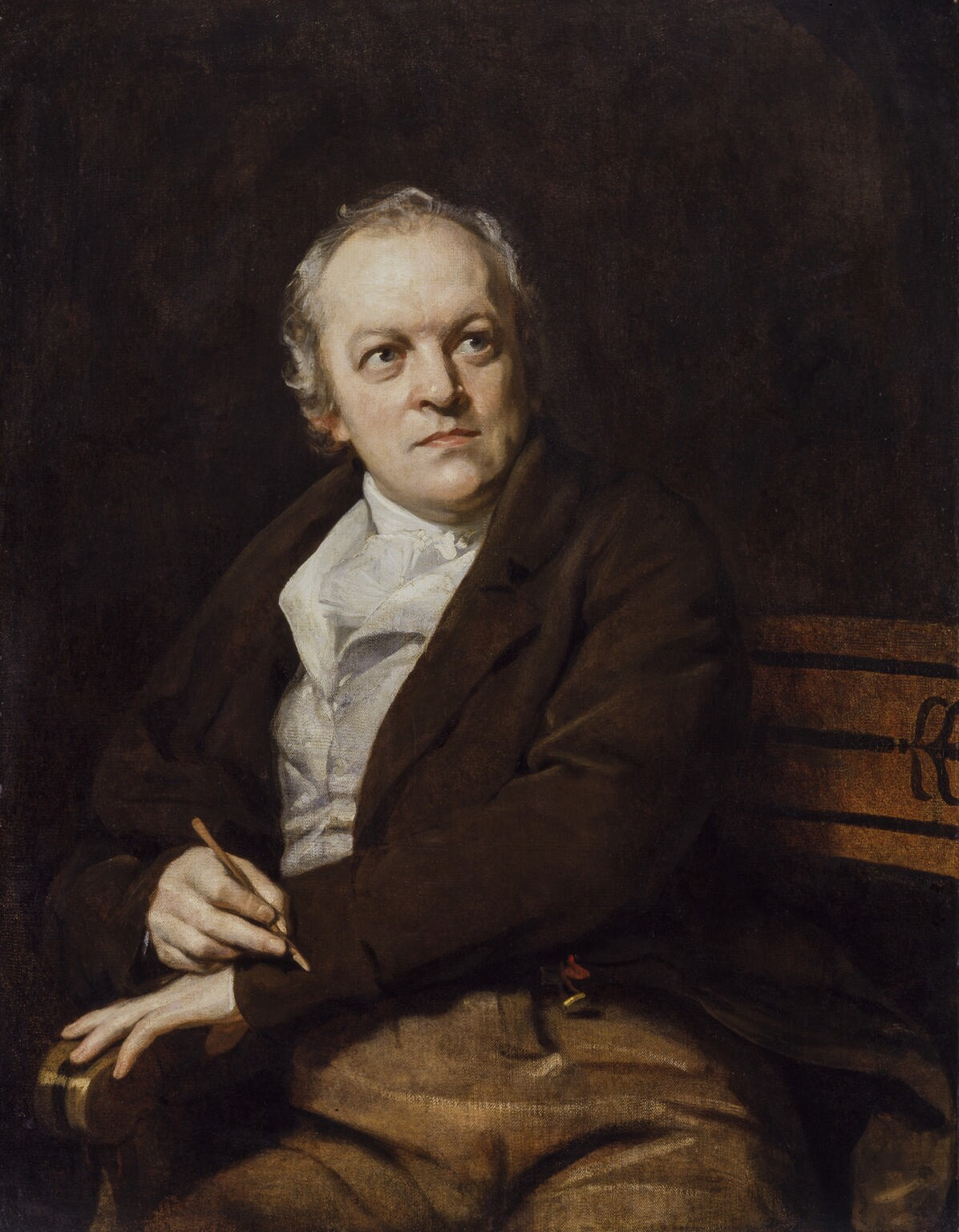
CHAPTER LXXVI. "To mercy, pity, peace, and love All pray in their distress, And to these virtues of delight, Return their thankfulness. . . . . . . For Mercy has a human heart, Pity a human face; And Love, the human form divine; And Peace, the human dress. --WILLIAM BLAKE: Songs of Innocence.

Dorothea follows through:
"Not because there is no one to believe in you?" said Dorothea, pouring out her words in clearness from a full heart. "I know the unhappy mistakes about you. I knew them from the first moment to be mistakes. You have never done anything vile. You would not do anything dishonorable." It was the first assurance of belief in him that had fallen on Lydgate's ears. He drew a deep breath, and said, "Thank you." He could say no more: it was something very new and strange in his life that these few words of trust from a woman should be so much to him. "I beseech you to tell me how everything was," said Dorothea, fearlessly. "I am sure that the truth would clear you."
She is like a balm on his heart.  She even will help him with his marriage, though I wonder at the good that will do.
 following the impulse to let Dorothea see deeper into the difficulty of his life, he said, "The fact is, this trouble has come upon her confusedly. We have not been able to speak to each other about it. ... "May I go and see her?" said Dorothea, eagerly. "Would she accept my sympathy? I would tell her that you have not been blamable before any one's judgment but your own. I would tell her that you shall be cleared in every fair mind. I would cheer her heart. Will you ask her if I may go to see her? I did see her once." "I am sure you may," said Lydgate, seizing the proposition with some hope. ".... I will not speak to her about your coming--that she may not connect it with my wishes at all."
CHAPTER LXXVII. "And thus thy fall hath left a kind of blot, To mark the full-fraught man and best indued With some suspicion." --Henry V.
There was evidently some mental separation, some barrier to complete confidence which had arisen between this wife and the husband who had yet made her happiness a law to him. That was a trouble which no third person must directly touch. But Dorothea thought with deep pity of the loneliness which must have come upon Rosamond from the suspicions cast on her husband; and there would surely be help in the manifestation of respect for Lydgate and sympathy with her.
Oh...if only Rosamond were as Dorothea imagines.

CHAPTER LXXVIII. "Would it were yesterday and I i' the grave, With her sweet faith above for monument"

In which Rosamond makes a move for Will, who is thoroughly disgusted, and Dorothea happens upon them at just the wrong moment.  Well, even though he hasn't been cleared in the eyes of his wife, Lydgate shines at what he does best.
"...Rosamond! has something agitated you?" Clinging to him she fell into hysterical sobbings and cries, and for the next hour he did nothing but soothe and tend her. He imagined that Dorothea had been to see her, and that all this effect on her nervous system, which evidently involved some new turning towards himself, was due to the excitement of the new impressions which that visit had raised. 
CHAPTER LXXIX. "Now, I saw in my dream, that just as they had ended their talk, they drew nigh to a very miry slough, that was in the midst of the plain; and they, being heedless, did both fall suddenly into the bog. The name of the slough was Despond."--BUNYAN.
We are on a perilous margin when we begin to look passively at our future selves, and see our own figures led with dull consent into insipid misdoing and shabby achievement. Poor Lydgate was inwardly groaning on that margin, and Will was arriving at it. It seemed to him this evening as if the cruelty of his outburst to Rosamond had made an obligation for him, and he dreaded the obligation: he dreaded Lydgate's unsuspecting good-will: he dreaded his own distaste for his spoiled life, which would leave him in motiveless levity.
I wonder if any other of the men would have felt this obligation after a burst of cruelty.  Mr. Garth perhaps.  Would others have even realized how they were cruel?  Not Sir James. Not Mr. Brooke. Mr. Farebrother wouldn't have got himself in that position: I think he'd see enough clues to avoid it.

CHAPTER LXXX. "Stern lawgiver! yet thou dost wear The Godhead's most benignant grace; Nor know we anything so fair As is the smile upon thy face; Flowers laugh before thee on their beds, And fragrance in thy footing treads; Thou dost preserve the Stars from wrong; And the most ancient Heavens, through thee, are fresh and strong. --WORDSWORTH: Ode to Duty.

Ahh...some comic relief via Miss Henrietta Noble.
...when suddenly some inarticulate little sounds were heard which called everybody's attention. "Henrietta Noble," said Mrs. Farebrother, seeing her small sister moving about the furniture-legs distressfully, "what is the matter?" "I have lost my tortoise-shell lozenge-box. I fear the kitten has rolled it away," said the tiny old lady, involuntarily continuing her beaver-like notes. ..."Oh, if it is Ladislaw's present," said Mr. Farebrother, in a deep tone of comprehension, getting up and hunting. ..."That is an affair of the heart with my aunt," said Mr. Farebrother, smiling at Dorothea, as he reseated himself. "If Henrietta Noble forms an attachment to any one, Mrs. Casaubon," said his mother, emphatically,--"she is like a dog--she would take their shoes for a pillow and sleep the better." "Mr. Ladislaw's shoes, I would," said Henrietta Noble. 
Dorothea resolves something in herself that night.
She was vigorous enough to have borne that hard night without feeling ill in body, beyond some aching and fatigue; but she had waked to a new condition: she felt as if her soul had been liberated from its terrible conflict; she was no longer wrestling with her grief, but could sit down with it as a lasting companion and make it a sharer in her thoughts.
CHAPTER LXXXI. "Du Erde warst auch diese Nacht bestandig, Und athmest neu erquickt zu meinen Fussen, Beginnest schon mit Lust mich zu umgeben, Zum regst und ruhrst ein kraftiges Reschliessen Zum hochsten Dasein immerfort zu streben. --Faust: 2r Theil.

Google translate and free ebooks to the rescue again...Faust speaking:

And thou, O Earth !—for nature still is true—
Didst, this night, of the common boon partake;
And, breathing in fresh vigour at my feet,
Already, with thy charms of new delight,
Dost in my heart the earnest wish awake
To strive towards Being's unascended height.
Dorothea visits Rosamond, who, thinking others would be like herself, thinks Dorothea comes with a mean purpose.  But Dorothea comes to heal.
"...And I have told Mr. Farebrother, and Mr. Brooke, and Sir James Chettam: they all believe in your husband. That will cheer you, will it not? That will give you courage?" Dorothea's face had become animated, and as it beamed on Rosamond very close to her, she felt something like bashful timidity before a superior, in the presence of this self-forgetful ardor. She said, with blushing embarrassment, "Thank you: you are very kind."
And they share a moment.  A rare true moment.
[Rosamond] withdrew the handkerchief with which she had been hiding her face, her eyes met Dorothea's as helplessly as if they had been blue flowers. What was the use of thinking about behavior after this crying? And Dorothea looked almost as childish, with the neglected trace of a silent tear. Pride was broken down between these two.
And Rosamond gives Dorothea the gift of truth, that Will rejected her due to another woman, Dorothea.
Rosamond had delivered her soul under impulses which she had not known before. She had begun her confession under the subduing influence of Dorothea's emotion; and as she went on she had gathered the sense that she was repelling Will's reproaches, which were still like a knife-wound within her. 
...   "Mrs. Lydgate and I have chatted a great deal, and it is time for me to go. I have always been accused of being immoderate and saying too much." She put out her hand to Rosamond, and they said an earnest, quiet good-by without kiss or other show of effusion: there had been between them too much serious emotion for them to use the signs of it superficially.
CHAPTER LXXXII. "My grief lies onward and my joy behind." --SHAKESPEARE: Sonnets.

Will is devastated but...
 But it is given to us sometimes even in our every-day life to witness the saving influence of a noble nature, the divine efficacy of rescue that may lie in a self-subduing act of fellowship. If Dorothea, after her night's anguish, had not taken that walk to Rosamond--why, she perhaps would have been a woman who gained a higher character for discretion, but it would certainly not have been as well for those three who were on one hearth in Lydgate's house at half-past seven that evening.
CHAPTER LXXXIII. "And now good-morrow to our waking souls Which watch not one another out of fear; For love all love of other sights controls, And makes one little room, an everywhere." --DR. DONNE.

Oh! Miss Noble again, with her tortoise-shell lozenge box from Will. She comes with a message from him for Dorothea.  How cute, that the little old spinster would be the messenger, and brings the two together at last.  Will takes her hand...
Still it was difficult to loose the hand, and Dorothea, withdrawing it in a confusion that distressed her, looked and moved away. "See how dark the clouds have become, and how the trees are tossed," she said, walking towards the window, yet speaking and moving with only a dim sense of what she was doing.
Methinks it is an internal storm brewing as well.
"We may at least have the comfort of speaking to each other without disguise. Since I must go away--since we must always be divided--you may think of me as one on the brink of the grave." While he was speaking there came a vivid flash of lightning which lit each of them up for the other--and the light seemed to be the terror of a hopeless love. Dorothea darted instantaneously from the window; Will followed her, seizing her hand with a spasmodic movement; and so they stood, with their hands clasped, like two children, looking out on the storm, while the thunder gave a tremendous crack and roll above them, and the rain began to pour down. Then they turned their faces towards each other, with the memory of his last words in them, and they did not loose each other's hands.
So classic...these days:
"...I meant to go away into silence, but I have not been able to do what I meant." "Don't be sorry," said Dorothea, in her clear tender tones. "I would rather share all the trouble of our parting." Her lips trembled, and so did his. It was never known which lips were the first to move towards the other lips; but they kissed tremblingly, and then they moved apart. The rain was dashing against the window-panes as if an angry spirit were within it, and behind it was the great swoop of the wind; it was one of those moments in which both the busy and the idle pause with a certain awe.
Cue big sigh.

CHAPTER LXXXIV. "Though it be songe of old and yonge, That I sholde be to blame, Theyrs be the charge, that spoke so large In hurtynge of my name." --The Not-Browne Mayde.

And so they will be married, despite the despicable will, or because of it.
"Oh, there is usually a silent exception in such cases," said Mrs. Cadwallader. "The only wonder to me is, that any of you are surprised. You did nothing to hinder it. If you would have had Lord Triton down here to woo her with his philanthropy, he might have carried her off before the year was over. There was no safety in anything else. Mr. Casaubon had prepared all this as beautifully as possible. He made himself disagreeable--or it pleased God to make him so--and then he dared her to contradict him. It's the way to make any trumpery tempting, to ticket it at a high price in that way."
What she said.

CHAPTER LIXXV. "Then went the jury out whose names were Mr. Blindman, Mr. No-good, Mr. Malice, Mr. Love-lust, Mr. Live-loose, Mr. Heady, Mr. High-mind, Mr. Enmity, Mr. Liar, Mr. Cruelty, Mr. Hate-light, Mr. Implacable, who every one gave in his private verdict against him among themselves, and afterwards unanimously concluded to bring him in guilty before the judge. And first among themselves, Mr. Blindman, the foreman, said, I see clearly that this man is a heretic. Then said Mr. No-good, Away with such a fellow from the earth! Ay, said Mr. Malice, for I hate the very look of him. Then said Mr. Love-lust, I could never endure him. Nor I, said Mr. Live-loose; for he would be always condemning my way. Hang him, hang him, said Mr. Heady. A sorry scrub, said Mr. High-mind. My heart riseth against him, said Mr. Enmity. He is a rogue, said Mr. Liar. Hanging is too good for him, said Mr. Cruelty. Let us despatch him out of the way said Mr. Hate-light. Then said Mr. Implacable, Might I have all the world given me, I could not be reconciled to him; therefore let us forthwith bring him in guilty of death." --Pilgrim's Progress.

Pilgrim's Progress...never read it, and this doesn't make me want to.

Mr. Bulstrode is done for.  The sad part, Mrs. Bulstrode must be done for with him.  This is what harsh judgments do...they slay the innocent as well as the guilty.  No matter what, no matter who.  But together, they manage to do some good, and arrange for Fred to take over the running of the Stone Court estate, the very estate he thought he might inherit.

CHAPTER LXXXVI. "Le coeur se sature d'amour comme d'un sel divin qui le conserve; de la l'incorruptible adherence de ceux qui se sont aimes des l'aube de la vie, et la fraicheur des vielles amours prolonges. Il existe un embaumement d'amour. C'est de Daphnis et Chloe que sont faits Philemon et Baucis. Cette vieillesse la, ressemblance du soir avec l'aurore." --VICTOR HUGO: L'homme qui rit.
"The heart is saturated with love as a divine salt that preserves it; of the incorruptible adherence of those who are like the dawn of life, and extenders freshness of the old loves. There is an embalming of love. It's Daphnis and Chloe are made as Philemon and Baucis. This old age the likeness of the evening with the dawn. "- VICTOR HUGO: The Man Who Laughs.
And Mary indeed ends up with Fred.  Poor Mr. Farebrother.

FINALE.
Marriage, which has been the bourne of so many narratives, is still a great beginning, as it was to Adam and Eve, who kept their honeymoon in Eden, but had their first little one among the thorns and thistles of the wilderness. It is still the beginning of the home epic--the gradual conquest or irremediable loss of that complete union which makes the advancing years a climax, and age the harvest of sweet memories in common.

We get to find out what happens to everyone! I like that part at the end of movies...so dissatisfying to be left wondering.
When Fred was riding home on winter evenings he had a pleasant vision beforehand of the bright hearth in the wainscoted parlor, and was sorry for other men who could not have Mary for their wife; especially for Mr. Farebrother. "He was ten times worthier of you than I was," Fred could now say to her, magnanimously. "To be sure he was," Mary answered; "and for that reason he could do better without me. But you--I shudder to think what you would have been-- a curate in debt for horse-hire and cambric pocket-handkerchiefs!" 
Lydgate's hair never became white. He died when he was only fifty, leaving his wife and children provided for by a heavy insurance on his life. He had gained an excellent practice, alternating, according to the season, between London and a Continental bathing-place; having written a treatise on Gout, a disease which has a good deal of wealth on its side. His skill was relied on by many paying patients, but he always regarded himself as a failure: he had not done what he once meant to do. His acquaintances thought him enviable to have so charming a wife, and nothing happened to shake their opinion.
At least one good impulse from Rosamond over the years:
Why then had he chosen her? It was a pity he had not had Mrs. Ladislaw, whom he was always praising and placing above her. And thus the conversation ended with the advantage on Rosamond's side. But it would be unjust not to tell, that she never uttered a word in depreciation of Dorothea, keeping in religious remembrance the generosity which had come to her aid in the sharpest crisis of her life.
And Dorothea...

 Still, she never repented that she had given up position and fortune to marry Will Ladislaw, and he would have held it the greatest shame as well as sorrow to him if she had repented. They were bound to each other by a love stronger than any impulses which could have marred it.

Certainly those determining acts of her life were not ideally beautiful.  They were the mixed result of young and noble impulse struggling amidst the conditions of an imperfect social state, in which great feelings will often take the aspect of error, and great faith the aspect of illusion. For there is no creature whose inward being is so strong that it is not greatly determined by what lies outside it. A new Theresa will hardly have the opportunity of reforming a conventual life, any more than a new Antigone will spend her heroic piety in daring all for the sake of a brother's burial: the medium in which their ardent deeds took shape is forever gone. But we insignificant people with our daily words and acts are preparing the lives of many Dorotheas, some of which may present a far sadder sacrifice than that of the Dorothea whose story we know.    ...
But the effect of her being on those around her was incalculably diffusive: for the growing good of the world is partly dependent on unhistoric acts; and that things are not so ill with you and me as they might have been, is half owing to the number who lived faithfully a hidden life, and rest in unvisited tombs.       [The End]
Must go back and look at those beginning lines about Theresa...and maybe find out more about Theresa.

Must think about "unhistoric acts."

Monday, October 10, 2011

Slow Read: Middlemarch Book 7

Middlemarch: A Study of Provincial Life (Broadview Editions)BOOK VII. TWO TEMPTATIONS. 
I presume the two temptations are a continuation of the story of the widow and the wife.

CHAPTER LXIII. These little things are great to little man.--GOLDSMITH.

Mr. Farebrother noticed that Lydgate seemed bored, and that Mr. Vincy spoke as little as possible to his son-in-law. Rosamond was perfectly graceful and calm, and only a subtle observation such as the Vicar had not been roused to bestow on her would have perceived the total absence of that interest in her husband's presence which a loving wife is sure to betray, even if etiquette keeps her aloof from him.
Poor Mr. Farebrother.  Is he who notices the subtle details of the relationships of others doomed to have no intimate relationships for himself?
"Ah, there's enormous patience wanted with the way of the world. But it is the easier for a man to wait patiently when he has friends who love him, and ask for nothing better than to help him through, so far as it lies in their power." "Oh yes," said Lydgate, in a careless tone, changing his attitude and looking at his watch. "People make much more of their difficulties than they need to do." He knew as distinctly as possible that this was an offer of help to himself from Mr. Farebrother, and he could not bear it. So strangely determined are we mortals, that, after having been long gratified with the sense that he had privately done the Vicar a service, the suggestion that the Vicar discerned his need of a service in return made him shrink into unconquerable reticence.
Ah, the control.  For some it is easier to dispense help rather than receive.  To receive help means one is not in control and on top of things. To give help means others are obligated to you, to receive help means you are obligated to others.  I don't think that bothers Lydgate so much as that his life is out of control, but if he can take care of it himself he maintains the illusion of control.

CHAPTER LXIV. 1st Gent. Where lies the power, there let the blame lie too. 2d Gent. Nay, power is relative; you cannot fright The coming pest with border fortresses, Or catch your carp with subtle argument. All force is twain in one: cause is not cause Unless effect be there; and action's self Must needs contain a passive. So command Exists but with obedience."

Who has the power?  And even if they have the power, it cannot exist without those who are obedient.  So do the obedient ones have the power, as without their passivity, the power could not exist?
It was because Lydgate writhed under the idea of getting his neck beneath this vile yoke that he had fallen into a bitter moody state which was continually widening Rosamond's alienation from him. After the first disclosure about the bill of sale, he had made many efforts to draw her into sympathy with him about possible measures for narrowing their expenses, and with the threatening approach of Christmas his propositions grew more and more definite.
It appears Rosamond has the power, and Lydgate gives it to her.  She would go to London, a pie in the sky idea, but there's no getting around her will.
"To do what? What is the use of my leaving my work in Middlemarch to go where I have none? We should be just as penniless elsewhere as we are here," said Lydgate still more angrily. "If we are to be in that position it will be entirely your own doing, Tertius," said Rosamond, turning round to speak with the fullest conviction.
While we, the reader, can see that she had a big hand in it with her spending on her trousseau, no one in the book, that I can remember, tells Rosamond she needs to take responsibility.
He had long ago made up his mind to what he thought was her negative character--her want of sensibility, which showed itself in disregard both of his specific wishes and of his general aims. The first great disappointment had been borne: the tender devotedness and docile adoration of the ideal wife must be renounced, and life must be taken up on a lower stage of expectation, as it is by men who have lost their limbs.
Rather than talk about this, Lydgate bears it all silently as his lot.  What he thinks is her negative character is her stubborn willfulness.  He doesn't get that she willfully does what she does, and that she has no respect for him. I wonder if the mere case of his falling in love with her due to her distress would make this inevitable.

CHAPTER LXV. "One of us two must bowen douteless, And, sith a man is more reasonable Than woman is, ye [men] moste be suffrable. --CHAUCER: Canterbury Tales.

This is about the power again...since one must bow before the other, and a man will be more reasonable, he must bow before the unreasonable woman?  Or he's operating on a different system than she is, so he gets the shorter end?  This seems to be the case with Tertius and Rosamond.  He shouldn't underestimate her.
 Lydgate paused in his movements, looked at her again, and said, with biting severity-- "Will this be enough to convince you of the harm you may do by secret meddling? Have you sense enough to recognize now your incompetence to judge and act for me--to interfere with your ignorance in affairs which it belongs to me to decide on?"
Lydgate shouldn't consider Rosamond incompetent.  That seems more benign than she deserves.  She wouldn't care about her ignorance, she thinks she can make things happen the way she wills.
Lydgate flung himself into a chair, feeling checkmated. What place was there in her mind for a remonstrance to lodge in? He laid down his hat, flung an arm over the back of his chair, and looked down for some moments without speaking.
Darn right he's checkmated.
"It is so very hard to be disgraced here among all the people we know, and to live in such a miserable way. I wish I had died with the baby." She spoke and wept with that gentleness which makes such words and tears omnipotent over a loving-hearted man. Lydgate drew his chair near to hers and pressed her delicate head against his cheek with his powerful tender hand. He only caressed her; he did not say anything; for what was there to say?
And her conquest is complete.

CHAPTER LXVI. " 'Tis one thing to be tempted, Escalus, Another thing to fall." --Measure for Measure.
Some of that twice-blessed mercy was always with Lydgate in his work at the Hospital or in private houses, serving better than any opiate to quiet and sustain him under his anxieties and his sense of mental degeneracy. Mr. Farebrother's suspicion as to the opiate was true, however. 
Will Dr. Lydgate fall from this?  I find it hard to believe. Is this one of the two temptations?

And Fred?  Is gambling to be his temptation again? He had...
ten pounds which he meant to reserve for himself from his half-year's salary (having before him the pleasure of carrying thirty to Mrs. Garth when Mary was likely to be come home again)-- he had those ten pounds in his mind as a fund from which he might risk something, if there were a chance of a good bet.
Nope, not Fred, but Lydgate, gambling.
Fred felt a shock greater than he could quite account for by the vague knowledge that Lydgate was in debt, and that his father had refused to help him; and his own inclination to enter into the play was suddenly checked. It was a strange reversal of attitudes: Fred's blond face and blue eyes, usually bright and careless, ready to give attention to anything that held out a promise of amusement, looking involuntarily grave and almost embarrassed as if by the sight of something unfitting; while Lydgate, who had habitually an air of self-possessed strength, and a certain meditativeness that seemed to lie behind his most observant attention, was acting, watching, speaking with that excited narrow consciousness which reminds one of an animal with fierce eyes and retractile claws.
And Mr. Farebrother seals the deal of Fred's reformation.
Perhaps Mr. Farebrother's might be concentrated into a single shrug and one little speech. "To think of the part one little woman can play in the life of a man, so that to renounce her may be a very good imitation of heroism, and to win her may be a discipline!"
CHAPTER LXVII. Now is there civil war within the soul: Resolve is thrust from off the sacred throne By clamorous Needs, and Pride the grand-vizier Makes humble compact, plays the supple part Of envoy and deft-tongued apologist For hungry rebels.

Lydgate asks for Bulstrode's help with his money owed.  He is declined.

CHAPTER LXVIII. "What suit of grace hath Virtue to put on If Vice shall wear as good, and do as well? If Wrong, if Craft, if Indiscretion Act as fair parts with ends as laudable? Which all this mighty volume of events The world, the universal map of deeds, Strongly controls, and proves from all descents, That the directest course still best succeeds. For should not grave and learn'd Experience That looks with the eyes of all the world beside, And with all ages holds intelligence, Go safer than Deceit without a guide! --DANIEL: Musophilus.

Gah, these old wordings can be difficult to interpret.  To think that once upon a time I read the original Chaucer and apparently understood it.  This chapter is about Bulstrode...that gives me a clue.  Ahh.  His fortune begun in vice, in the end, he will get his, even though he wore the suit of virtue, to cover up, or repent, of his ill-gotten beginnings.

CHAPTER LXIX. "If thou hast heard a word, let it die with thee." --Ecclesiasticus.

While Bulstrode hoped Raffles spoke to no one else, the man did, and consequently Mr. Garth quits.
"No," said Caleb, lifting his hand deprecatingly; "I am ready to believe better, when better is proved. I rob you of no good chance. As to speaking, I hold it a crime to expose a man's sin unless I'm clear it must be done to save the innocent. That is my way of thinking, Mr. Bulstrode, and what I say, I've no need to swear. I wish you good-day."
In other news, Lydgate seems to have hit bottom.

CHAPTER LXX. Our deeds still travel with us from afar, And what we have been makes us what we are."

The chapter in which Bulstrode repents of his treatment of Lydgate, and he somehow needs to shut up Raffles. Dr. Lydgate treats Raffles (with no knowledge of the true connection to Bulstrode) and Bulstrode gets instructions on the man's care.  The innocent view: Bulstrode repents and helps Lydgate with his money problems, and the mistake with the instructions is just a mistake.  The guilty view: Bulstrode bribes, and Lydgate looks the other way.  The truth: somewhere in between, with a bit of unconscious desires mixed in.

CHAPTER LXXI. Clown. . . . 'Twas in the Bunch of Grapes, where, indeed, you have a delight to sit, have you not? Froth. I have so: because it is an open room, and good for winter. Clo. Why, very well then: I hope here be truths. --Measure for Measure.

Hmmm. The second quote from this Shakespeare play...one I have not read.  Oh well.  Maybe I'll get a chance to read it before I read Middlemarch again someday.  If gossip is involved, little chance of truths here.
Hence, in spite of the negative as to any direct sign of guilt in relation to the death at Stone Court, Mr. Hawley's select party broke up with the sense that the affair had "an ugly look." But this vague conviction of indeterminable guilt, which was enough to keep up much head-shaking and biting innuendo even among substantial professional seniors, had for the general mind all the superior power of mystery over fact.
You can't get more public than a town meeting. So were the two temptations more about these men than about Fred or Rosamond?  If they yielded to temptation, it doesn't appear to have been entirely conscious...and if unconscious, can it be said they did yield to temptation?  And does it matter if the public has tried them in the gossip and found them guilty?
Lydgate felt sure there was not strength enough in him to walk away without support. What could he do? He could not see a man sink close to him for want of help. He rose and gave his arm to Bulstrode, and in that way led him out of the room; yet this act, which might have been one of gentle duty and pure compassion, was at this moment unspeakably bitter to him. It seemed as if he were putting his sign-manual to that association of himself with Bulstrode, of which he now saw the full meaning as it must have presented itself to other minds. He now felt the conviction that this man who was leaning tremblingly on his arm, had given him the thousand pounds as a bribe, and that somehow the treatment of Raffles had been tampered with from an evil motive.
Lydgate seals his fate as an accomplice, yet as a doctor he still cannot turn away from a man in distress.

Tuesday, October 04, 2011

Slow Read: Middlemarch Book 6

It was my plan to be reading Book 8 this week. I was a book behind last week, but now I am indeed on the last book of this large tome, though I am still catching up with the blogging part.

In my search for annotations which might include translations, I found this list of websites on Eliot. I may want to visit it when I am done with the book.  Soon now, soon.  I found the translation, incidentally, by first using Google Translate, and then searching for particular words in the particular book in Google Books.  Ahh, isn't life grand these days? (So yes, these blogs take me a little while, as it's not just about reflecting and writing.)

Middlemarch (Penguin Classics)BOOK VI. THE WIDOW AND THE WIFE.


CHAPTER LIV. "Negli occhi porta la mia donna Amore; Per che si fa gentil eio ch'ella mira: Ov'ella passa, ogni uom ver lei si gira, E cui saluta fa tremar lo core. Sicche, bassando il viso, tutto smore, E d'ogni suo difetto allor sospira: Fuggon dinanzi a lei Superbia ed Ira: Aiutatemi, donne, a farle onore. Ogni dolcezza, ogni pensiero umile Nasee nel core a chi parlar la sente; Ond' e beato chi prima la vide. Quel ch'ella par quand' un poco sorride, Non si pub dicer, ne tener a mente, Si e nuovo miracolo gentile." --DANTE: la Vita Nuova.

Translation:

My lady carries love within her eyes
All that she looks on is made pleasanter
Upon her path men turn to gaze at her
He whom she greeteth feels his heart to rise
And droops his troubled visage full of sighs
And of his evil heart is then aware
Hate loves and pride becomes a worshipper
E women help to praise her in somewise
Humbleness and the hope that hopeth well
By speech of hers into the mind are brought
And who beholds is blessed oftenwhiles
The look she hath when she a little smiles
Cannot be said nor holden in the thought
Tis such a new and gracious miracle. Dante's The New Life
Is this saying all a man needs is the love of a good woman?
but to an aunt who does not recognize her infant nephew as Bouddha, and has nothing to do for him but to admire, his behavior is apt to appear monotonous, and the interest of watching him exhaustible. This possibility was quite hidden from Celia, who felt that Dorothea's childless widowhood fell in quite prettily with the birth of little Arthur (baby was named after Mr. Brooke).
This is the second time Celia's baby is referred to as a Bouddha, the first referenced hair, or perhaps the lack of it, I wasn't sure.  Certainly, he appears to be meant to provide comic relief.
"Good God!" Will burst out passionately, rising, with his hat still in his hand, and walking away to a marble table, where he suddenly turned and leaned his back against it. The blood had mounted to his face and neck, and he looked almost angry. It had seemed to him as if they were like two creatures slowly turning to marble in each other's presence, while their hearts were conscious and their eyes were yearning. But there was no help for it.
The two appear to be falling in love, for all the wrong reasons as it often seems of characters in this book.  Or is this how we always fall in love? Is there no escape from the blindness of our own projections?  These two see each other, yet do not. They don't know the full story, and respond to another story in the other.  I think nowadays there is a help for it.  There is the possibility of radical honesty. There is the possibility of speaking truth in intimacy without judgement, without censorship.


CHAPTER LV. Hath she her faults? I would you had them too. They are the fruity must of soundest wine; Or say, they are regenerating fire Such as hath turned the dense black element Into a crystal pathway for the sun. If youth is the season of hope, it is often so only in the sense that our elders are hopeful about us; for no age is so apt as youth to think its emotions, partings, and resolves are the last of their kind. Each crisis seems final, simply because it is new. 
   We are told that the oldest inhabitants in Peru do not cease to be agitated by the earthquakes, but they probably see beyond each shock, and reflect that there are plenty more to come.

The Widow: Dorothea pines for Will Ladislaw, now especially that he is forbidden. Celia carries the idea to Sir James that Dorothea thinks never to marry again.  This fits his view of widows, even though she's a young widow.

Sir Henry Wotton
CHAPTER LVI. "How happy is he born and taught That serveth not another's will; Whose armor is his honest thought, And simple truth his only skill! . . . . . . . This man is freed from servile bands Of hope to rise or fear to fall; Lord of himself though not of lands; And having nothing yet hath all." --SIR HENRY WOTTON. [friend of John Donne]

The rail is coming to Middlemarch, and the people in their usual resistance to change think it will be a bad thing.  The scene: rabblerousers would run off the rail suveyors.  Fred Vincy and Caleb Garth see this and assist the rail workers and deal with the locals.  Fred gets job with Caleb.  This looks good for Fred, with regards to Mary.

CHAPTER LVII. They numbered scarce eight summers when a name Rose on their souls and stirred such motions there As thrill the buds and shape their hidden frame At penetration of the quickening air: His name who told of loyal Evan Dhu, Of quaint Bradwardine, and Vich Ian Vor, Making the little world their childhood knew Large with a land of mountain lake and scaur, And larger yet with wonder love belief Toward Walter Scott who living far away Sent them this wealth of joy and noble grief. The book and they must part, but day by day, In lines that thwart like portly spiders ran They wrote the tale, from Tully Veolan.

Mrs. Farebrother, mother to the cleric who would woo Mary, talks to Mary of her feelings toward clergy.  To be fair to Mrs. Farebrother, it does seem a rather inane reason to leave clergy out of the running:
"I don't like their neckcloths." "Why, you don't like Camden's, then," said Miss Winifred, in some anxiety. "Yes, I do," said Mary. "I don't like the other clergymen's neckcloths, because it is they who wear them." "How very puzzling!" said Miss Noble, feeling that her own intellect was probably deficient. "My dear, you are joking. You would have better reasons than these for slighting so respectable a class of men," said Mrs. Farebrother, majestically.

CHAPTER LVIII. "For there can live no hatred in thine eye, Therefore in that I cannot know thy change: In many's looks the false heart's history Is writ in moods and frowns and wrinkles strange: But Heaven in thy creation did decree That in thy face sweet love should ever dwell: Whate'er thy thoughts or thy heart's workings be Thy looks should nothing thence but sweetness tell." --SHAKESPEARE: Sonnets.

The Wife: Lydgate and Rosamond squabble over the visit of his cousin the Captain.  She enjoys the attention, he sees the sparkle dim from his infatuation. He must deal with the tremendous debt from their marriage, she would refuse to make any changes. This does not bode well.

CHAPTER LIX. They said of old the Soul had human shape, But smaller, subtler than the fleshly self, So wandered forth for airing when it pleased. And see! beside her cherub-face there floats A pale-lipped form aerial whispering Its promptings in that little shell her ear."

The Widow:
Now Lydgate, like Mr. Farebrother, knew a great deal more than he told, and when he had once been set thinking about the relation between Will and Dorothea his conjectures had gone beyond the fact. He imagined that there was a passionate attachment on both sides, and this struck him as much too serious to gossip about. He remembered Will's irritability when he had mentioned Mrs. Casaubon, and was the more circumspect.
The Wife:
She was oppressed by ennui, and by that dissatisfaction which in women's minds is continually turning into a trivial jealousy, referring to no real claims, springing from no deeper passion than the vague exactingness of egoism, and yet capable of impelling action as well as speech.
CHAPTER LX. Good phrases are surely, and ever were, very commendable. --Justice Shallow. [old friend of Falstaff's, Henry IV, part 2]

Uh-oh.  Raffles makes an appearance again. The sale, like a fair, is a fun scene.

 CHAPTER LXI. "Inconsistencies," answered Imlac, "cannot both be right, but imputed to man they may both be true."--Rasselas. [from The History of Rasselas, Prince of Abissinia by Samuel Johnson]

Like a pearl, Mr. Bulstrode's good works have grown around a flaw, a dark seed coming from a lie.  His money first came from questionable pawnbrokers, then he withheld knowledge of his wife's daughter, a daughter who would inherit her money.  Instead he did. And this is what Raffles has on him.  And this is what propels him to good deeds with his fortune.  In a way he's pathetic, but he is also just trying to maintain his family's position.

CHAPTER LXII. "He was a squyer of lowe degre, That loved the king's daughter of Hungrie. --Old Romance.

OK, now Dorothea and Will both know the conditions of their divide.  And so they part. "She put out her hand, and Will took it for an instant without speaking, for her words had seemed to him cruelly cold and unlike herself. Their eyes met, but there was discontent in his, and in hers there was only sadness." 
How could he dream of her defying the barrier that her husband had placed between them?--how could she ever say to herself that she would defy it? Will's certainty as the carriage grew smaller in the distance, had much more bitterness in it. Very slight matters were enough to gall him in his sensitive mood, and the sight of Dorothea driving past him while he felt himself plodding along as a poor devil seeking a position in a world which in his present temper offered him little that he coveted, made his conduct seem a mere matter of necessity, and took away the sustainment of resolve.

Monday, October 03, 2011

Slow Read: Middlemarch Book 5

Middlemarch
BOOK V. THE DEAD HAND.
CHAPTER XLIII.
This figure hath high price: 't was wrought with love Ages ago in finest ivory; Nought modish in it, pure and noble lines Of generous womanhood that fits all time That too is costly ware; majolica Of deft design, to please a lordly eye: The smile, you see, is perfect--wonderful As mere Faience! a table ornament To suit the richest mounting."

When Mrs. Casaubon visits the doctor to learn about her husband's health, we get a glimpse into Rosamond's thoughts. She realizes even though she is married, she can make conquests.  Could it be she is the table ornament?

CHAPTER XLIV. I would not creep along the coast but steer Out in mid-sea, by guidance of the stars.

With his age, do Casaubon and Dorothea ever have a real chance?  His paranoia widens the rift: "He distrusted her affection; and what loneliness is more lonely than distrust?"

CHAPTER XLV. It is the humor of many heads to extol the days of their forefathers, and declaim against the wickedness of times present. Which notwithstanding they cannot handsomely do, without the borrowed help and satire of times past; condemning the vices of their own times, by the expressions of vices in times which they commend, which cannot but argue the community of vice in both. Horace, therefore, Juvenal, and Persius, were no prophets, although their lines did seem to indigitate and point at our times.--SIR THOMAS BROWNE: Pseudodoxia Epidemica.

Gossip about the outsider Dr. Lydgate: he wants to cut up bodies willy-nilly; he never ever dispenses drugs; and is ">disagreeably inattentive to etiquette."
That last bit is probably true.

Advice from Farebrother: don't get too close to Bulstrode; don't get into debt. Can you say "foreshadow?"

CHAPTER XLVI. Pues no podemos haber aquello que queremos, queramos aquello que podremos. Since we cannot get what we like, let us like what we can get. --Spanish Proverb.

Wo, what? Or how about "You can't always get what you want/ And if you try sometime you find/ You get what you need" or "and if you can’t be with the one you love, honey, love the one you’re with..."?

You hurt me very much when you look so, Tertius." "Do I? Then I am a brute," said Lydgate, caressing her penitently. "What vexed you?" "Oh, outdoor things--business." It was really a letter insisting on the payment of a bill for furniture. But Rosamond was expecting to have a baby, and Lydgate wished to save her from any perturbation.
So the one she's with doesn't make enough money, and the one he's with is a flibbertigibbet.

CHAPTER XLVII. Was never true love loved in vain, For truest love is highest gain. No art can make it: it must spring Where elements are fostering. So in heaven's spot and hour Springs the little native flower, Downward root and upward eye, Shapen by the earth and sky.

Will Ladislaw in his smitten state finds a loophole in Casaubon's order to stay way: church! But one should be careful what one wishes for.
Will walked out after them, but they went on towards the little gate leading out of the churchyard into the shrubbery, never looking round. It was impossible for him to follow them, and he could only walk back sadly at mid-day along the same road which he had trodden hopefully in the morning. The lights were all changed for him both without and within. 
CHAPTER XLVIII Surely the golden hours are turning gray And dance no more, and vainly strive to run: I see their white locks streaming in the wind-- Each face is haggard as it looks at me, Slow turning in the constant clasping round Storm-driven.

Casaubon would shackle Dorothea from beyond the grave.  She has some small will to choose for herself left, and takes some time to decide whether to promise.  Perhaps the cosmos is smiling on her after all...he dies before she can say yes.

CHAPTER XLIX. A task too strong for wizard spells This squire had brought about; 'T is easy dropping stones in wells, But who shall get them out?"

But Casaubon extends his suspicions from beyond the grave.  Sir James continues to be the knightly gentleman as her brother-in-law:
"I say that he has most unfairly compromised Dorothea. I say that there never was a meaner, more ungentlemanly action than this--a codicil of this sort to a will which he made at the time of his marriage with the knowledge and reliance of her family-- a positive insult to Dorothea!"
CHAPTER L. "`This Loller here wol precilen us somewhat.' `Nay by my father's soule! that schal he nat,' Sayde the Schipman, `here schal he not preche, We schal no gospel glosen here ne teche. We leven all in the gret God,' quod he. He wolden sowen some diffcultee." Canterbury Tales.
Her world was in a state of convulsive change; the only thing she could say distinctly to herself was, that she must wait and think anew. One change terrified her as if it had been a sin; it was a violent shock of repulsion from her departed husband, who had had hidden thoughts, perhaps perverting everything she said and did.
Dorothea is transformed by the knowledge of her husband that his death brought her.  Relationships change even after death, and a person is affected.

CHAPTER LI. Party is Nature too, and you shall see By force of Logic how they both agree: The Many in the One, the One in Many; All is not Some, nor Some the same as Any: Genus holds species, both are great or small; One genus highest, one not high at all; Each species has its differentia too, This is not That, and He was never You, Though this and that are AYES, and you and he Are like as one to one, or three to three.

Mr. Brooke tries his hand at politics...not very good at it, but Ladislaw is, whom he has taken on.

CHAPTER LII. "His heart The lowliest duties on itself did lay." --WORDSWORTH.

Mr. Farebrother as cleric has the unwelcome task of acting as go-between for Fred and Mary.  Will she have him? But Mr. Farebrother cannot say he likes her himself.  What a soap opera!

CHAPTER LIII. It is but a shallow haste which concludeth insincerity from what outsiders call inconsistency--putting a dead mechanism of "ifs" and "therefores" for the living myriad of hidden suckers whereby the belief and the conduct are wrought into mutual sustainment.
Mr. Raffles had pushed away his chair and looked down at himself, particularly at his straps. His chief intention was to annoy Bulstrode, but he really thought that his appearance now would produce a good effect, and that he was not only handsome and witty, but clad in a mourning style which implied solid connections.
Mr. Raffles is not just visiting Bulstrode to blackmail, he's there to blackmail with panache.

Sunday, September 25, 2011

Slow Read: Middlemarch Book 4

Middlemarch
BOOK IV. THREE LOVE PROBLEMS. 
Three love problems....hmmm. Mary and Fred? Rosamond and Mr. Lydgate? Dorothea and Casaubon?
CHAPTER XXXIV. 1st Gent. Such men as this are feathers, chips, and straws. Carry no weight, no force. 2d Gent. But levity Is causal too, and makes the sum of weight. For power finds its place in lack of power; Advance is cession, and the driven ship May run aground because the helmsman's thought Lacked force to balance opposites."

If any one will here contend that there must have been traits of goodness in old Featherstone, I will not presume to deny this; but I must observe that goodness is of a modest nature, easily discouraged, and when much privacy, elbowed in early life by unabashed vices, is apt to retire into extreme privacy, so that it is more easily believed in by those who construct a selfish old gentleman theoretically, than by those who form the narrower judgments based on his personal acquaintance.

In other words, if you thought there must be goodness in him, you didn't know Featherstone.

Watching funeral attendees...a day's entertainment:
"Ah, now they are coming out of church," Mrs. Cadwallader exclaimed. "Dear me, what a wonderfully mixed set! Mr. Lydgate as doctor, I suppose. But that is really a good looking woman, and the fair young man must be her son. Who are they, Sir James, do you know?" "I see Vincy, the Mayor of Middlemarch; they are probably his wife and son," said Sir James
CHAPTER XXXV. "Non, je ne comprends pas de plus charmant plaisir Que de voir d'heritiers une troupe affligee Le maintien interdit, et la mine allongee, Lire un long testament ou pales, etonnes On leur laisse un bonsoir avec un pied de nez. Pour voir au naturel leur tristesse profonde Je reviendrais, je crois, expres de l'autre monde." --REGNARD: Le Legataire Universel.

Google translates (hey, don't knock it...my two years of French for reading knowledge was over 20 years ago): "No, I do not understand a more charming pleasure to see a troop of heirs afflicted Maintaining prohibited, and the long face, read a will or long blades, astonished They leave a good evening with a snub. To see in their natural deep sadness I would, I believe, expression of the other world. "- REGNARD: The sole heir.
There was still a residue of personal property as well as the land, but the whole was left to one person, and that person was-- O possibilities! O expectations founded on the favor of "close" old gentlemen! O endless vocatives that would still leave expression slipping helpless from the measurement of mortal folly!-- that residuary legatee was Joshua Rigg, who was also sole executor, and who was to take thenceforth the name of Featherstone.
And Mary, no one knows but Mary, could have caused a different outcome. So, problem one: Mary ruined Fred Vincy's chances, and thus his chances with her.

CHAPTER XXXVI.
"'Tis strange to see the humors of these men, These great aspiring spirits, that should be wise: . . . . . . . . For being the nature of great spirits to love To be where they may be most eminent; They, rating of themselves so farre above Us in conceit, with whom they do frequent, Imagine how we wonder and esteeme All that they do or say; which makes them strive To make our admiration more extreme, Which they suppose they cannot, 'less they give Notice of their extreme and highest thoughts. --DANIEL: Tragedy of Philotas.


"Walter, you never mean to tell me that you have allowed all this to go on without inquiry into Mr. Lydgate's prospects?" said Mrs. Bulstrode, opening her eyes with wider gravity at her brother, who was in his peevish warehouse humor. "Think of this girl brought up in luxury--in too worldly a way, I am sorry to say-- what will she do on a small income?"
Problem two: Rosamond will spend beyond Lydgate's means.

CHAPTER XXXVII.
"Thrice happy she that is so well assured Unto herself and settled so in heart That neither will for better be allured Ne fears to worse with any chance to start, But like a steddy ship doth strongly part The raging waves and keeps her course aright; Ne aught for tempest doth from it depart, Ne aught for fairer weather's false delight. Such self-assurance need not fear the spight Of grudging foes; ne favour seek of friends; But in the stay of her own stedfast might Neither to one herself nor other bends. Most happy she that most assured doth rest, But he most happy who such one loves best." --SPENSER.
Not for one moment did Mr. Casaubon suspect Dorothea of any doubleness: he had no suspicions of her, but he had (what was little less uncomfortable) the positive knowledge that her tendency to form opinions about her husband's conduct was accompanied with a disposition to regard Will Ladislaw favorably and be influenced by what he said.
Problem three: Not, as I might have expected, the popping of Dorothea's bubble of Mr. Casaubon, but Mr. Casaubon's jealousy stemming from feelings of inadequacy.

CHAPTER XXXVIII. "C'est beaucoup que le jugement des hommes sur les actions humaines; tot ou tard il devient efficace."--GUIZOT.
"It's great, men's judgment over human actions, sooner or later it becomes effective."

Uh-oh...politics.

CHAPTER XXXIX. "If, as I have, you also doe, Vertue attired in woman see, And dare love that, and say so too, And forget the He and She; And if this love, though placed so, From prophane men you hide, Which will no faith on this bestow, Or, if they doe, deride: Then you have done a braver thing Than all the Worthies did, And a braver thence will spring, Which is, to keep that hid." --DR. DONNE.

Oh the intrigue! Sir James gets Dorothea to her uncle's estate so she can get him on the right track regarding the estate, and politics, but he has to pretend she's visiting Celia. Will is there, who is forbidden to visit by Casaubon, and of course, Will's smittenness deepens. And Brooke...he quarreled with Garth years ago? The interconnections of Middlemarch, a small world.

CHAPTER XL. Wise in his daily work was he: To fruits of diligence, And not to faiths or polity, He plied his utmost sense. These perfect in their little parts, Whose work is all their prize-- Without them how could laws, or arts, Or towered cities rise?

Thanks to the machinations of Sir James, the Garths are pulled up out of their poverty. The Garths tell the vicar, Mr. Farebrother, who often visits the Vincys, about Mary's secret late night with the old man and her indirect influence on Fred Vincy's lack of inheritance.

CHAPTER XLI. "By swaggering could I never thrive, For the rain it raineth every day. --Twelfth Night
He played this part now with as much spirit as if his journey had been entirely successful, resorting at frequent intervals to his flask. The paper with which he had wedged it was a letter signed Nicholas Bulstrode, but Raffles was not likely to disturb it from its present useful position.
The surprise heir Rigg has a surprise ne'erdowell step-father. What will he do with that letter from Bulstrode?

CHAPTER XLII. "How much, methinks, I could despise this man Were I not bound in charity against it! --SHAKESPEARE: Henry VIII.
Instead of wondering at this result of misery in Mr. Casaubon, I think it quite ordinary. Will not a tiny speck very close to our vision blot out the glory of the world, and leave only a margin by which we see the blot? I know no speck so troublesome as self.
I think this narrator is a closet Buddhist. That's what it's all about...this troublesome self.

Now Dorothea's belief in her husband begins to erode. The honeymoon's over, and the two don't know how to connect to each other, he especially.

Saturday, September 24, 2011

Slow Read: Middlemarch Book 3, Chapters 28-33

CHAPTER XXVIII. 1st Gent. All times are good to seek your wedded home Bringing a mutual delight. 2d Gent. Why, true. The calendar hath not an evil day For souls made one by love, and even death Were sweetness, if it came like rolling waves While they two clasped each other, and foresaw No life apart.

CHAPTER XXIX. "I found that no genius in another could please me. My unfortunate paradoxes had entirely dried up that source of comfort."--GOLDSMITH.

It is an uneasy lot at best, to be what we call highly taught and yet not to enjoy: to be present at this great spectacle of life and never to be liberated from a small hungry shivering self-- never to be fully possessed by the glory we behold, never to have our consciousness rapturously transformed into the vividness of a thought, the ardor of a passion, the energy of an action, but always to be scholarly and uninspired, ambitious and timid, scrupulous and dim-sighted.

Casaubon is a small man, who managed to land a great wife.

CHAPTER XXX. "Qui veut delasser hors de propos, lasse."--PASCAL.
Translation, thanks to this blogger: Whoever tries to divert us at the wrong time tires us out
Lydgate would have taken no notice of these words as anything more than the Vicar's usual way of putting things. They seemed now to convey an innuendo which confirmed the impression that he had been making a fool of himself and behaving so as to be misunderstood: not, he believed, by Rosamond herself; she, he felt sure, took everything as lightly as he intended it.

Or not. Clueless. Everyone is clueless.

CHAPTER XXXI. How will you know the pitch of that great bell Too large for you to stir? Let but a flute Play 'neath the fine-mixed metal listen close Till the right note flows forth, a silvery rill. Then shall the huge bell tremble--then the mass With myriad waves concurrent shall respond In low soft unison.
That moment of naturalness was the crystallizing feather-touch: it shook flirtation into love. Remember that the ambitious man who was looking at those Forget-me-nots under the water was very warm-hearted and rash. He did not know where the chain went; an idea had thrilled through the recesses within him which had a miraculous effect in raising the power of passionate love lying buried there in no sealed sepulchre, but under the lightest, easily pierced mould. His words were quite abrupt and awkward; but the tone made them sound like an ardent, appealing avowal. "What is the matter? you are distressed. Tell me, pray."

So how it happens...a crystallizing moment. Words unfold, love awakened. So seemingly inconsequential, but that enormous fullness of love was just shimmering beneath a thin skin, ready for a single moment to allow it to burst out.

CHAPTER XXXII. "They'll take suggestion as a cat laps milk." --SHAKESPEARE: Tempest.
For the old man's dislike of his own family seemed to get stronger as he got less able to amuse himself by saying biting things to them. Too languid to sting, he had the more venom refluent in his blood. Not fully believing the message sent through Mary Garth, they had presented themselves together within the door of the bedroom, both in black--Mrs. Waule having a white handkerchief partially unfolded in her hand--and both with faces in a sort of half-mourning purple...

The vultures circle, waiting to feast on the old man's remains.

CHAPTER XXXIII. "Close up his eyes and draw the curtain close; And let us all to meditation." --2 Henry VI.
In a very little while there was no longer any doubt that Peter Featherstone was dead, with his right hand clasping the keys, and his left hand lying on the heap of notes and gold.
This death scene was so Dickensian, was it not? Mary Garth alone with the old man, who would pull his puppet strings of the people around him to his last breath, but she would not be put in that spot.

Tuesday, September 13, 2011

Slow Read: Middlemarch Book 3, Chapters 23-27

Middlemarch

My days are just packed. I've been reading this, as well as another very long book. This coming week I start co-teaching that class at the Zen Center, and that involves the class time as well as preparation and an extra meeting each week. To top it off, I signed up for a training at work this week. Oh, and Dharma School starts this Sunday...not next Sunday. So....gonna be a little behind on the reflective blogging bit.

BOOK III. WAITING FOR DEATH.
CHAPTER XXIII. "Your horses of the Sun," he said, "And first-rate whip Apollo! Whate'er they be, I'll eat my head, But I will beat them hollow."

And Fred winced under the idea of being looked down upon as wanting funds for small debts. Thus it came to pass that the friend whom he chose to apply to was at once the poorest and the kindest--namely, Caleb Garth.
Oh Fred Fred Fred.  Bad idea.  Way to ruin things with Mary.

Fred believed in the excellence of his bargain, and even before the fair had well set in, had got possession of the dappled gray, at the price of his old horse and thirty pounds in addition--only five pounds more than he had expected to give.

Oh Fred Fred Fred, way to fall from the frying pan into the fire. You got all excited about that horse sight unseen, so of course you didn't see the flaws.

CHAPTER XXIV. "The offender's sorrow brings but small relief To him who wears the strong offence's cross." --SHAKESPEARE: Sonnets.
Fred...
had not occupied himself with the inconvenience and possible injury that his breach might occasion them, for this exercise of the imagination on other people's needs is not common with hopeful young gentlemen.

That's putting it lightly. Foolish, happy-go-lucky, selfish Fred.

W. Blake
CHAPTER XXV. "Love seeketh not itself to please, Nor for itself hath any care But for another gives its ease And builds a heaven in hell's despair. . . . . . . . Love seeketh only self to please, To bind another to its delight, Joys in another's loss of ease, And builds a hell in heaven's despite." --W. BLAKE: Songs of Experience
And here are your consequences, Fred:

"I will try to be anything you like, Mary, if you will say that you love me." "I should be ashamed to say that I loved a man who must always be hanging on others, and reckoning on what they would do for him. What will you be when you are forty?

CHAPTER XXVI. "He beats me and I rail at him: O worthy satisfaction! would it were otherwise--that I could beat him while he railed at me.--" --Troilus and Cressida.

Fred takes ill, Wrench barely does his duty as doc, and the Vincys take on Lydgate for a doctor. Gossip ensues, romance soon to follow.

CHAPTER XXVII. Let the high Muse chant loves Olympian: We are but mortals, and must sing of man.

Girl flirts with Doctor, considers herself practically engaged. Doctor flirts with girl, thinking that's just what they do.

It is true, Lydgate had the counter-idea of remaining unengaged; but this was a mere negative, a shadow east by other resolves which themselves were capable of shrinking. Circumstance was almost sure to be on the side of Rosamond's idea, which had a shaping activity and looked through watchful blue eyes, whereas Lydgate's lay blind and unconcerned as a jelly-fish which gets melted without knowing it.

Lydgate sure has been blind to her possible effect on him, as his mind has been more on research and doctoring than on girls.

Sunday, September 04, 2011

Slow Read: Middlemarch Book 2, Chapters 18-22

MiddlemarchCHAPTER XVIII "Oh, sir, the loftiest hopes on earth Draw lots with meaner hopes: heroic breasts, Breathing bad air, ran risk of pestilence; Or, lacking lime-juice when they cross the Line, May languish with the scurvy."

Lydgate continued to work with Mr. Bulstrode. He was really uncertain whether Tyke were not the more suitable candidate, and yet his consciousness told him that if he had been quite free from indirect bias he should have voted for Mr. Farebrother.
but later...
Lydgate thought that there was a pitiable infirmity of will in Mr. Farebrother. 
Isn't that the pot calling the kettle black? Or does he think it an expression of will to vote against what others expect? Hardly seems so to me...seems to me his actions then are all about what others expect.


CHAPTER XIX "L' altra vedete ch'ha fatto alla guancia Della sua palma, sospirando, letto." --Purgatorio, vii.
They were just in time to see another figure standing against a pedestal near the reclining marble: a breathing blooming girl, whose form, not shamed by the Ariadne, was clad in Quakerish gray drapery; her long cloak, fastened at the neck, was thrown backward from her arms, and one beautiful ungloved hand pillowed her cheek, pushing somewhat backward the white beaver bonnet which made a sort of halo to her face around the simply braided dark-brown hair. 
Here I find the benefit not only of reviewing for the sake of blogging, but of the use of my Kindle. Currently, I've just read through Book III, and the image of Ariadne is fresh in my mind from that reading. So, looking back, this jumps out at me, and now I want to know more about Ariadne. And, thanks to my Kindle, I can easily find all the references to Ariadne in Middlemarch. There are just these two occurrences in which Ariadne is named. This one refers to Dorothea Brooke next to the Ariadne statue, witnessed by Will Ladislaw and his German buddy.  The statue draws attention to Dorothea's beauty due to her vivid life as contrasted to the dead stone, and due to her Christian bearing and "Quakerish gray drapery," as contrasted to the Greek fable.  The next occurrence likens the young woman Rosamond to Ariadne...more on that later...but I will say I think this may prove significant in the difference between these two women.
Antigone by Lord Frederick Leighton
"Confound you, Naumann! I don't know what I shall do. I am not so brazen as you." "Bah! that is because you are dilettantish and amateurish. If you were an artist, you would think of Mistress Second-Cousin as antique form animated by Christian sentiment--a sort of Christian Antigone-- sensuous force controlled by spiritual passion."
Ah, Dorothea as Antigone. A passionate idealist who would die for her faith, and the gods will side with her, or God, in this case.

CHAPTER XX "A child forsaken, waking suddenly, Whose gaze afeard on all things round doth rove, And seeth only that it cannot see The meeting eyes of love."
Nor can I suppose that when Mrs. Casaubon is discovered in a fit of weeping six weeks after her wedding, the situation will be regarded as tragic. Some discouragement, some faintness of heart at the new real future which replaces the imaginary, is not unusual, and we do not expect people to be deeply moved by what is not unusual. That element of tragedy which lies in the very fact of frequency, has not yet wrought itself into the coarse emotion of mankind; and perhaps our frames could hardly bear much of it. If we had a keen vision and feeling of all ordinary human life, it would be like hearing the grass grow and the squirrel's heart beat, and we should die of that roar which lies on the other side of silence. As it is, the quickest of us walk about well wadded with stupidity.
I love this. Don't get all bent out of shape...this is what happens.  Illusions are toppled, it's not unusual for a bride to cry.  If we felt deeply over this all the time, everything would be as sharp as pins, all the time.  We should die of the roar on the other side of silence.  The child that wakes suddenly learns from experience, grows up, and learns to move on. This bears pondering.
...she was inwardly seeing the light of years to come in her own home and over the English fields and elms and hedge-bordered highroads; and feeling that the way in which they might be filled with joyful devotedness was not so clear to her as it had been. But in Dorothea's mind there was a current into which all thought and feeling were apt sooner or later to flow--the reaching forward of the whole consciousness towards the fullest truth, the least partial good. There was clearly something better than anger and despondency. 
CHAPTER XXI  "Hire facounde eke full womanly and plain, No contrefeted termes had she To semen wise." --CHAUCER.
We are all of us born in moral stupidity, taking the world as an udder to feed our supreme selves: Dorothea had early begun to emerge from that stupidity, but yet it had been easier to her to imagine how she would devote herself to Mr. Casaubon, and become wise and strong in his strength and wisdom, than to conceive with that distinctness which is no longer reflection but feeling-- an idea wrought back to the directness of sense, like the solidity of objects--that he had an equivalent centre of self, whence the lights and shadows must always fall with a certain difference.

CHAPTER XXII "Nous causames longtemps; elle etait simple et bonne. Ne sachant pas le mal, elle faisait le bien; Des richesses du coeur elle me fit l'aumone, Et tout en ecoutant comme le coeur se donne, Sans oser y penser je lui donnai le mien; Elle emporta ma vie, et n'en sut jamais rien." --ALFRED DE MUSSET.

Found that translation:
"We talked for a long time; she was simple and kind.
Knowing no evil, she did only good:
She gave me alms from the riches of her heart,
And listening intently as she poured out her heart,
Scarcely daring to think, I gave her mine;
Thus she carried off my life, and never even knew it."

"Une Bonne Fortune," by Alfred de Musset (1834).
Even without translation, we could tell this was about Will falling for Dorothea. With translation, we get insights into his looming love.

pfuscherei? = bungling...Will says Naumann will say this of his painting.
It was beautiful to see how Dorothea's eyes turned with wifely anxiety and beseeching to Mr. Casaubon: she would have lost some of her halo if she had been without that duteous preoccupation; and yet at the next moment the husband's sandy absorption of such nectar was too intolerable; and Will's longing to say damaging things about him was perhaps not the less tormenting because he felt the strongest reasons for restraining it.
...
If he never said a cutting word about Mr. Casaubon again and left off receiving favors from him, it would clearly be permissible to hate him the more. The poet must know how to hate, says Goethe; and Will was at least ready with that accomplishment.


Tuesday, August 30, 2011

Slow Read: Middlemarch Book 2, Chapters 13-17

MiddlemarchBOOK II. OLD AND YOUNG
I see rather than characters, the Books may instead branch out.  Beginning with Miss Brooke, the view is expanded, and we now look toward the people around her. Or maybe it will all end up centering around Dorothea.

CHAPTER XIII 1st Gent. How class your man?--as better than the most, Or, seeming better, worse beneath that cloak? As saint or knave, pilgrim or hypocrite? 2d Gent. Nay, tell me how you class your wealth of books The drifted relics of all time. As well sort them at once by size and livery: Vellum, tall copies, and the common calf Will hardly cover more diversity Than all your labels cunningly devised To class your unread authors.

Hmmm, will the people be classified?

You know Mr. Farebrother?" "I have seen him. He gave me his vote. I must call to thank him. He seems a very bright pleasant little fellow. And I understand he is a naturalist." "Mr. Farebrother, my dear sir, is a man deeply painful to contemplate. I suppose there is not a clergyman in this country who has greater talents." Mr. Bulstrode paused and looked meditative. "I have not yet been pained by finding any excessive talent in Middlemarch," said Lydgate, bluntly.
Indeed they will, it seems.
Mr. Vincy rose, began to button his great-coat, and looked steadily at his brother-in-law, meaning to imply a demand for a decisive answer. This was not the first time that Mr. Bulstrode had begun by admonishing Mr. Vincy, and had ended by seeing a very unsatisfactory reflection of himself in the coarse unflattering mirror which that manufacturer's mind presented to the subtler lights and shadows of his fellow-men; and perhaps his experience ought to have warned him how the scene would end.
Wow...it seemed Fred would not get his letter, but Mr. Vincy has his ways.  All he needs to do is to imply sisterly wrath.

CHAPTER XIV "Follows here the strict receipt For that sauce to dainty meat, Named Idleness, which many eat By preference, and call it sweet: First watch for morsels, like a hound Mix well with buffets, stir them round With good thick oil of flatteries, And froth with mean self-lauding lies. Serve warm: the vessels you must choose To keep it in are dead men's shoes."

"Your friends would dislike it, and so would mine. My father would think it a disgrace to me if I accepted a man who got into debt, and would not work!" Fred was stung, and released her hand. She walked to the door, but there she turned and said: "Fred, you have always been so good, so generous to me. I am not ungrateful. But never speak to me in that way again." "Very well," said Fred, sulkily, taking up his hat and whip. His complexion showed patches of pale pink and dead white. Like many a plucked idle young gentleman, he was thoroughly in love, and with a plain girl, who had no money! But having Mr. Featherstone's land in the background, and a persuasion that, let Mary say what she would, she really did care for him, Fred was not utterly in despair.
Poor Fred, declares his love, and this is what he gets.  Is Mary so devoid of feeling, so practical?  Or does she challenge Fred to do better than gamble and fritter time away?

CHAPTER XV "Black eyes you have left, you say, Blue eyes fail to draw you; Yet you seem more rapt to-day, Than of old we saw you. "Oh, I track the fairest fair Through new haunts of pleasure; Footprints here and echoes there Guide me to my treasure: "Lo! she turns--immortal youth Wrought to mortal stature, Fresh as starlight's aged truth-- Many-named Nature!"

Lydgate's spots of commonness lay in the complexion of his prejudices, which, in spite of noble intention and sympathy, were half of them such as are found in ordinary men of the world: that distinction of mind which belonged to his intellectual ardor, did not penetrate his feeling and judgment about furniture, or women, or the desirability of its being known (without his telling) that he was better born than other country surgeons.
Lydgate is ambitious, and hopes to better his position through his work as a doctor, right? Nothing else holds his interest longer, not even a beautiful woman.

He had two selves within him apparently, and they must learn to accommodate each other and bear reciprocal impediments. Strange, that some of us, with quick alternate vision, see beyond our infatuations, and even while we rave on the heights, behold the wide plain where our persistent self pauses and awaits us.
What he had was a young love that turned out to be not so worthy of his attention.  I think of it as an inoculation, and he perhaps is now immune to foolish love.  Is he also immune to worthy love?  Would love fit in his life now?

CHAPTER XVI "All that in woman is adored In thy fair self I find-- For the whole sex can but afford The handsome and the kind." --SIR CHARLES SEDLEY.

It was the pleasantest family party that Lydgate had seen since he came to Middlemarch. The Vincys had the readiness to enjoy, the rejection of all anxiety, and the belief in life as a merry lot, which made a house exceptional in most county towns at that time, when Evangelicalism had cast a certain suspicion as of plague-infection over the few amusements which survived in the provinces. At the Vincys' there was always whist, and the card-tables stood ready now, making some of the company secretly impatient of the music.
Yet, Dr. Lydgate tried several times to leave, having a greater interest in the samples of science. He is not wooed by the invitations of the ladies to stay with their amusements.
He thought of Rosamond and her music only in the second place; and though, when her turn came, he dwelt on the image of her for the rest of his walk, he felt no agitation, and had no sense that any new current had set into his life.

He is so focused on his objectives that a possible love barely penetrates his mind and heart.
Our passions do not live apart in locked chambers, but, dressed in their small wardrobe of notions, bring their provisions to a common table and mess together, feeding out of the common store according to their appetite. Rosamond, in fact, was entirely occupied not exactly with Tertius Lydgate as he was in himself, but with his relation to her; and it was excusable in a girl who was accustomed to hear that all young men might, could, would be, or actually were in love with her, to believe at once that Lydgate could be no exception.
Who we love depends on our experiences and our position in society.  It was clear Rosamond was predisposed to falling in love with an outsider.  Everyone she'd known all her life was too familiar, and too clearly already conquests.  She sought an Other, and found him in Dr. Lydgate, and her fantasy is what she saw in him, not him necessarily.

CHAPTER XVII "The clerkly person smiled and said Promise was a pretty maid, But being poor she died unwed."
Who?  Who will die unwed?  Miss Noble?  Who is Miss Noble?  I need a character guide. Ahh, Mrs. Farebrother's sister.  That would make her the Vicar's aunt.  Indeed, she must be an older spinster. 

Meanwhile tiny Miss Noble carried on her arm a small basket, into which she diverted a bit of sugar, which she had first dropped in her saucer as if by mistake; looking round furtively afterwards, and reverting to her teacup with a small innocent noise as of a tiny timid quadruped. ... Perhaps she was conscious of being tempted to steal from those who had much that she might give to those who had nothing, and carried in her conscience the guilt of that repressed desire.
This struck me as so psychologically astute.  I conferred with my co-worker with the History major.  Yes, William James came after this. This was first published in 1871. William James published The Principles of Psychology in 1890.

So much politics among clergy: Tyke would withhold coal from his parishioners if they went to Farebrother. Farebrother either seems to be above it, or does his politicking by being amiable.

Ah, but he is amiable for another reason perhaps:
The Vicar's frankness seemed not of the repulsive sort that comes from an uneasy consciousness seeking to forestall the judgment of others, but simply the relief of a desire to do with as little pretence as possible. Apparently he was not without a sense that his freedom of speech might seem premature, for he presently said-- "I have not yet told you that I have the advantage of you, Mr. Lydgate, and know you better than you know me. You remember Trawley who shared your apartment at Paris for some time? I was a correspondent of his, and he told me a good deal about you.

Not only is he amenable to bartering scientific treasures, it seems he hopes to get Dr. Lydgate's talents focused on his documents. ...or back to the politicking idea...he's cultivating Lydgate to get his vote for the chaplaincy at the hospital. In the end he honestly says he could use the money, but doesn't expect he'll get the position. To Lydgate he says...
You are a sort of circumnavigator come to settle among us, and will keep up my belief in the antipodes. Now tell me all about them in Paris.
This seems kind of mysterious.  Antipodes --> polarities?  Why must Farebrother keep up his belief in them? And what about Paris?  Would he know from Lydgate's former roommate about the love affair?  It seems to be he wishes to lighten the mood by saying this. He's recognizing the tug of war over the chaplaincy, and recognizing Dr. Lydgate may be the one who decides the tug of war. 

But somehow I have a feeling there's more to it than this, a foreshadowing.  Dr. Lydgate is the one who can travel around this world of Middlemarch, isn't that right?  He's an outsider, so can be kind of a referee.  He is not really of the poor class, nor is he of the titled class. In a world where the Mrs. Cadwalladers and the Mrs. Farebrothers manipulate the interactions of and negotiations between the classes, Dr. Lydgate can travel freely, being a doctor and a scientist.  And Mr. Farebrother's primary interest in him is as a scientist, perhaps not so much as a decider of his fate. Maybe it means nothing, just that the vicar hopes to have a chance thanks to the doctor and the amiability between them.  Or, hearkening back to the beginning of this Book, Dr. Lydgate can be a circumnavigator because he has no stake.  He hasn't found any great talents, is hardly affected by the charms of the local beauty, and only cares about his work and having the funds to carry it out.