Monday, August 29, 2011

Eastern Oregon Trip: Pendleton
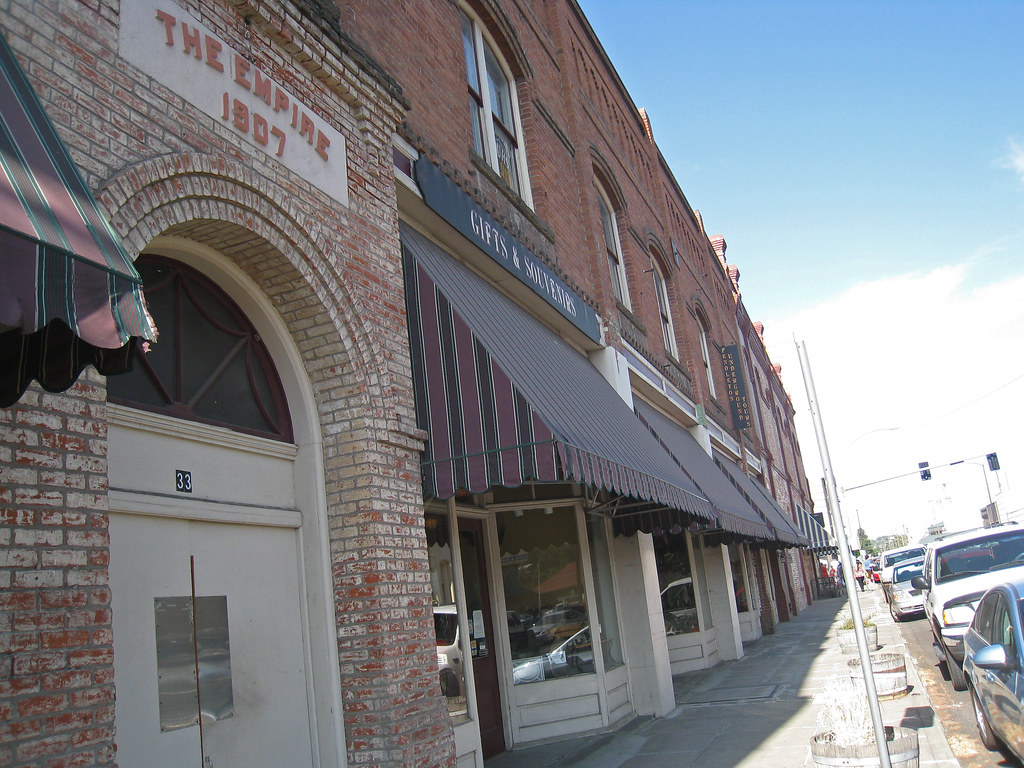
The Empire Meat CompanyI packed quite a lot of plans into this little weekend trip. (Here's a map.) I didn't expect we could do everything, but I was prepared with possibilities depending on our mood. Our stop in Pendleton depended on how our drive along I-84 went, and whether we got a timely start in the morning.  Fortunately, the last tour of the day of Pendleton's Underground happens at 2:30 pm, so we didn't have to make it a very early morning start.  After about 4 hours of driving, it was a good time to make a stop, anyway.  We got there with just enough time to grab some lunch...simple sandwiches across the street...and wait a few minutes for the tour.
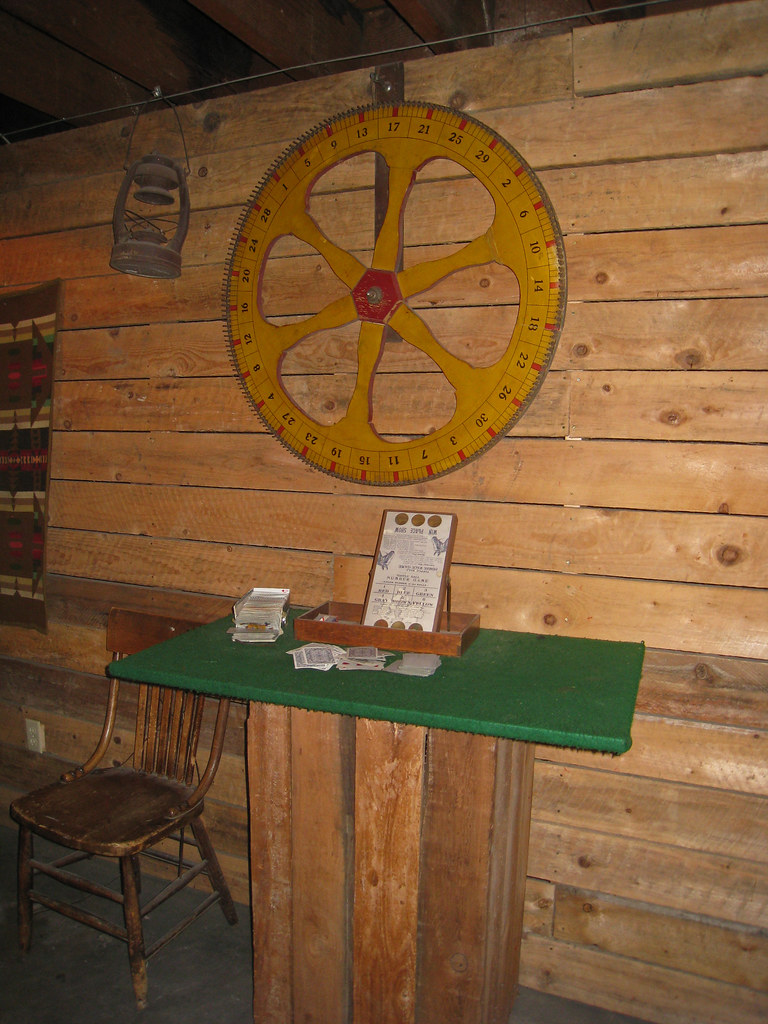
Wheel of chanceOur first stop was a western barroom underground. Oregon had experienced a gold rush later than the California Rush.  Our guide told us how bartenders would measure gold dust in payment for drinks, but as they did so, they would spill some grains along the bar.  After payment and poured drink, they would swipe it onto the floor with a cloth, and near the end of their shift, would tromp around in the mud, come back behind the bar, then pick up the gold dust off the floor with the mud on their boots.  Hmmm, sounds like a good story, but true?  Our guide said that's how bartenders got into the habit of wiping down the bar even when not needed.  Now that definitely sounds made up, because I thought it was due to health codes.  All in good fun.  In the same vein, the Chinese laborers would sweep up the barroom floor at the end of the night, and they would get all kinds of gold dust out of their sweepings.

In the same room he pointed out a simple wheel with numbers and pegs, telling us it was donated by Pendleton Woolen Mills. Back in the day, he said, the company would give sellers the opportunity to spin for the price of their wool.
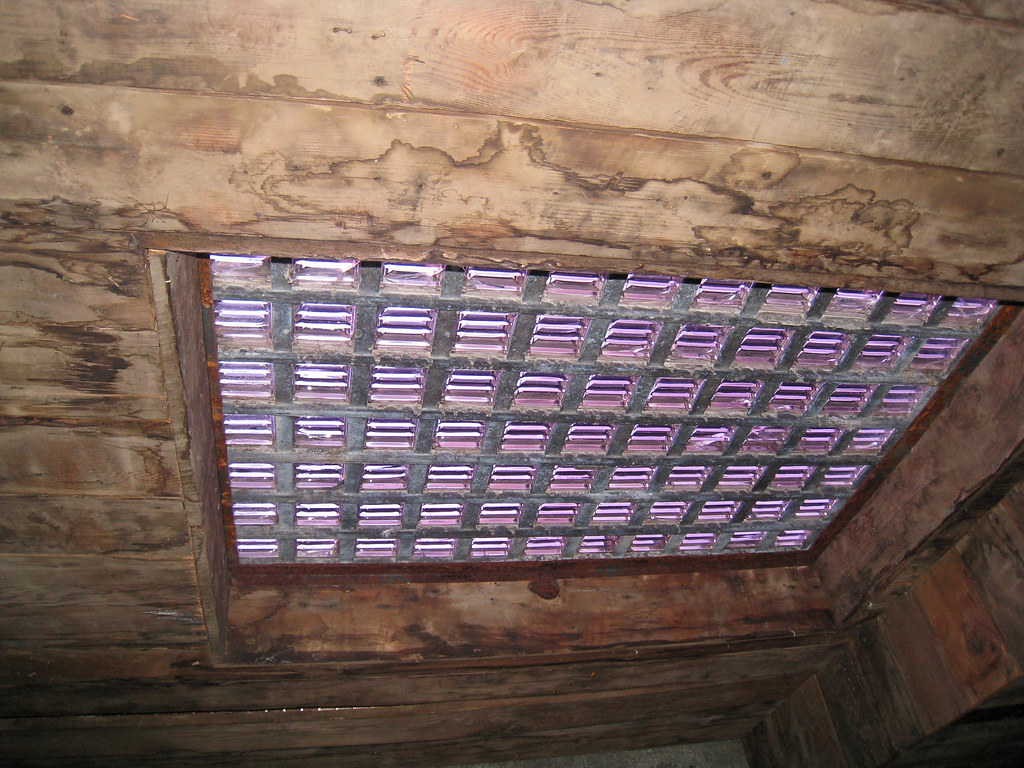
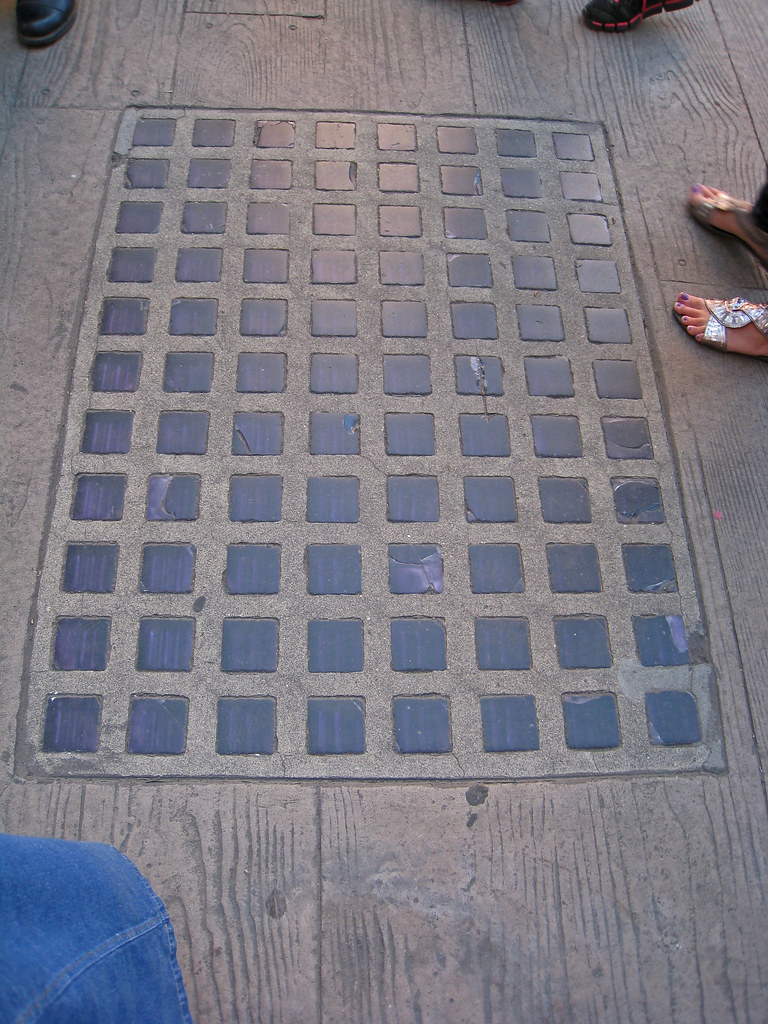
prism lights from belowPrism glass in sidewalkWhenever you're in a Western town or city and see those purple glass squares in a sidewalk, that means there is, or was, tunnels underground there. It's actually magnesium glass prisms.  The prisms start out clear, but the sun turns them purple.  They're designed to focus and amplify the light in the tunnels.  The tunnels are designed to provide one stop for delivery, with individual deliveries to businesses branching out underground, rather than on the busy street.  Nothing nefarious about the original intention, despite the legends of Shanghai Tunnels, opium dens, and speakeasies (though it seems these often turned into those).  The panels are really beautiful from underneath (right photo).  Unfortunately, an inept business destroyed all but two full panels when it rebuilt the streets and sidewalks of Pendleton. They were supposed to put the panels back in the sidewalks when they created the boardwalk style cement, but instead ground up the glass and recycled it.  I want to ask, what idiot thought those things weren't worth something?!  Or maybe they weren't idiots, and sold the prism panels while saying they accidentally destroyed them?

Also on this tour we saw Hop Sing's Laundry, a recreation of an early Ice Cream shop, an opium den, quarters for Chinese men, along with their Chinese jail, a big stakes poker room, a speakeasy, along with the requisite bullet holes in the tin ceiling, a butcher's shop, along with one of the earliest ice-makers, and a brothel, though the brothel tour was above ground.  In reality, the ice cream shop and the butcher shop were above ground, while the production of the foods were below ground, but hey, it's a museum of sorts.
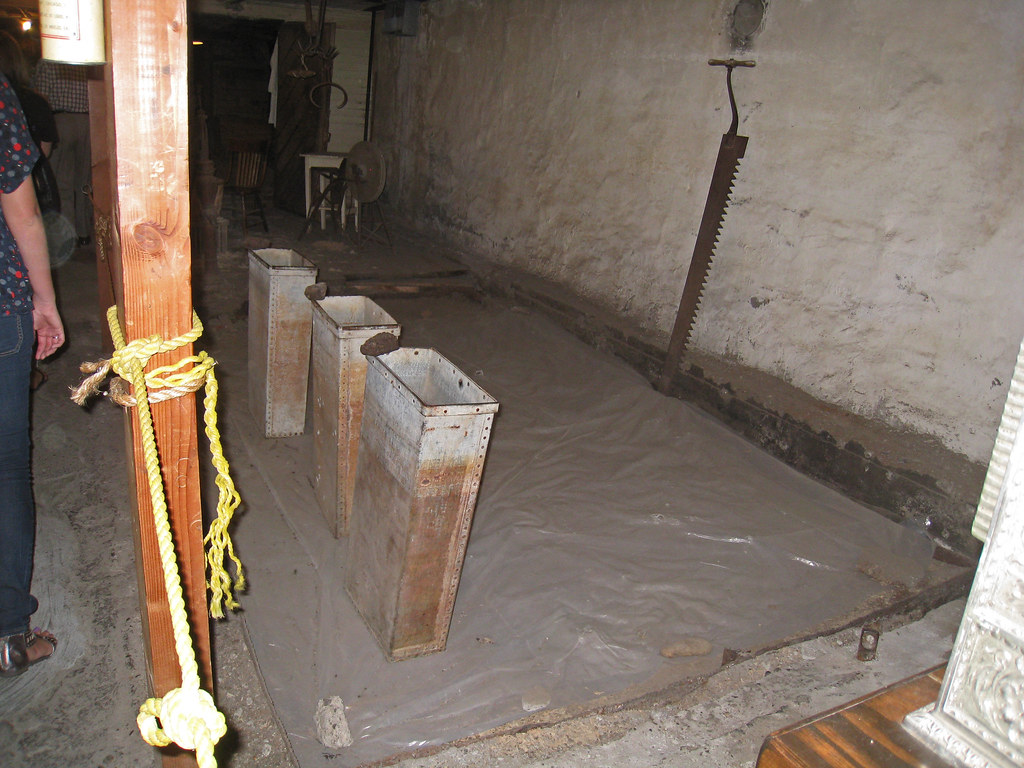
pit with brine waterIn some cases there was water in the tunnels.  Sometimes this was cause for a business to set up shop, like the ice cream makers and the butchers.  The butchers dug a pit in their tunnel, filled it with brine water they cooled with ammonia compression (who knew this was used for early refrigeration?), and fresh water was placed in tall metal containers.  They then sold the ice.
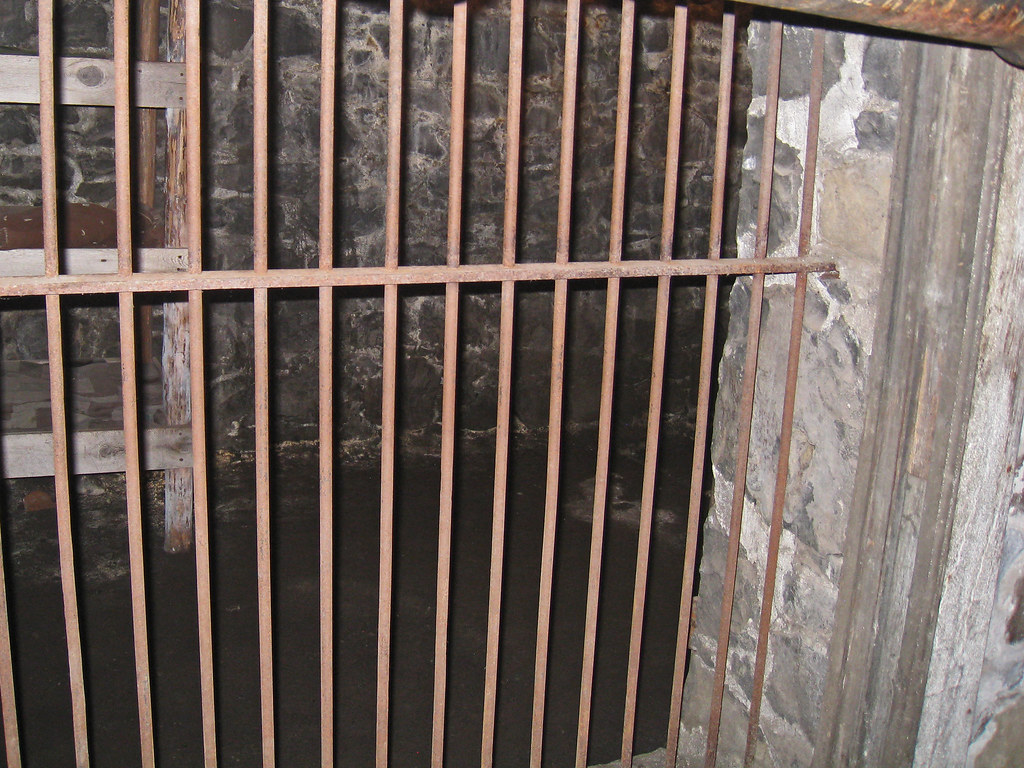
Chinese jail

Our guide told us he was sad to learn of this when he took this job, that there were sundown laws in Oregon.  No person of color could be on the city's streets after sundown.  This was why the Chinese men (only Chinese men were allowed to emigrate to the US, not women) lived in the tunnels.  Their "Chinese jails" were for each other...to keep someone from going above to get some air.  If he did, he could be shot by the whites, and the shooter would not be charged.

As I search around, I find this was an "unwritten law." While Oregon was not a slave state, it was indeed written into law that Blacks could not settle here (exclusion laws), and these "sundown laws" seem to be an extension of that racist institutionalization.  (Let me just say, if I haven't already, that an MCL card holder can access all of the Oregonian's archives, as well as JSTOR, where one can access many journals, images, letters, and other primary sources.  Included in JSTOR, Oregon Historical Quarterly.)

According to our guide, up until 1953, there were 18 brothels and 32 bars in Pendleton.  That all ended when a new minister came to town, didn't like the sin of the city, and observed the brothels to take names and force the city to close all the brothels down.  Gotta love morality by coercion.  There are still many upper stories of buildings, he pointed out, that are closed up, sealed since the day the prostitutes were sent out of town.  The one we toured had only been unsealed in recent years, revealing many belongings that were never retrieved.

One madame stuck around, sneaking back into town.  We learned that unlike other brothel managers, she treated her girls well: she covered all their expenses; paid them 50/50; and taught them life skills so they could move on from the business, even get married. Madame Stella would tour the town with a wagon load of groceries for the down and out, and have a visiting minister give sermons in her brothel so her employees could also convene with God because, of course, they weren't allowed in churches. Her funeral, our guide said, was the second-most-attended in Pendleton's history, after the sheriff who was killed in the line of duty.

The rest of the photos, and more of the story, can be found here.  The whole tour took an hour and a half.
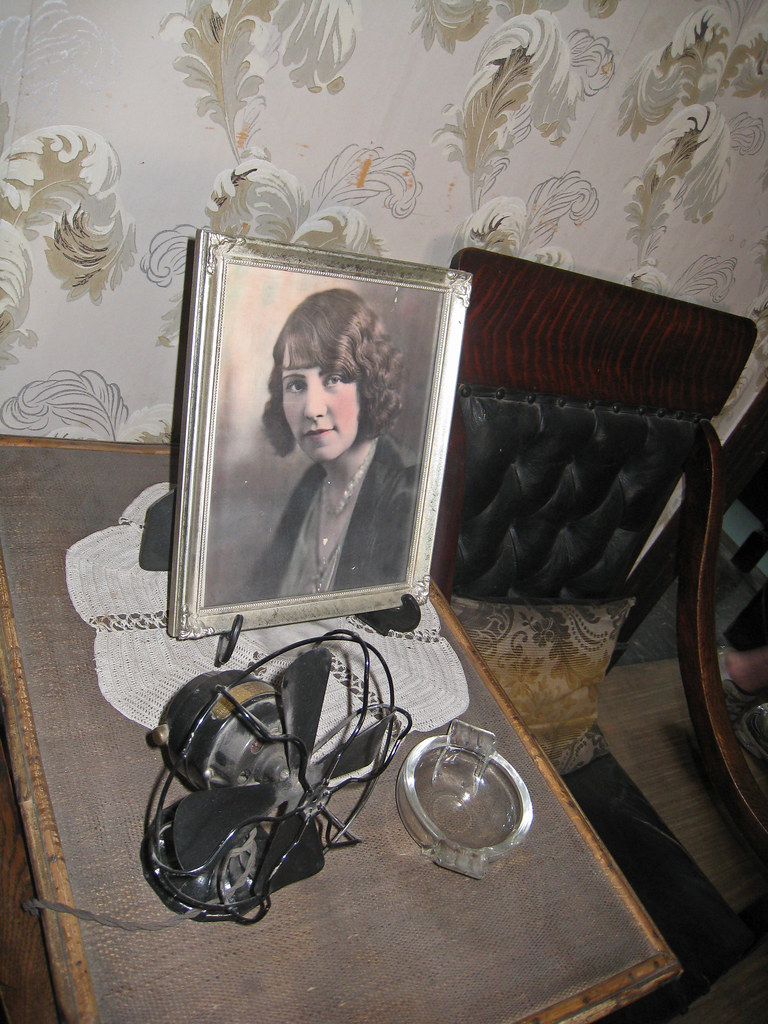
Madame Stella
Madame Stella Darby

Sunday, August 28, 2011

Odds n Ends

A few things kept me from the writing I intended, but I hope to do some catching up this weekend. Here's what kept me busy...

First of all, my sweetie and I took a 3-day, 2-night trip to Eastern Oregon.  Photos are here...more details to come. We packed a lot into those 3 days.  Then there was sifting through nearly 500 photos and editing the ones I chose.  I never would have taken that many photos in the days of film.  Now, rather than stand for 5 minutes and read a placard, I can take a photo and read it later. 

Some people scoff at the constant taking of photos, but I find it doesn't necessarily separate me from what I am experiencing because a view screen allows me to put the camera anywhere, as opposed to the view-finder forcing me to put the camera right in front of my face. The photos even allow me to see details I might not have otherwise.  This allows me to experience a place, preserve it for memories and future learning without getting all worn and bedraggled because I stood around reading all those signs.  There will be more posts to come on our trip, and more updating of those photos.

Yesterday I finally drank some mint tea brewed from leaves harvested from my front yard, sharing it with my best friend.  I spent several evenings on that harvest...that'll teach me to procrastinate in the future.  The Julep Spearmint was most fecund, and if anything needed to be cut back just to stop it from encroaching on the path to our door.  Next to it, the Chocolate Mint, also quite healthy but not quite as weedish, also had bolted.  Last thing I want is for those flowers' seeds to jump the concrete and asphalt and start growing everywhere.

I cut back those belly-high stalks of mint, and laid them out on a sheet to dry in the yard. We were having warm, dry weather, so I figured it would take 1-2 days to dry, which it did.  Then I stripped the leaves, and avoided the flowers.  This made it a much longer task.  Next year I'll be better about harvesting earlier and more often, especially the chocolate mint, as it smelled more chocolaty earlier in the season.  Still, the brew was better than I expected, so what was I waiting for?


Meanwhile, my baby roses are thriving, and some rose hips are ripe...certainly riper than my tomatoes.  I'm still getting new flowers, too.  The nursery where I bought them has some recipes for jam, puree, and tea.  Here's a forum where someone posted even more recipes.


Some tomatoes are finally turning color.  It looks like I will have at least 2 kinds.  A friend gave me several starts from her heirloom seeds...what I get is the luck of the draw.  I'm glad, because I like both the green stripey ones and the red or orange ones


Slow Read: Middlemarch Book 1

Middlemarch (Signet Classics)
Well...I'm a week behind with my posting, but only a day behind with my reading.  I do have a niggling worry about how I am going to fit in the reading of another thick book for my other book group: Ahab's Wife: Or, The Star-gazer: A Novel.

PRELUDE

Theresa's passionate, ideal nature demanded an epic life... Her flame...soared after some illimitable satisfaction, some object which would never justify weariness, which would reconcile self-despair with the rapturous consciousness of life beyond self. She found her epos in the reform of a religious order. ...Here and there is born a Saint Theresa, foundress of nothing, whose loving heart-beats and sobs after an unattained goodness tremble off and are dispersed among hindrances, instead of centring in some long-recognizable deed.
Is this the theme of the book?

BOOK I. MISS BROOKE

CHAPTER I  "Since I can do no good because a woman, Reach constantly at something that is near it. --The Maid's Tragedy: BEAUMONT AND FLETCHER.

Miss Brooke had that kind of beauty which seems to be thrown into relief by poor dress. She was usually spoken of as being remarkably clever, but with the addition that her sister Celia had more common-sense. ...Since they could remember, there had been a mixture of criticism and awe in the attitude of Celia's mind towards her elder sister. The younger had always worn a yoke; but is there any yoked creature without its private opinions?
I'm so glad I came across the etiquette explanation that the first-born young lady is always "Miss so-and-so" and the younger sisters are referred to by their first names.  I think I learned this while attending a play adaptation of Pride and Prejudice.  At first I thought the book is about these two, then I remembered the title. There's going to be a lot to keep track of, this being about the whole fictional town of Middlemarch.  Perhaps each Book will be focused on a particular character.

CHAPTER II `Seest thou not yon cavalier who cometh toward us on a dapple-gray steed, and weareth a golden helmet?' `What I see,' answered Sancho, `is nothing but a man on a gray ass like my own, who carries something shiny on his head.' `Just so,' answered Don Quixote: `and that resplendent object is the helmet of Mambrino.'

I see it looks like there will be a quote for every chapter. What does it mean? Does it set the tone? Does it explain Everything? Is it like the song in a musical...expressing the emotional underpinnings? I'm afraid I could make this very complex, or maybe the author made it very complex.

Long story short: Sir James likes Miss Brooke.  Miss Brooke's uncle and guardian likes Sir James for Miss Brooke.  Celia knows Sir James likes Miss Brooke.  Miss Brooke has no clue Sir James likes her, nor would she care.  She thinks Sir James likes Celia. Miss Brooke likes the old quasi-holy man, Mr. Casaubon, whom she just met.  So...Miss Brooke = Don Quixote, and Celia = the more reality-based Sancho? Sir James thinks Miss Brooke likes him back.

CHAPTER III "Say, goddess, what ensued, when Raphael, The affable archangel . . . Eve The story heard attentive, and was filled With admiration, and deep muse, to hear Of things so high and strange." --Paradise Lost, B. vii.

Here was something beyond the shallows of ladies' school literature: here was a living Bossuet, whose work would reconcile complete knowledge with devoted piety; here was a modern Augustine who united the glories of doctor and saint.
Miss Dorothea Brooke is smitten. Who is Bossuet? There's a lot to look up in this book.
Celia was present while the plans were being examined, and observed Sir James's illusion. "He thinks that Dodo cares about him, and she only cares about her plans. Yet I am not certain that she would refuse him if she thought he would let her manage everything and carry out all her notions. And how very uncomfortable Sir James would be! I cannot bear notions." ...Celia was not impulsive: what she had to say could wait, and came from her always with the same quiet staccato evenness.
Celia has more tact than I. I am beginning to get impatient with Miss Brooke's blindness to the feelings of others. Isn't this going overboard? Then the author seems to read my thoughts...

It is difficult to say whether there was or was not a little wilfulness in her continuing blind to the possibility that another sort of choice was in question in relation to her. But her life was just now full of hope and action: she was not only thinking of her plans, but getting down learned books from the library and reading many things hastily...
CHAPTER IV 1st Gent. Our deeds are fetters that we forge ourselves. 2d Gent. Ay, truly: but I think it is the world That brings the iron.

In which Mr. Brooke informs Miss Brooke of Sir James' intentions, and Miss Brooke tells him she wants a wise man who guides her, not one she could boss. I wonder, does she know herself, and I think Mr. Brooke wonders the same thing, but he is a good man, and allows her her choices.

CHAPTER V "Hard students are commonly troubled with gowts, catarrhs, rheums, cachexia, bradypepsia, bad eyes, stone, and collick, crudities, oppilations, vertigo, winds, consumptions, and all such diseases as come by over-much sitting: they are most part lean, dry, ill-colored . . . and all through immoderate pains and extraordinary studies. If you will not believe the truth of this, look upon great Tostatus and Thomas Aquainas' works; and tell me whether those men took pains."--BURTON'S Anatomy of Melancholy, P. I, s. 2.

Dorothea sees only what she wants in the letter proposing marriage. This is how it goes, blinded by love. Celia can see more clearly.
When she spoke there was a tear gathering. "Oh, Dodo, I hope you will be happy." Her sisterly tenderness could not but surmount other feelings at this moment, and her fears were the fears of affection.
CHAPTER VI My lady's tongue is like the meadow blades, That cut you stroking them with idle hand. Nice cutting is her function: she divides With spiritual edge the millet-seed, And makes intangible savings.

I wonder where this quote is from? Of course Google yields only Middlemarch. Same from a poetry database...so is this a poem by Eliot for the book? The busybody Mrs. Cadwallader warns Sir James, so he has the chance to save face...
Perhaps his face had never before gathered so much concentrated disgust as when he turned to Mrs. Cadwallader and repeated, "Casaubon?" "Even so. You know my errand now." "Good God! It is horrible! He is no better than a mummy!"
...and to set his sights toward another, with her suggestion...
However, if I were a man I should prefer Celia, especially when Dorothea was gone.
While the beginning quote of a chapter seems to set the tone, the final sentence is like the musical note that defines the whole previous piece.
We mortals, men and women, devour many a disappointment between breakfast and dinner-time; keep back the tears and look a little pale about the lips, and in answer to inquiries say, "Oh, nothing!" Pride helps us; and pride is not a bad thing when it only urges us to hide our own hurts--not to hurt others.
CHAPTER VII "Piacer e popone Vuol la sua stagione." --Italian Proverb.

Google translate tells me it means "Pleasure and melon Does his season," but says if I mean "Vuole" it means "Pleasure and melon wants his season."
Miss Brooke was certainly very naive with all her alleged cleverness. Celia, whose mind had never been thought too powerful, saw the emptiness of other people's pretensions much more readily.
Just as I thought. Eliot crafts her characters well.

CHAPTER VIII "Oh, rescue her! I am her brother now, And you her father. Every gentle maid Should have a guardian in each gentleman."

Final note:
Hence it happened that in the good baronet's succeeding visits, while he was beginning to pay small attentions to Celia, he found himself talking with more and more pleasure to Dorothea. She was perfectly unconstrained and without irritation towards him now, and he was gradually discovering the delight there is in frank kindness and companionship between a man and a woman who have no passion to hide or confess.
Hmmm. Now that the whole issue of infatuation is out of the way, is this setting the stage for future true love? But then she will be married to the wrong man!  But then, if the beginning quote steers us right, Sir James will be more like a brother to Dorothea.

CHAPTER IX 1st Gent. An ancient land in ancient oracles Is called "law-thirsty": all the struggle there Was after order and a perfect rule. Pray, where lie such lands now? . . . 2d Gent. Why, where they lay of old--in human souls.

CHAPTER X "He had catched a great cold, had he had no other clothes to wear than the skin of a bear not yet killed."--FULLER.

Aaaarrggh. I need annotations. Where does this come from? Why is this quote so different in flavor? In this chapter we meet a young cousin of Mr. Casaubon, Will. The narrator inserts herself, saying it's too soon to tell of the conceit of Will, but "this caution against a too hasty judgment interests me more in relation to Mr. Casaubon than to his young cousin."

CHAPTER XI "But deeds and language such as men do use, And persons such as comedy would choose, When she would show an image of the times, And sport with human follies, not with crimes." --BEN JONSON.

CHAPTER XII "He had more tow on his distaffe Than Gerveis knew." --CHAUCER.

OK, this I found. It's in The Miller's Tale. Long story short, an assistant gets it on with the old carpenter's young wife, and a clerk also wants the carpenter's wife. Gerveis is the smithy from whom the clerk gets a hot poker to revenge himself on the wife, who rejected the clerk. The smithy jokes about the clerk's women troubles, and the clerk is thinking 'oh if only you knew...'

So this chapter is about the young Fred having to jump through hoops to keep in good graces with his manipulative rich uncle, Mr. Featherstone.
It had not occurred to Fred that the introduction of Bulstrode's name in the matter was a fiction of old Featherstone's; nor could this have made any difference to his position. He saw plainly enough that the old man wanted to exercise his power by tormenting him a little, and also probably to get some satisfaction out of seeing him on unpleasant terms with Bulstrode. Fred fancied that he saw to the bottom of his uncle Featherstone's soul, though in reality half what he saw there was no more than the reflex of his own inclinations.
Meanwhile, Fred's sister Rosamond, meets the eyes of the new man in town, Dr. Lydgate, a moment that "seems like a sudden divine clearance of haze."

Yet this result, which she took to be a mutual impression, called falling in love, was just what Rosamond had contemplated beforehand.


Schedule
  • August 14-20: Prelude, and Book One: Miss Brooke
  • August 21-27: Book Two: Old and Young
  • August 28-September 3: Book Three: Waiting for Death
  • September 4-10: Book Four: Three Love Problems
  • September 11-17: Book Five: The Dead Hand
  • September 18-24: Book Six: The Widow and the Wife
  • September 25-October 1: Book Seven: Two Temptations
  • October 2-8: Book Eight: Sunset and Sunrise; and Finale

Monday, August 08, 2011

Announcing a Slow Read


My library is overflowing with book groups.  In addition to the one I facilitate, mixed fiction and non-fiction chosen by the regular attendees, and the non-fiction one that's been around awhile, there will be a new Classics Pageturners.  Rather than staff facilitating this one, regular attendees will volunteer to facilitate.  As I have been wanting this particular book group for a long time, I plan to attend regularly, even though it will always meet on the third Sunday, and the group I facilitate always meets on the third Tuesday.  I will have to take care to plan my book-reading.

Middlemarch (Signet Classics)One book I have been intending to read for a loooooong time...ever since I heard it has been on my alma mater's reading list, but wasn't when I attended Santa Fe, is Middlemarch by George Eliot.  The Classics Pageturners group will be reading it for October, and I've volunteered to facilitate.  (and I'll be a good example)  You know, don't you, that Middlemarch is a gazillion pages long?  This is perfect for a slow read with blogging, as it will take a long time to read anyway, and I would have to reflect and write notes just in self-defense in any case.

It has 1088 pages, is broken up into 8 books, and 86 chapters.  I will read a book a week, starting next week.  I hope there will be people inclined to join me in the slow read, whether you live in Portland and plan to attend the book group, or are a fellow alumn, or just because you've always meant to read it too.  Reading it slow reduces the pressure of a thick book, and great books like this are better savored, and shared.  It's available free for the Kindle and online thanks to Project Gutenberg.

  • August 14-20: Prelude, and Book One: Miss Brooke
  • August 21-27: Book Two: Old and Young
  • August 28-September 3: Book Three: Waiting for Death
  • September 4-10: Book Four: Three Love Problems
  • September 11-17: Book Five: The Dead Hand
  • September 18-24: Book Six: The Widow and the Wife
  • September 25-October 1: Book Seven: Two Temptations
  • October 2-8: Book Eight: Sunset and Sunrise; and Finale
Soto Zen: An Introduction to the Thought of the Serene Refection Meditation School of BuddhismIncidentally, I will also be doing another slow read of sorts...I will be co-leading a class with my friend and Buddhist priest Domyo, on Soto Zen, a book by our Zen Center's founding father, Keido Chisan. The first class will be September 14.  Domyo and I need to get cracking on our planning.  Free pdf here.

Sunday, August 07, 2011

Landscaping progress

The plans I had for the front yard edible landscaping are fulfilled.

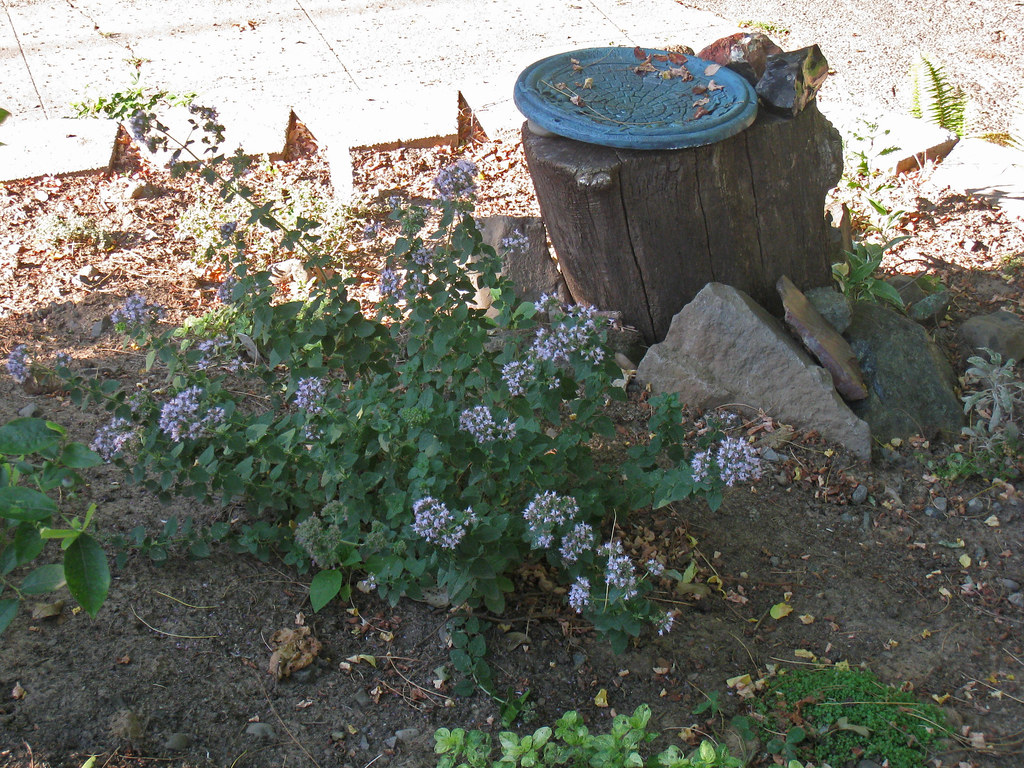
oregano and birdbath from aboveThe bird bath, acquired from Amazon for less than 20 bucks completed the plan.  There may be new additions in the future, but those will be refinements.  Now it is a matter of waiting for plants to grow to their full potential.

Stan, the builder of the wall, is looking out for me.  He found some great assorted rocks and fossils at a yard sale, and brought them back for me.  Next to the birdbath is a large piece of obsidian.  He also planted this oregano now crazy with purple blooms.  He "had plenty."

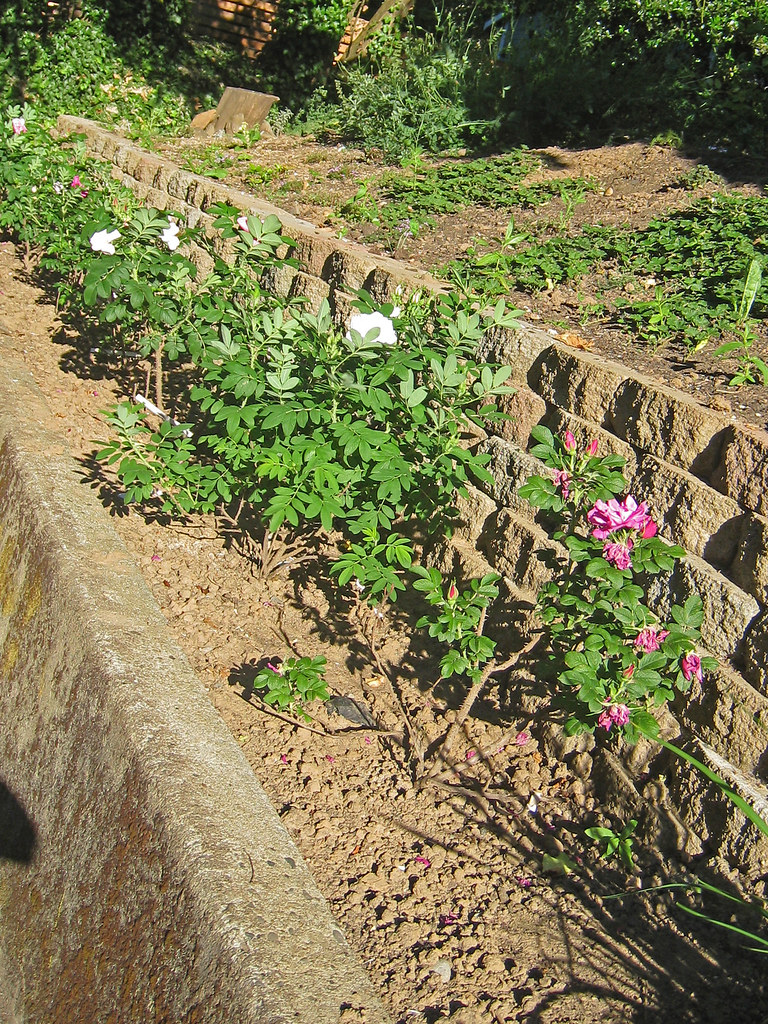
I ordered my roses from a Wisconsin nursery, as I was looking for Rugosas, and Spring Valley Roses made it very easy for me to find the type and the expected bush size I was looking for. They arrived in April. These smell nice and produce large, and tastier, rose hips. I could make rose hip tea, or even jelly.  I didn't expect much the first year, but I got several blooms on each baby bush, though not all at the same time. Here they are at the beginning of July.

rugosa roses in the front


From left to right:
  • Charles Albanel
  • Snow Pavement
  • Foxi
  • Fru Dagmar Hastrup
  • Purple Pavement
  • Fru Dagmar....and the rest a mirror image of the left
I decided the order based on size and alternating lighter and darker colors. You can find more photos here, including a ladybug on the new green rose leaves.  Look for the rhubarb...yes...I got rhubarb!  A facebook (and co-worker) friend announced she was giving some away this spring.  Next year I will likely be able to harvest.

Thursday, July 21, 2011

Be a Superhero at Kickstarter

Thanks to Facebook, I've come across Kickstarter and a couple of businesses I'm really happy to see get going in Portland.

The first was plugged by the coffee shop across the street from my library, Jazzkats. I supported Heidi Ho Organics not because I'm vegetarian, though I like to choose vegan options when I can, but more because of the name. Kinda required, don'tya think?

Lately, I've been all about the food carts. Innovative, creative food, cheap, and a lot of choice when you go to the pods. Who cares if it's raining during this summer-long Portland winter? We've got cart pods with tents and heat. There are 3 pods in walking distance of my house, and another mini-pod. This one, Alacarts, has my favorite veggie burger place, Off the Griddle. Not only are they all about the vegetarian, they have all renewable energy, including their own solar panels.

So now, comfort food as finger food. Mmmm. Plus Steampunk. At a cart pod hopefully near me. It may be a little light on the vegetarian options, but I have faith, and the baker is focusing on locally grown ingredients. I'm supporting them; why don't you watch this video, then be a superhero and help them get started too.


Hopefully the feature in the freely delivered Food Day will also get her more donations at Kickstarter...only about 20 days left.

Oh...if you make a donation and comment here, I will raise my donation by $5 for each of you who does so.